Therese K Dalsbø, Rakel Aasheim Greve, Ingrid L Jørgensen, Marita S Fønhus
{"title":"Education and training interventions for healthcare workers to prevent sexual harassment.","authors":"Therese K Dalsbø, Rakel Aasheim Greve, Ingrid L Jørgensen, Marita S Fønhus","doi":"10.1002/14651858.CD016096.pub2","DOIUrl":null,"url":null,"abstract":"<p><strong>Rationale: </strong>Sexual harassment is common among healthcare workers and is associated with poor mental health, job dissatisfaction, and workforce attrition. Education and training may help prevent sexual harassment, but their effectiveness in healthcare settings has not been systematically evaluated.</p><p><strong>Objectives: </strong>To assess the effectiveness of education and training interventions on knowledge and skills for managing sexual harassment, and to assess their impact on the incidence of sexual harassment towards healthcare workers in healthcare settings.</p><p><strong>Search methods: </strong>We searched CENTRAL, MEDLINE, Embase, PsycINFO, AMED, CINAHL, Scopus, ClinicalTrials.gov, and the WHO ICTRP, together with reference checking and contact with study authors, to identify eligible studies. The latest search date was March 2025.</p><p><strong>Eligibility criteria: </strong>We included randomised controlled trials (RCTs) involving healthcare workers comparing education or training interventions with control (no intervention, waiting list, placebo, or minimal intervention) or different types of education or training to prevent sexual harassment in healthcare settings.</p><p><strong>Outcomes: </strong>Our critical outcomes were knowledge and skills in managing sexual harassment and the incidence of all types of sexual harassment perpetrated by patients, visitors, coworkers, and management. Important outcomes were anxiety, depression, burnout, sick leave, staff turnover, disability, and perception of the organisational climate related to harassment.</p><p><strong>Risk of bias: </strong>We used the Cochrane RoB 2 tool to assess risk of bias.</p><p><strong>Synthesis methods: </strong>We synthesised results for each outcome using random-effects model meta-analysis. We used GRADE to assess the certainty of evidence for each outcome.</p><p><strong>Included studies: </strong>We included two studies from Taiwan with a total of 170 nurses. Most participants were young women with little work experience. The intervention group received education to prevent sexual harassment, and the comparison group received a different type of education to prevent sexual harassment. We found no studies that had a comparison group without any active educational or training components.</p><p><strong>Synthesis of results: </strong>Education and training interventions to prevent sexual harassment compared to control (no intervention, waiting list, placebo, or minimal intervention) in healthcare workers No studies addressed this comparison. Education and training interventions to prevent sexual harassment compared to other education and training interventions for healthcare workers We found two studies reporting on education and training interventions to prevent sexual harassment compared to other education and training interventions in healthcare workers. Educational interventions to prevent sexual harassment probably increase sexual harassment prevention knowledge slightly ('sexual harassment prevention', mean difference (MD) 4.74, 95% confidence interval (CI) 1.21 to 8.28; P = 0.71; I<sup>2</sup> = 0%; 2 RCTs, 168 participants; moderate-certainty evidence) and may increase management skills slightly ('coping behaviour', MD 6.36, 95% CI -6.84 to 19.56; P = 0.43; I<sup>2</sup> = 0%; 2 RCTs, 168 participants; low-certainty evidence) and ('prevention strategy', MD 11.70, 95% CI 2.56 to 20.85; P = 0.22; I<sup>2</sup> = 33%; 2 RCTs, 168 participants; low-certainty evidence). No study evaluated the incidence of sexual harassment, anxiety, depression, burnout, sick leave, staff turnover, disability, or perception of the organisational climate related to harassment. Adverse effects were not measured or reported in the included studies. The certainty of the evidence was moderate to low. We judged the overall risk of bias as low, and we identified no inconsistency or publication bias. However, imprecision was more of a concern given the low number of participants and relatively broad CIs around the effect estimates.</p><p><strong>Authors' conclusions: </strong>Healthcare workers may benefit from education and training compared to another type of education and training. The benefits were modest and were measured as increased knowledge ('sexual harassment prevention') and management skills ('coping behaviour' and 'prevention strategy'). The certainty of the evidence is moderate to low, and future studies could make the findings more robust. There is a need for future studies investigating other types of outcomes such as anxiety, depression, burnout, sick leave, staff turnover, disability, and perception of the organisational climate related to harassment. It would also be valuable to assess a wider range of healthcare workers, as we only found studies in nurses. No studies addressed the effects of education and training compared to control groups (no intervention, waiting list, placebo, or minimal intervention). The decision to offer sexual harassment education and training to healthcare workers is supported by the existing evidence. However, other contextual factors may also be considered, as well as healthcare workers' preferences to participate in educational activities.</p><p><strong>Funding: </strong>This Cochrane review had no dedicated funding.</p><p><strong>Registration: </strong>Registration: Cochrane Collaboration, 19th of December 2023.</p><p><strong>Title: </strong>Education and training interventions for health care workers to prevent sexual harassment. Identification number: EMID:9ba735d2b5367171. Authors: Therese K Dalsbø, Rakel Aasheim Greve, Ingrid L Jørgensen, Marita S Fønhus.</p><p><strong>Protocol: </strong>Published on the 6th of February 2025 available via Cochrane Library at https://doi.org/10.1002/14651858.CD016096.</p>","PeriodicalId":10473,"journal":{"name":"Cochrane Database of Systematic Reviews","volume":"10 ","pages":"CD016096"},"PeriodicalIF":11.1000,"publicationDate":"2026-10-12","publicationTypes":"Journal Article","fieldsOfStudy":null,"isOpenAccess":false,"openAccessPdf":"https://www.ncbi.nlm.nih.gov/pmc/articles/PMC13656299/pdf/","citationCount":"0","resultStr":null,"platform":"Semanticscholar","paperid":null,"PeriodicalName":"Cochrane Database of Systematic Reviews","FirstCategoryId":"3","ListUrlMain":"https://doi.org/10.1002/14651858.CD016096.pub2","RegionNum":2,"RegionCategory":"医学","ArticlePicture":[],"TitleCN":null,"AbstractTextCN":null,"PMCID":null,"EPubDate":"","PubModel":"","JCR":"Q1","JCRName":"MEDICINE, GENERAL & INTERNAL","Score":null,"Total":0}
引用次数: 0
Abstract
Rationale: Sexual harassment is common among healthcare workers and is associated with poor mental health, job dissatisfaction, and workforce attrition. Education and training may help prevent sexual harassment, but their effectiveness in healthcare settings has not been systematically evaluated.
Objectives: To assess the effectiveness of education and training interventions on knowledge and skills for managing sexual harassment, and to assess their impact on the incidence of sexual harassment towards healthcare workers in healthcare settings.
Search methods: We searched CENTRAL, MEDLINE, Embase, PsycINFO, AMED, CINAHL, Scopus, ClinicalTrials.gov, and the WHO ICTRP, together with reference checking and contact with study authors, to identify eligible studies. The latest search date was March 2025.
Eligibility criteria: We included randomised controlled trials (RCTs) involving healthcare workers comparing education or training interventions with control (no intervention, waiting list, placebo, or minimal intervention) or different types of education or training to prevent sexual harassment in healthcare settings.
Outcomes: Our critical outcomes were knowledge and skills in managing sexual harassment and the incidence of all types of sexual harassment perpetrated by patients, visitors, coworkers, and management. Important outcomes were anxiety, depression, burnout, sick leave, staff turnover, disability, and perception of the organisational climate related to harassment.
Risk of bias: We used the Cochrane RoB 2 tool to assess risk of bias.
Synthesis methods: We synthesised results for each outcome using random-effects model meta-analysis. We used GRADE to assess the certainty of evidence for each outcome.
Included studies: We included two studies from Taiwan with a total of 170 nurses. Most participants were young women with little work experience. The intervention group received education to prevent sexual harassment, and the comparison group received a different type of education to prevent sexual harassment. We found no studies that had a comparison group without any active educational or training components.
Synthesis of results: Education and training interventions to prevent sexual harassment compared to control (no intervention, waiting list, placebo, or minimal intervention) in healthcare workers No studies addressed this comparison. Education and training interventions to prevent sexual harassment compared to other education and training interventions for healthcare workers We found two studies reporting on education and training interventions to prevent sexual harassment compared to other education and training interventions in healthcare workers. Educational interventions to prevent sexual harassment probably increase sexual harassment prevention knowledge slightly ('sexual harassment prevention', mean difference (MD) 4.74, 95% confidence interval (CI) 1.21 to 8.28; P = 0.71; I2 = 0%; 2 RCTs, 168 participants; moderate-certainty evidence) and may increase management skills slightly ('coping behaviour', MD 6.36, 95% CI -6.84 to 19.56; P = 0.43; I2 = 0%; 2 RCTs, 168 participants; low-certainty evidence) and ('prevention strategy', MD 11.70, 95% CI 2.56 to 20.85; P = 0.22; I2 = 33%; 2 RCTs, 168 participants; low-certainty evidence). No study evaluated the incidence of sexual harassment, anxiety, depression, burnout, sick leave, staff turnover, disability, or perception of the organisational climate related to harassment. Adverse effects were not measured or reported in the included studies. The certainty of the evidence was moderate to low. We judged the overall risk of bias as low, and we identified no inconsistency or publication bias. However, imprecision was more of a concern given the low number of participants and relatively broad CIs around the effect estimates.
Authors' conclusions: Healthcare workers may benefit from education and training compared to another type of education and training. The benefits were modest and were measured as increased knowledge ('sexual harassment prevention') and management skills ('coping behaviour' and 'prevention strategy'). The certainty of the evidence is moderate to low, and future studies could make the findings more robust. There is a need for future studies investigating other types of outcomes such as anxiety, depression, burnout, sick leave, staff turnover, disability, and perception of the organisational climate related to harassment. It would also be valuable to assess a wider range of healthcare workers, as we only found studies in nurses. No studies addressed the effects of education and training compared to control groups (no intervention, waiting list, placebo, or minimal intervention). The decision to offer sexual harassment education and training to healthcare workers is supported by the existing evidence. However, other contextual factors may also be considered, as well as healthcare workers' preferences to participate in educational activities.
Funding: This Cochrane review had no dedicated funding.
Registration: Registration: Cochrane Collaboration, 19th of December 2023.
Title: Education and training interventions for health care workers to prevent sexual harassment. Identification number: EMID:9ba735d2b5367171. Authors: Therese K Dalsbø, Rakel Aasheim Greve, Ingrid L Jørgensen, Marita S Fønhus.
Protocol: Published on the 6th of February 2025 available via Cochrane Library at https://doi.org/10.1002/14651858.CD016096.
期刊介绍:
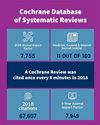
The Cochrane Database of Systematic Reviews (CDSR) stands as the premier database for systematic reviews in healthcare. It comprises Cochrane Reviews, along with protocols for these reviews, editorials, and supplements. Owned and operated by Cochrane, a worldwide independent network of healthcare stakeholders, the CDSR (ISSN 1469-493X) encompasses a broad spectrum of health-related topics, including health services.

 求助内容:
 应助结果提醒方式:


 京公网安备 11010802042870号


