
Enriching Locally the Reactive Intermediates of Ammonium Nitrate via Simple Pore-Size Modulation for Robust NH3–SCR Denitration

IF 3.9 3区 工程技术 Q2 ENGINEERING, CHEMICAL
Siyuan Li,Qi Gao,Penghao Gu,Chang Sun,Baiyun Zhu,Meilin Tao,Weifeng Zhang,Xiao Cai,Changjin Tang
{"title":"Enriching Locally\nthe Reactive Intermediates of Ammonium\nNitrate via Simple Pore-Size Modulation for Robust NH3–SCR\nDenitration","authors":"Siyuan Li,Qi Gao,Penghao Gu,Chang Sun,Baiyun Zhu,Meilin Tao,Weifeng Zhang,Xiao Cai,Changjin Tang","doi":"10.1021/acs.iecr.6c03497","DOIUrl":null,"url":null,"abstract":"Abstract Porous materials are extensively utilized in the catalytic elimination of environmental pollutants. However, the intrinsic role of pore size in modulating catalytic performance remains poorly understood. Herein, we report that the reactivity of ammonium nitrate (AN), a critical meltable intermediate in the reaction of NH3 selective catalytic reduction (NH3–SCR), can be effectively manipulated by simply adjusting the mesopore size of silica supports, while preserving identical active sites. For the investigated catalysts of Fe2O3 confined in mesoporous silica (Fe2O3@meso-SiO2), we demonstrate that catalytic activity exhibits a strong positive correlation with mesopore size for both SBA-15 and KIT-6 confined catalysts in the medium- to low-temperature range, independent of the mesoporous architecture. AN-temperature-programmed desorption (AN-TPD) revealed that the behavior of AN can be systematically tuned by mesopore size. Larger pores raise the equilibrium vapor pressure of molten AN via the Kelvin effect, enriching the local gaseous AN concentration. Following Le Chatelier’s principle, this elevated concentration shifts the surface adsorption equilibrium of AN on active sites and accelerates the reaction between AN and NO to yield N2. Our work underscores the importance of pore size engineering for tuning the local concentration of meltable reactive intermediates, offering a new avenue for the rational design of high-performance NH3–SCR catalysts.","PeriodicalId":39,"journal":{"name":"Industrial & Engineering Chemistry Research","volume":"20 1","pages":""},"PeriodicalIF":3.9000,"publicationDate":"2026-10-09","publicationTypes":"Journal Article","fieldsOfStudy":null,"isOpenAccess":false,"openAccessPdf":"","citationCount":"0","resultStr":null,"platform":"Semanticscholar","paperid":null,"PeriodicalName":"Industrial & Engineering Chemistry Research","FirstCategoryId":"5","ListUrlMain":"https://doi.org/10.1021/acs.iecr.6c03497","RegionNum":3,"RegionCategory":"工程技术","ArticlePicture":[],"TitleCN":null,"AbstractTextCN":null,"PMCID":null,"EPubDate":"","PubModel":"","JCR":"Q2","JCRName":"ENGINEERING, CHEMICAL","Score":null,"Total":0}
引用次数: 0

Abstract

Abstract Porous materials are extensively utilized in the catalytic elimination of environmental pollutants. However, the intrinsic role of pore size in modulating catalytic performance remains poorly understood. Herein, we report that the reactivity of ammonium nitrate (AN), a critical meltable intermediate in the reaction of NH3 selective catalytic reduction (NH3–SCR), can be effectively manipulated by simply adjusting the mesopore size of silica supports, while preserving identical active sites. For the investigated catalysts of Fe2O3 confined in mesoporous silica (Fe2O3@meso-SiO2), we demonstrate that catalytic activity exhibits a strong positive correlation with mesopore size for both SBA-15 and KIT-6 confined catalysts in the medium- to low-temperature range, independent of the mesoporous architecture. AN-temperature-programmed desorption (AN-TPD) revealed that the behavior of AN can be systematically tuned by mesopore size. Larger pores raise the equilibrium vapor pressure of molten AN via the Kelvin effect, enriching the local gaseous AN concentration. Following Le Chatelier’s principle, this elevated concentration shifts the surface adsorption equilibrium of AN on active sites and accelerates the reaction between AN and NO to yield N2. Our work underscores the importance of pore size engineering for tuning the local concentration of meltable reactive intermediates, offering a new avenue for the rational design of high-performance NH3–SCR catalysts.
通过简单的孔径调节富集硝酸铵反应中间体以实现nh3 - scr脱硝
多孔材料在环境污染物的催化去除中得到了广泛的应用。然而,孔径在调节催化性能中的内在作用仍然知之甚少。在此,我们报道了硝酸铵(AN)的反应活性可以通过简单地调整二氧化硅载体的介孔大小而有效地控制,而硝酸铵是NH3选择性催化还原(NH3 - scr)反应中的关键熔融中间体。对于所研究的介孔二氧化硅中的Fe2O3催化剂(Fe2O3@meso-SiO2),我们证明了SBA-15和KIT-6催化剂的催化活性与介孔大小在中低温范围内呈强正相关,与介孔结构无关。AN- tpd表明,AN的行为可以通过介孔大小系统地调节。较大的孔隙通过开尔文效应提高了熔融AN的平衡蒸汽压,从而增加了局部气体AN的浓度。根据勒夏特列原理,这种浓度的升高改变了AN在活性位点的表面吸附平衡,加速了AN和NO之间的反应生成N2。我们的工作强调了孔径工程对于调节可熔融反应中间体的局部浓度的重要性,为合理设计高性能NH3-SCR催化剂提供了新的途径。
本文章由计算机程序翻译,如有差异,请以英文原文为准。
求助全文
约1分钟内获得全文 求助全文
来源期刊
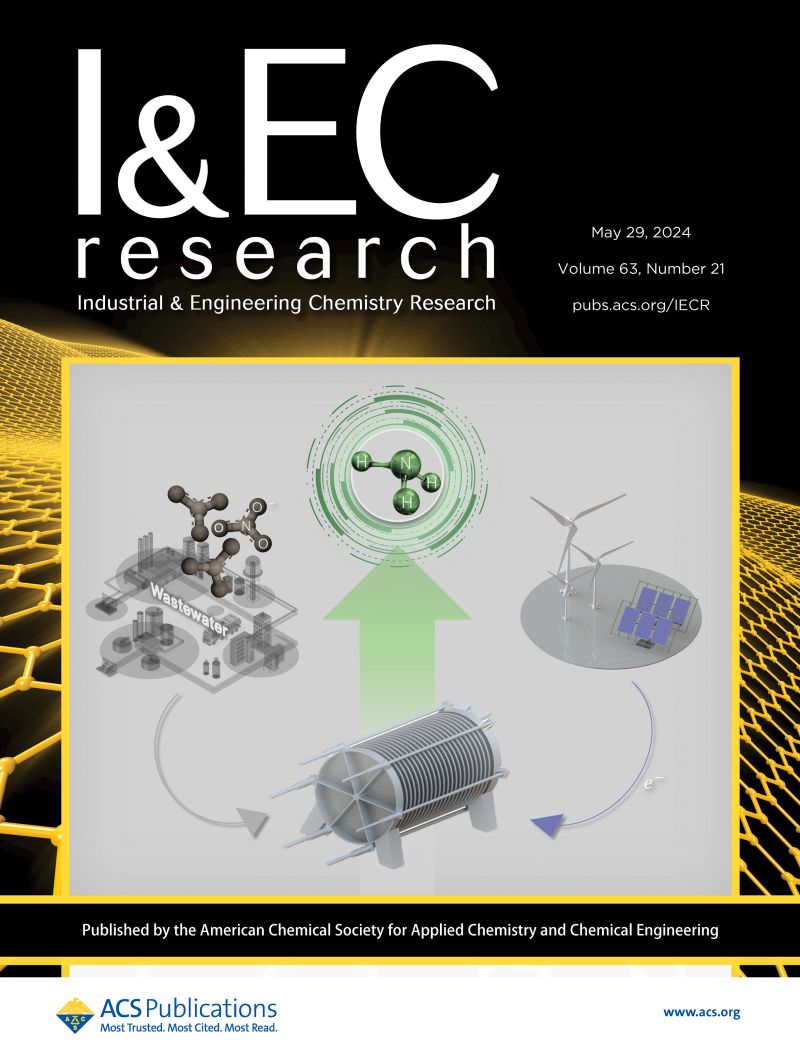
Industrial & Engineering Chemistry Research
Industrial & Engineering Chemistry Research 工程技术-工程:化工
CiteScore
7.40
自引率
7.10%
发文量
1467
审稿时长
2.8 months
期刊介绍: ndustrial & Engineering Chemistry, with variations in title and format, has been published since 1909 by the American Chemical Society. Industrial & Engineering Chemistry Research is a weekly publication that reports industrial and academic research in the broad fields of applied chemistry and chemical engineering with special focus on fundamentals, processes, and products.

×
引用
GB/T 7714-2015
复制
MLA
复制
APA
复制
导出至
BibTeX EndNote RefMan NoteFirst NoteExpress
×
提示
您的信息不完整,为了账户安全,请先补充。
现在去补充
×
提示
您因"违规操作"
具体请查看互助需知
我知道了
×
提示
确定
请完成安全验证×
copy
已复制链接
快去分享给好友吧!
我知道了
右上角分享
点击右上角分享
0
联系我们:info@booksci.cn Book学术提供免费学术资源搜索服务,方便国内外学者检索中英文文献。致力于提供最便捷和优质的服务体验。 Copyright © 2023 布克学术 All rights reserved.
京ICP备2023020795号-1
ghs 京公网安备 11010802042870号
Book学术文献互助
Book学术文献互助群
群 号:604180095
Book学术官方微信
小红书


