Barbara Mintzes, Joel Lexchin, Quinn Grundy, Alice Fabbri, Geoffrey Kp Spurling, Riaz Qureshi, Lisa Bero
{"title":"Pharmaceutical industry information and promotional strategies aimed at prescribers.","authors":"Barbara Mintzes, Joel Lexchin, Quinn Grundy, Alice Fabbri, Geoffrey Kp Spurling, Riaz Qureshi, Lisa Bero","doi":"10.1002/14651858.CD013423.pub3","DOIUrl":null,"url":null,"abstract":"<p><strong>Rationale: </strong>The influence of pharmaceutical company promotion on prescribing and its impacts have been subject to extensive debate. This review helps to clarify whether and how interactions between clinicians and the pharmaceutical industry influence prescribing.</p><p><strong>Objectives: </strong>Main objective: to assess the effects, using evidence from randomised trials, and the associations, using evidence from non-randomised studies, of pharmaceutical industry promotional interactions with prescribers (including provision of information, payments, gifts, and samples), compared to no interactions, on the appropriateness, quantity, and cost of prescribed medicines, and on formulary requests.</p><p><strong>Search methods: </strong>We searched CENTRAL, MEDLINE, Embase, one other database, and two trial registers to January 2025.</p><p><strong>Eligibility criteria: </strong>We included randomised trials, non-randomised trials, controlled before-after studies with at least two intervention sites and at least two control sites, interrupted time series studies with a clearly defined intervention time point and at least three data points both before and after the intervention time, and cross-sectional studies comparing exposure levels and outcomes at a single time point. We also included controlled cohort studies comparing outcomes over time, and case-control studies assessing the effects of past exposures. We included cross-sectional, cohort, and case-control studies if the data covered an entire population or a random sample of a defined population, with a response rate of at least 60%.</p><p><strong>Outcomes: </strong>The critical outcomes were prescribing appropriateness, quantity, and cost, and formulary requests by clinicians exposed to interactions with pharmaceutical companies compared to clinicians not exposed or with less exposure.</p><p><strong>Risk of bias: </strong>We used Cochrane's RoB 2 tool to assess bias in randomised controlled trials (RCTs), and the Joanna Briggs Institute tool for cross-sectional studies to assess bias in cross-sectional, cohort, and nested case-control studies. We used study design-specific criteria developed by the Cochrane Effective Practice and Organisation of Care (EPOC) Group to assess bias in controlled before-after studies and interrupted time series studies.</p><p><strong>Synthesis methods: </strong>We grouped studies into four groups based on exposure type - advertising and education; gifts and payments; free samples; and conflict-of-interest policies - to analyse outcomes. We presented the data in harvest plots and narratively summarised the results. Due to heterogeneity, we were unable to conduct any meta-analyses. We used GRADE to assess the certainty of evidence.</p><p><strong>Included studies: </strong>We included 93 studies. Most studies (82/93, 88%) were conducted in the USA; 11 were conducted in the European Union or the UK. Sixty of 93 studies (65%) were cross-sectional, along with 23 controlled cohort studies, four controlled before-after studies, four interrupted time series, one nested case-control, and one RCT. Sixty-two studies examined payments, gifts, or other transfers of value; 16 examined advertising or educational activities (primarily delivered through pharmaceutical industry sales representative visits); seven examined free drug samples; and eight examined conflict-of-interest policies, such as restrictions on sales representative visits or the acceptance of gifts and samples.</p><p><strong>Synthesis of results: </strong>Exposure to pharmaceutical company advertising or education may be associated with decreased prescribing appropriateness (6 studies; 1335 prescribers) and increased prescribing costs (2 studies; 986 prescribers), and is probably associated with an increased quantity of prescriptions (7 studies; 151,399 prescribers), compared to no or less exposure. Prescribers' receipt of gifts and payments from pharmaceutical companies is associated with decreased prescribing appropriateness (10 studies; 2,941,948 prescribers), an increased quantity of prescriptions (39 studies; 3,858,871 prescribers), and is probably associated with increased prescribing costs (25 studies; 2,505,292 prescribers), compared to receiving no or fewer gifts and payments. Evidence on associations between receipt of free samples and prescribing appropriateness (1 study; 10 practices), quantity (4 studies; 150,050 prescribers), and costs (4 studies; 2508 prescribers) is very uncertain. Institutional conflict-of-interest policies are probably associated with improved prescribing appropriateness (2 studies; 3065 prescribers), may be associated with a decreased quantity of prescriptions (6 studies; 110,470 prescribers), and have uncertain effects on costs (2 studies; 33,975 participants), compared to no or more lenient conflict-of-interest policies. There was little evidence examining formulary requests (1 study; 105 prescribers). Prescribers' exposure to pharmaceutical industry advertising and education and their receipt of gifts and payments may be associated with increased formulary requests, but the evidence is very uncertain. We rated two outcomes from the one included RCT as having an overall high risk of bias. The principal risk-of-bias concerns for the cross-sectional and cohort studies related to the identification of confounding factors. For controlled before-after studies, the main concerns were baseline comparability and incomplete outcome data. We judged most domains for interrupted time series studies to be at low risk of bias. Overall, we downgraded the certainty of the evidence for risk of bias and imprecision, and upgraded it for dose-response effects and large effect sizes.</p><p><strong>Authors' conclusions: </strong>Overall, we found that promotional interactions clinicians have with pharmaceutical companies are probably associated with harmful outcomes: less appropriate prescribing, greater quantity of medicines prescribed or provided, higher prescribing costs, and a greater likelihood of recommending hospital formulary additions of the company's drugs. Conversely, in most analyses of organisational conflict-of-interest policies restricting the pharmaceutical industry's promotional interactions with clinicians, restrictions are associated with beneficial outcomes on prescribing appropriateness, quantity, and costs. These findings have implications for cost and quality of care.</p><p><strong>Funding: </strong>There was no funding for this review.</p><p><strong>Registration: </strong>The protocol is available at the following link: https://www.cochranelibrary.com/cdsr/doi/10.1002/14651858.CD013423.pub2/full.</p>","PeriodicalId":10473,"journal":{"name":"Cochrane Database of Systematic Reviews","volume":"10 ","pages":"CD013423"},"PeriodicalIF":11.1000,"publicationDate":"2026-10-09","publicationTypes":"Journal Article","fieldsOfStudy":null,"isOpenAccess":false,"openAccessPdf":"https://www.ncbi.nlm.nih.gov/pmc/articles/PMC13649351/pdf/","citationCount":"0","resultStr":null,"platform":"Semanticscholar","paperid":null,"PeriodicalName":"Cochrane Database of Systematic Reviews","FirstCategoryId":"3","ListUrlMain":"https://doi.org/10.1002/14651858.CD013423.pub3","RegionNum":2,"RegionCategory":"医学","ArticlePicture":[],"TitleCN":null,"AbstractTextCN":null,"PMCID":null,"EPubDate":"","PubModel":"","JCR":"Q1","JCRName":"MEDICINE, GENERAL & INTERNAL","Score":null,"Total":0}
引用次数: 0
Abstract
Rationale: The influence of pharmaceutical company promotion on prescribing and its impacts have been subject to extensive debate. This review helps to clarify whether and how interactions between clinicians and the pharmaceutical industry influence prescribing.
Objectives: Main objective: to assess the effects, using evidence from randomised trials, and the associations, using evidence from non-randomised studies, of pharmaceutical industry promotional interactions with prescribers (including provision of information, payments, gifts, and samples), compared to no interactions, on the appropriateness, quantity, and cost of prescribed medicines, and on formulary requests.
Search methods: We searched CENTRAL, MEDLINE, Embase, one other database, and two trial registers to January 2025.
Eligibility criteria: We included randomised trials, non-randomised trials, controlled before-after studies with at least two intervention sites and at least two control sites, interrupted time series studies with a clearly defined intervention time point and at least three data points both before and after the intervention time, and cross-sectional studies comparing exposure levels and outcomes at a single time point. We also included controlled cohort studies comparing outcomes over time, and case-control studies assessing the effects of past exposures. We included cross-sectional, cohort, and case-control studies if the data covered an entire population or a random sample of a defined population, with a response rate of at least 60%.
Outcomes: The critical outcomes were prescribing appropriateness, quantity, and cost, and formulary requests by clinicians exposed to interactions with pharmaceutical companies compared to clinicians not exposed or with less exposure.
Risk of bias: We used Cochrane's RoB 2 tool to assess bias in randomised controlled trials (RCTs), and the Joanna Briggs Institute tool for cross-sectional studies to assess bias in cross-sectional, cohort, and nested case-control studies. We used study design-specific criteria developed by the Cochrane Effective Practice and Organisation of Care (EPOC) Group to assess bias in controlled before-after studies and interrupted time series studies.
Synthesis methods: We grouped studies into four groups based on exposure type - advertising and education; gifts and payments; free samples; and conflict-of-interest policies - to analyse outcomes. We presented the data in harvest plots and narratively summarised the results. Due to heterogeneity, we were unable to conduct any meta-analyses. We used GRADE to assess the certainty of evidence.
Included studies: We included 93 studies. Most studies (82/93, 88%) were conducted in the USA; 11 were conducted in the European Union or the UK. Sixty of 93 studies (65%) were cross-sectional, along with 23 controlled cohort studies, four controlled before-after studies, four interrupted time series, one nested case-control, and one RCT. Sixty-two studies examined payments, gifts, or other transfers of value; 16 examined advertising or educational activities (primarily delivered through pharmaceutical industry sales representative visits); seven examined free drug samples; and eight examined conflict-of-interest policies, such as restrictions on sales representative visits or the acceptance of gifts and samples.
Synthesis of results: Exposure to pharmaceutical company advertising or education may be associated with decreased prescribing appropriateness (6 studies; 1335 prescribers) and increased prescribing costs (2 studies; 986 prescribers), and is probably associated with an increased quantity of prescriptions (7 studies; 151,399 prescribers), compared to no or less exposure. Prescribers' receipt of gifts and payments from pharmaceutical companies is associated with decreased prescribing appropriateness (10 studies; 2,941,948 prescribers), an increased quantity of prescriptions (39 studies; 3,858,871 prescribers), and is probably associated with increased prescribing costs (25 studies; 2,505,292 prescribers), compared to receiving no or fewer gifts and payments. Evidence on associations between receipt of free samples and prescribing appropriateness (1 study; 10 practices), quantity (4 studies; 150,050 prescribers), and costs (4 studies; 2508 prescribers) is very uncertain. Institutional conflict-of-interest policies are probably associated with improved prescribing appropriateness (2 studies; 3065 prescribers), may be associated with a decreased quantity of prescriptions (6 studies; 110,470 prescribers), and have uncertain effects on costs (2 studies; 33,975 participants), compared to no or more lenient conflict-of-interest policies. There was little evidence examining formulary requests (1 study; 105 prescribers). Prescribers' exposure to pharmaceutical industry advertising and education and their receipt of gifts and payments may be associated with increased formulary requests, but the evidence is very uncertain. We rated two outcomes from the one included RCT as having an overall high risk of bias. The principal risk-of-bias concerns for the cross-sectional and cohort studies related to the identification of confounding factors. For controlled before-after studies, the main concerns were baseline comparability and incomplete outcome data. We judged most domains for interrupted time series studies to be at low risk of bias. Overall, we downgraded the certainty of the evidence for risk of bias and imprecision, and upgraded it for dose-response effects and large effect sizes.
Authors' conclusions: Overall, we found that promotional interactions clinicians have with pharmaceutical companies are probably associated with harmful outcomes: less appropriate prescribing, greater quantity of medicines prescribed or provided, higher prescribing costs, and a greater likelihood of recommending hospital formulary additions of the company's drugs. Conversely, in most analyses of organisational conflict-of-interest policies restricting the pharmaceutical industry's promotional interactions with clinicians, restrictions are associated with beneficial outcomes on prescribing appropriateness, quantity, and costs. These findings have implications for cost and quality of care.
Funding: There was no funding for this review.
Registration: The protocol is available at the following link: https://www.cochranelibrary.com/cdsr/doi/10.1002/14651858.CD013423.pub2/full.
期刊介绍:
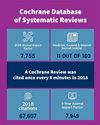
The Cochrane Database of Systematic Reviews (CDSR) stands as the premier database for systematic reviews in healthcare. It comprises Cochrane Reviews, along with protocols for these reviews, editorials, and supplements. Owned and operated by Cochrane, a worldwide independent network of healthcare stakeholders, the CDSR (ISSN 1469-493X) encompasses a broad spectrum of health-related topics, including health services.

 求助内容:
 应助结果提醒方式:


 京公网安备 11010802042870号


