Louise Rose, David R Williamson, Iain J McCullagh, Becky Skidmore, Dean A Fergusson, Marc M Perreault, Lisa D Burry
{"title":"Daily sedation interruption versus no daily sedation interruption for critically ill adults and children requiring invasive mechanical ventilation.","authors":"Louise Rose, David R Williamson, Iain J McCullagh, Becky Skidmore, Dean A Fergusson, Marc M Perreault, Lisa D Burry","doi":"10.1002/14651858.CD009176.pub3","DOIUrl":null,"url":null,"abstract":"<p><strong>Rationale: </strong>Daily sedation interruption (DSI) aims to limit drug accumulation and promote a more awake state, thereby reducing the duration of mechanical ventilation and its associated complications. This is an update of a Cochrane review first published in 2014.</p><p><strong>Objectives: </strong>To assess the effects of DSI versus sedation management without DSI on the duration of invasive mechanical ventilation, mortality, intensive care unit (ICU) length of stay, adverse events related to under- or oversedation (including accidental removal of endotracheal tube and tracheostomy), total doses of sedative and analgesic drug administered, and health-related quality of life, for critically ill people requiring intravenous sedation.</p><p><strong>Search methods: </strong>We used CENTRAL, MEDLINE All, Embase Classic+Embase, Cumulative Index to Nursing and Allied Health Literature (CINAHL), Web of Science Core Collection, and two trial registers, together with reference checking, citation searching, and contact with study authors to identify the studies included in the review. The latest search date was 8 October 2025.</p><p><strong>Eligibility criteria: </strong>We included randomised controlled trials (RCTs) comparing DSI with sedation strategies that did not include DSI (protocolised sedation, non-protocolised usual care (clinician discretion), or analgesia first/no sedation) in mechanically ventilated, critically ill people (adults and infants or children under 18 years of age).</p><p><strong>Outcomes: </strong>Our critical outcomes were duration of mechanical ventilation (from randomisation to successful extubation or death), mortality, and ICU length of stay (LOS). Our important outcomes included hospital LOS, adverse events related to under- or oversedation (e.g. accidental removal of endotracheal tube or other lines or catheters, tracheostomy, new onset of delirium occurrence, use of physical restraint, and cardiac events), total drug doses, and health-related quality of life (HRQoL).</p><p><strong>Risk of bias: </strong>We used the original Cochrane tool, RoB 1, to assess bias in the RCTs.</p><p><strong>Synthesis methods: </strong>We synthesised results for each outcome using meta-analysis (random-effects modelling). We conducted subgroup and sensitivity analyses according to pre-defined criteria. We used GRADE to assess the certainty of evidence.</p><p><strong>Included studies: </strong>This update included 23 trials (one cluster-randomised trial; 18 RCTs in adults, five in children) with 5987 (4910 adjusted) participants (3238 adults, 2750 (1673 adjusted) children). Nine trials used a sedation protocol comparator, nine used 'usual sedation practices' with sedative and analgesic drugs at the clinical team's discretion, and five used analgesia-first or no-sedation comparators.</p><p><strong>Synthesis of results: </strong>Daily sedation interruption may reduce the duration of mechanical ventilation compared with sedation strategies that do not include DSI (mean difference (MD) -0.15 log days, 95% confidence interval (CI) -0.29 to -0.01; I<sup>2</sup> = 88%; 18 studies, 3815 participants; low-certainty evidence). These data translate to a relative reduction of 14% (95% CI 1% to 25%). Daily sedation interruption probably reduces mortality compared with sedation strategies that do not include DSI (relative risk (RR) 0.88, 95% CI 0.77 to 0.99; I<sup>2</sup> = 0%; 18 studies, 4057 participants; 725 events; moderate-certainty evidence). Daily sedation interruption probably reduces ICU LOS (MD -0.12 log days, 95% CI -0.22 to -0.02; I<sup>2</sup> = 72%; 18 studies, 4477 participants; moderate-certainty evidence). These data translate to a relative reduction of 11% (95% CI 2% to 20%). Daily sedation interruption probably reduces hospital LOS (MD -0.12 log days, 95% CI -0.22 to -0.02; I<sup>2</sup> = 39%; 13 studies, 3589 participants; moderate-certainty evidence). These data translate to a relative reduction of 11% (95% CI 2% to 20%). For adverse events related to under- or oversedation, DSI may result in little to no difference in the rate of self/accidental removal of the endotracheal tube (RR 0.88, 95% CI 0.66 to 1.19; P = 0.41, I<sup>2</sup> = 0%; 16 studies, 4342 participants; 171 events; low-certainty evidence) or self/accidental removal of lines or catheters (RR 1.44, 95% CI 0.80 to 2.57; P = 0.22, I<sup>2</sup> = 0%; 7 studies, 1536 participants; 42 events; low-certainty evidence). DSI probably reduces rates of tracheostomy (RR 0.68, 95% CI 0.55 to 0.85; P < 0.001, I<sup>2</sup> = 0%; 8 studies, 2503 participants; 263 events; moderate-certainty evidence). It may result in little to no difference in the rate of delirium occurrence, but the evidence is very uncertain (RR 0.92, 95% CI 0.74 to 1.15; P = 0.48, I<sup>2</sup> = 59%; 4 studies, 1009 participants; 520 events; very low-certainty evidence). Compared with sedation management without DSI, DSI may result in little to no difference in the total dose of benzodiazepines, fentanyl, or propofol administered over the ICU admission. However, the evidence is very uncertain. Daily sedation interruption probably increases the total dose of morphine administered over the ICU admission (MD 0.07 log mg, 95% CI 0 to 0.13; P = 0.05, I<sup>2</sup> = 0%; 4 studies, 404 participants; moderate-certainty evidence). These data translate to a relative increase of 7% (95% CI 0% to 14%). DSI may result in little to no difference in HRQoL compared with sedation management without DSI, with evidence in the mental health domain being very uncertain. Evidence certainty is limited by inconsistency (statistical heterogeneity) and imprecision due to wide CIs, including CIs that encompass both benefit and harm for some outcomes.</p><p><strong>Authors' conclusions: </strong>Based on low- and moderate-certainty evidence from 23 trials including nearly 6000 critically ill people, we found that DSI may reduce the duration of mechanical ventilation and probably reduces mortality, intensive care LOS, and hospital LOS compared with other sedation methods. Daily sedation interruption may have little to no effect on the adverse outcomes of accidental removal of the endotracheal tube or other lines or catheters, but probably reduces the need for tracheostomy. The evidence on sedation dosing is very uncertain; however, DSI probably increases opioid dosing. Given the evidence on the effect on sedation dosing is very uncertain, future trials should include data on total sedative and analgesic doses as well as delirium and health-related quality of life, as these remain under-evaluated.</p><p><strong>Funding: </strong>This review received no funding.</p><p><strong>Registration: </strong>Registration (CD009176) and previous version of the review: Cochrane Database of Systematic Reviews via DOI: 10.1002/14651858.CD009176.pub2. Protocol available via DOI 10.1002/14651858.CD009176.pub1.</p>","PeriodicalId":10473,"journal":{"name":"Cochrane Database of Systematic Reviews","volume":"10 ","pages":"CD009176"},"PeriodicalIF":11.1000,"publicationDate":"2026-10-07","publicationTypes":"Journal Article","fieldsOfStudy":null,"isOpenAccess":false,"openAccessPdf":"https://www.ncbi.nlm.nih.gov/pmc/articles/PMC13643891/pdf/","citationCount":"0","resultStr":null,"platform":"Semanticscholar","paperid":null,"PeriodicalName":"Cochrane Database of Systematic Reviews","FirstCategoryId":"3","ListUrlMain":"https://doi.org/10.1002/14651858.CD009176.pub3","RegionNum":2,"RegionCategory":"医学","ArticlePicture":[],"TitleCN":null,"AbstractTextCN":null,"PMCID":null,"EPubDate":"","PubModel":"","JCR":"Q1","JCRName":"MEDICINE, GENERAL & INTERNAL","Score":null,"Total":0}
引用次数: 0
Abstract
Rationale: Daily sedation interruption (DSI) aims to limit drug accumulation and promote a more awake state, thereby reducing the duration of mechanical ventilation and its associated complications. This is an update of a Cochrane review first published in 2014.
Objectives: To assess the effects of DSI versus sedation management without DSI on the duration of invasive mechanical ventilation, mortality, intensive care unit (ICU) length of stay, adverse events related to under- or oversedation (including accidental removal of endotracheal tube and tracheostomy), total doses of sedative and analgesic drug administered, and health-related quality of life, for critically ill people requiring intravenous sedation.
Search methods: We used CENTRAL, MEDLINE All, Embase Classic+Embase, Cumulative Index to Nursing and Allied Health Literature (CINAHL), Web of Science Core Collection, and two trial registers, together with reference checking, citation searching, and contact with study authors to identify the studies included in the review. The latest search date was 8 October 2025.
Eligibility criteria: We included randomised controlled trials (RCTs) comparing DSI with sedation strategies that did not include DSI (protocolised sedation, non-protocolised usual care (clinician discretion), or analgesia first/no sedation) in mechanically ventilated, critically ill people (adults and infants or children under 18 years of age).
Outcomes: Our critical outcomes were duration of mechanical ventilation (from randomisation to successful extubation or death), mortality, and ICU length of stay (LOS). Our important outcomes included hospital LOS, adverse events related to under- or oversedation (e.g. accidental removal of endotracheal tube or other lines or catheters, tracheostomy, new onset of delirium occurrence, use of physical restraint, and cardiac events), total drug doses, and health-related quality of life (HRQoL).
Risk of bias: We used the original Cochrane tool, RoB 1, to assess bias in the RCTs.
Synthesis methods: We synthesised results for each outcome using meta-analysis (random-effects modelling). We conducted subgroup and sensitivity analyses according to pre-defined criteria. We used GRADE to assess the certainty of evidence.
Included studies: This update included 23 trials (one cluster-randomised trial; 18 RCTs in adults, five in children) with 5987 (4910 adjusted) participants (3238 adults, 2750 (1673 adjusted) children). Nine trials used a sedation protocol comparator, nine used 'usual sedation practices' with sedative and analgesic drugs at the clinical team's discretion, and five used analgesia-first or no-sedation comparators.
Synthesis of results: Daily sedation interruption may reduce the duration of mechanical ventilation compared with sedation strategies that do not include DSI (mean difference (MD) -0.15 log days, 95% confidence interval (CI) -0.29 to -0.01; I2 = 88%; 18 studies, 3815 participants; low-certainty evidence). These data translate to a relative reduction of 14% (95% CI 1% to 25%). Daily sedation interruption probably reduces mortality compared with sedation strategies that do not include DSI (relative risk (RR) 0.88, 95% CI 0.77 to 0.99; I2 = 0%; 18 studies, 4057 participants; 725 events; moderate-certainty evidence). Daily sedation interruption probably reduces ICU LOS (MD -0.12 log days, 95% CI -0.22 to -0.02; I2 = 72%; 18 studies, 4477 participants; moderate-certainty evidence). These data translate to a relative reduction of 11% (95% CI 2% to 20%). Daily sedation interruption probably reduces hospital LOS (MD -0.12 log days, 95% CI -0.22 to -0.02; I2 = 39%; 13 studies, 3589 participants; moderate-certainty evidence). These data translate to a relative reduction of 11% (95% CI 2% to 20%). For adverse events related to under- or oversedation, DSI may result in little to no difference in the rate of self/accidental removal of the endotracheal tube (RR 0.88, 95% CI 0.66 to 1.19; P = 0.41, I2 = 0%; 16 studies, 4342 participants; 171 events; low-certainty evidence) or self/accidental removal of lines or catheters (RR 1.44, 95% CI 0.80 to 2.57; P = 0.22, I2 = 0%; 7 studies, 1536 participants; 42 events; low-certainty evidence). DSI probably reduces rates of tracheostomy (RR 0.68, 95% CI 0.55 to 0.85; P < 0.001, I2 = 0%; 8 studies, 2503 participants; 263 events; moderate-certainty evidence). It may result in little to no difference in the rate of delirium occurrence, but the evidence is very uncertain (RR 0.92, 95% CI 0.74 to 1.15; P = 0.48, I2 = 59%; 4 studies, 1009 participants; 520 events; very low-certainty evidence). Compared with sedation management without DSI, DSI may result in little to no difference in the total dose of benzodiazepines, fentanyl, or propofol administered over the ICU admission. However, the evidence is very uncertain. Daily sedation interruption probably increases the total dose of morphine administered over the ICU admission (MD 0.07 log mg, 95% CI 0 to 0.13; P = 0.05, I2 = 0%; 4 studies, 404 participants; moderate-certainty evidence). These data translate to a relative increase of 7% (95% CI 0% to 14%). DSI may result in little to no difference in HRQoL compared with sedation management without DSI, with evidence in the mental health domain being very uncertain. Evidence certainty is limited by inconsistency (statistical heterogeneity) and imprecision due to wide CIs, including CIs that encompass both benefit and harm for some outcomes.
Authors' conclusions: Based on low- and moderate-certainty evidence from 23 trials including nearly 6000 critically ill people, we found that DSI may reduce the duration of mechanical ventilation and probably reduces mortality, intensive care LOS, and hospital LOS compared with other sedation methods. Daily sedation interruption may have little to no effect on the adverse outcomes of accidental removal of the endotracheal tube or other lines or catheters, but probably reduces the need for tracheostomy. The evidence on sedation dosing is very uncertain; however, DSI probably increases opioid dosing. Given the evidence on the effect on sedation dosing is very uncertain, future trials should include data on total sedative and analgesic doses as well as delirium and health-related quality of life, as these remain under-evaluated.
Funding: This review received no funding.
Registration: Registration (CD009176) and previous version of the review: Cochrane Database of Systematic Reviews via DOI: 10.1002/14651858.CD009176.pub2. Protocol available via DOI 10.1002/14651858.CD009176.pub1.
期刊介绍:
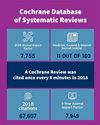
The Cochrane Database of Systematic Reviews (CDSR) stands as the premier database for systematic reviews in healthcare. It comprises Cochrane Reviews, along with protocols for these reviews, editorials, and supplements. Owned and operated by Cochrane, a worldwide independent network of healthcare stakeholders, the CDSR (ISSN 1469-493X) encompasses a broad spectrum of health-related topics, including health services.

 求助内容:
 应助结果提醒方式:


 京公网安备 11010802042870号


