Sharmila Queenthy Sabarimuthu, S. Shervin Prince, Munusamy Thirumavalavan, P. A. Vivekanand, Mohanya Kumaravel
{"title":"An In Silico Study of Phytochemicals of Cissus quadrangularis as Resources for Docking With Main Protease of SARS COV-2 and Comparative Analysis","authors":"Sharmila Queenthy Sabarimuthu, S. Shervin Prince, Munusamy Thirumavalavan, P. A. Vivekanand, Mohanya Kumaravel","doi":"10.1002/slct.74758","DOIUrl":null,"url":null,"abstract":"<div>\n \n <p>Investigating structurally varied ethnopharmacological scaffolds is still essential for finding long-lasting inhibitors against SARS-CoV-2, despite a great deal of research on synthetic antivirals. <i>Cissus quadrangularis</i> is a well-known medicinal succulent that is highly prized for its rich therapeutic profile of secondary metabolites. However, its unique multi-constituent strategy against the essential viral replication enzyme, the main protease (M<sup>pro</sup>), is still unknown. By performing a comparative structural screening of phytoconstituents from <i>C. quadrangularis</i> against the catalytically active dimeric form of SARS-CoV-2 M<sup>pro</sup> via docking and simulation analyses, this study filled this knowledge gap. The M<sup>pro</sup> dimer of COVID-19 was significantly inhibited by the top ranked phytochemicals of <i>C. quadrangularis</i> viz. luteolin (−7.7 Kcal/mol), quercetin (−7.3 Kcal/mol), kaempferol (−7.2 Kcal/mol), adrenosterone (−7.8 Kcal/mol), resveratrol (−7.0 Kcal/mol), piceatannol (−6.9 Kcal/mol), etc. which had the binding energies indicating their potential for additional in vitro research. These results elucidated the structural and thermodynamic framework behind <i>C. quadrangularis's</i> predicted target interaction, offering a clear computational rationale for prioritizing its specific flavonoid and stilbene components as candidates lead for mandatory future in vitro validation. The molecular docking of M<sup>pro</sup> dimer of COVID-19 was visualized using PyMOL and Ligplot.</p>\n </div>","PeriodicalId":146,"journal":{"name":"ChemistrySelect","volume":"11 38","pages":""},"PeriodicalIF":2.3000,"publicationDate":"2026-10-07","publicationTypes":"Journal Article","fieldsOfStudy":null,"isOpenAccess":false,"openAccessPdf":"","citationCount":"0","resultStr":null,"platform":"Semanticscholar","paperid":null,"PeriodicalName":"ChemistrySelect","FirstCategoryId":"92","ListUrlMain":"https://onlinelibrary.wiley.com/doi/10.1002/slct.74758","RegionNum":4,"RegionCategory":"化学","ArticlePicture":[],"TitleCN":null,"AbstractTextCN":null,"PMCID":null,"EPubDate":"","PubModel":"","JCR":"Q3","JCRName":"CHEMISTRY, MULTIDISCIPLINARY","Score":null,"Total":0}
引用次数: 0
Abstract
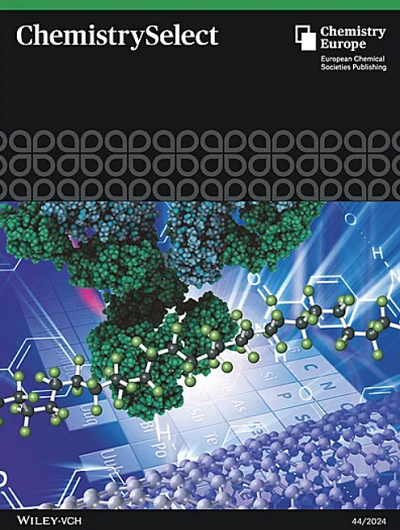
Investigating structurally varied ethnopharmacological scaffolds is still essential for finding long-lasting inhibitors against SARS-CoV-2, despite a great deal of research on synthetic antivirals. Cissus quadrangularis is a well-known medicinal succulent that is highly prized for its rich therapeutic profile of secondary metabolites. However, its unique multi-constituent strategy against the essential viral replication enzyme, the main protease (Mpro), is still unknown. By performing a comparative structural screening of phytoconstituents from C. quadrangularis against the catalytically active dimeric form of SARS-CoV-2 Mpro via docking and simulation analyses, this study filled this knowledge gap. The Mpro dimer of COVID-19 was significantly inhibited by the top ranked phytochemicals of C. quadrangularis viz. luteolin (−7.7 Kcal/mol), quercetin (−7.3 Kcal/mol), kaempferol (−7.2 Kcal/mol), adrenosterone (−7.8 Kcal/mol), resveratrol (−7.0 Kcal/mol), piceatannol (−6.9 Kcal/mol), etc. which had the binding energies indicating their potential for additional in vitro research. These results elucidated the structural and thermodynamic framework behind C. quadrangularis's predicted target interaction, offering a clear computational rationale for prioritizing its specific flavonoid and stilbene components as candidates lead for mandatory future in vitro validation. The molecular docking of Mpro dimer of COVID-19 was visualized using PyMOL and Ligplot.
期刊介绍:
ChemistrySelect is the latest journal from ChemPubSoc Europe and Wiley-VCH. It offers researchers a quality society-owned journal in which to publish their work in all areas of chemistry. Manuscripts are evaluated by active researchers to ensure they add meaningfully to the scientific literature, and those accepted are processed quickly to ensure rapid online publication.

 求助内容:
 应助结果提醒方式:


 京公网安备 11010802042870号


