Denis da Silva, Jonelle Gates, Madison Hattaway, Louisa Harding, Sandra O’Neill, Irvin Schultz
{"title":"Analysis of Multiple Tire Rubber-Derived Chemicals in Fish Bile and Plasma: Analytical Method and Field Assessment in Puget Sound, WA, USA","authors":"Denis da Silva, Jonelle Gates, Madison Hattaway, Louisa Harding, Sandra O’Neill, Irvin Schultz","doi":"10.1021/acs.est.6c07136","DOIUrl":null,"url":null,"abstract":"<p>Tire rubber-derived chemicals (TRCs) are known to be\r\nhighly toxic\r\nto fish, but understanding of their environmental levels and fate\r\nis still limited. This study presents a new method for the analysis\r\nof 18 TRCs, including phenylenediamines (TRC-PDs), their quinone derivatives\r\n(TRC-Qs), and rubber vulcanizing and curing-related chemicals (TRC-VCRs)\r\nin fish bile and plasma samples. We applied this method in bile and\r\nplasma samples from English sole collected in urban, near-urban, and\r\nnonurban sites in Puget Sound, WA, USA. TRCs were detected in 100%\r\nof bile and 96% of plasma samples from English sole collected from\r\nall nine sites in Puget Sound. Mean TRC levels in bile samples per\r\nsite ranged between 0.8 and 18 ng/mL, while plasma levels ranged between\r\n0.22 and 0.63 ng/mL, with total summed reaching up to 31 ng/mL in\r\nbile and 1.3 ng/mL in plasma. TRC-PDs were the most abundant group\r\nof TRC in both bile and plasma. Higher levels of TRCs in bile suggests\r\nthis matrix to be more valuable for environmental monitoring, providing\r\nmore sensitive detection of TRC during low exposures. To the best\r\nof our knowledge, this is the first data set reporting environmental\r\nlevels of 18 TRCs in the bile and plasma of field-caught fish.</p>","PeriodicalId":36,"journal":{"name":"环境科学与技术","volume":"60 41","pages":"29596–29607"},"PeriodicalIF":12.2000,"publicationDate":"2026-10-20","publicationTypes":"Journal Article","fieldsOfStudy":null,"isOpenAccess":false,"openAccessPdf":"","citationCount":"0","resultStr":null,"platform":"Semanticscholar","paperid":null,"PeriodicalName":"环境科学与技术","FirstCategoryId":"1","ListUrlMain":"https://pubs.acs.org/doi/10.1021/acs.est.6c07136","RegionNum":1,"RegionCategory":"环境科学与生态学","ArticlePicture":[],"TitleCN":null,"AbstractTextCN":null,"PMCID":null,"EPubDate":"2026/10/6 0:00:00","PubModel":"Epub","JCR":"Q1","JCRName":"ENGINEERING, ENVIRONMENTAL","Score":null,"Total":0}
引用次数: 0
Abstract
Tire rubber-derived chemicals (TRCs) are known to be
highly toxic
to fish, but understanding of their environmental levels and fate
is still limited. This study presents a new method for the analysis
of 18 TRCs, including phenylenediamines (TRC-PDs), their quinone derivatives
(TRC-Qs), and rubber vulcanizing and curing-related chemicals (TRC-VCRs)
in fish bile and plasma samples. We applied this method in bile and
plasma samples from English sole collected in urban, near-urban, and
nonurban sites in Puget Sound, WA, USA. TRCs were detected in 100%
of bile and 96% of plasma samples from English sole collected from
all nine sites in Puget Sound. Mean TRC levels in bile samples per
site ranged between 0.8 and 18 ng/mL, while plasma levels ranged between
0.22 and 0.63 ng/mL, with total summed reaching up to 31 ng/mL in
bile and 1.3 ng/mL in plasma. TRC-PDs were the most abundant group
of TRC in both bile and plasma. Higher levels of TRCs in bile suggests
this matrix to be more valuable for environmental monitoring, providing
more sensitive detection of TRC during low exposures. To the best
of our knowledge, this is the first data set reporting environmental
levels of 18 TRCs in the bile and plasma of field-caught fish.
期刊介绍:
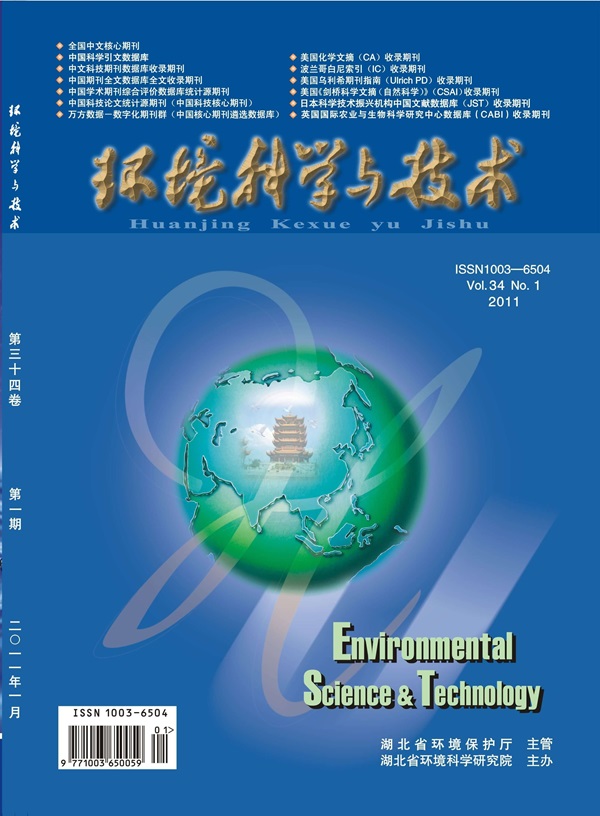
Environmental Science & Technology (ES&T) is a co-sponsored academic and technical magazine by the Hubei Provincial Environmental Protection Bureau and the Hubei Provincial Academy of Environmental Sciences.
Environmental Science & Technology (ES&T) holds the status of Chinese core journals, scientific papers source journals of China, Chinese Science Citation Database source journals, and Chinese Academic Journal Comprehensive Evaluation Database source journals. This publication focuses on the academic field of environmental protection, featuring articles related to environmental protection and technical advancements.

 求助内容:
 应助结果提醒方式:


 京公网安备 11010802042870号


