Tong Xu, Pan Xia, Jingwen Wang, Jiaqin Xiao, Jun Zhai, Liying Yang, Bingbing Wang, Qiang He, Fábio Gozzi, Zhihong Ye
{"title":"Spatiotemporal Magnetic Decoupling Directs Spin-Dependent Cascade ROS Evolution for Electro-Fenton Water Decontamination","authors":"Tong Xu, Pan Xia, Jingwen Wang, Jiaqin Xiao, Jun Zhai, Liying Yang, Bingbing Wang, Qiang He, Fábio Gozzi, Zhihong Ye","doi":"10.1021/acs.est.6c08534","DOIUrl":null,"url":null,"abstract":"<p>Heterogeneous electro-Fenton (HEF) systems hold great\r\npotential\r\nfor decentralized water purification, yet concurrently achieving high\r\ncatalytic activity, structural stability, and controlled reactive\r\noxygen species (ROS) selectivity remains challenging. Herein, we propose\r\na spatiotemporal magnetic decoupling strategy to concurrently address\r\nthese design objectives. The carbon shell spatially separated exterior\r\nFe<sup>0</sup> satellites from the FeN<sub><em>x</em></sub> core, eliminating deleterious short-range magnetic quenching and\r\naltering the local magnetic environment to modulate the internal Fe(III)\r\nspin state. The resulting low-spin Fe(III) sites suppressed electron\r\nback-donation into the H<sub>2</sub>O<sub>2</sub> σ∗\r\nantibonding orbital, favoring an additional <sup>1</sup>O<sub>2</sub> generation pathway. Spatial decoupling also enabled a gradient cascade\r\nactivation of H<sub>2</sub>O<sub>2</sub> across the Fe<sup>0</sup> and FeN<sub><em>x</em></sub> domains, synergistically boosting\r\nthe evolution of both <sup>•</sup>OH and <sup>1</sup>O<sub>2</sub>, with steady-state concentrations reaching 18.25 and 5.27\r\nμM, respectively. Consequently, the FeN<sub><em>x</em></sub>@C–Fe<sup>0</sup>-based HEF achieved complete naproxen\r\ndegradation within 60 min with significantly suppressed Fe leaching\r\n(0.85 mg L<sup>–1</sup>), outperforming all comparative systems.\r\nComprehensive characterizations and density functional theory (DFT)\r\ncalculations established a definitive relationship between topological\r\nengineering and spin-state dynamics. Furthermore, the system demonstrated\r\nproof-of-concept applicability in real hospital wastewater, highlighting\r\nthe potential of spatiotemporal spin-state engineering for regulating\r\nROS evolution in HEF systems.</p>","PeriodicalId":36,"journal":{"name":"环境科学与技术","volume":"60 41","pages":"29651–29664"},"PeriodicalIF":12.2000,"publicationDate":"2026-10-20","publicationTypes":"Journal Article","fieldsOfStudy":null,"isOpenAccess":false,"openAccessPdf":"","citationCount":"0","resultStr":null,"platform":"Semanticscholar","paperid":null,"PeriodicalName":"环境科学与技术","FirstCategoryId":"1","ListUrlMain":"https://pubs.acs.org/doi/10.1021/acs.est.6c08534","RegionNum":1,"RegionCategory":"环境科学与生态学","ArticlePicture":[],"TitleCN":null,"AbstractTextCN":null,"PMCID":null,"EPubDate":"2026/10/6 0:00:00","PubModel":"Epub","JCR":"Q1","JCRName":"ENGINEERING, ENVIRONMENTAL","Score":null,"Total":0}
引用次数: 0
Abstract
Heterogeneous electro-Fenton (HEF) systems hold great
potential
for decentralized water purification, yet concurrently achieving high
catalytic activity, structural stability, and controlled reactive
oxygen species (ROS) selectivity remains challenging. Herein, we propose
a spatiotemporal magnetic decoupling strategy to concurrently address
these design objectives. The carbon shell spatially separated exterior
Fe0 satellites from the FeNx core, eliminating deleterious short-range magnetic quenching and
altering the local magnetic environment to modulate the internal Fe(III)
spin state. The resulting low-spin Fe(III) sites suppressed electron
back-donation into the H2O2 σ∗
antibonding orbital, favoring an additional 1O2 generation pathway. Spatial decoupling also enabled a gradient cascade
activation of H2O2 across the Fe0 and FeNx domains, synergistically boosting
the evolution of both •OH and 1O2, with steady-state concentrations reaching 18.25 and 5.27
μM, respectively. Consequently, the FeNx@C–Fe0-based HEF achieved complete naproxen
degradation within 60 min with significantly suppressed Fe leaching
(0.85 mg L–1), outperforming all comparative systems.
Comprehensive characterizations and density functional theory (DFT)
calculations established a definitive relationship between topological
engineering and spin-state dynamics. Furthermore, the system demonstrated
proof-of-concept applicability in real hospital wastewater, highlighting
the potential of spatiotemporal spin-state engineering for regulating
ROS evolution in HEF systems.
期刊介绍:
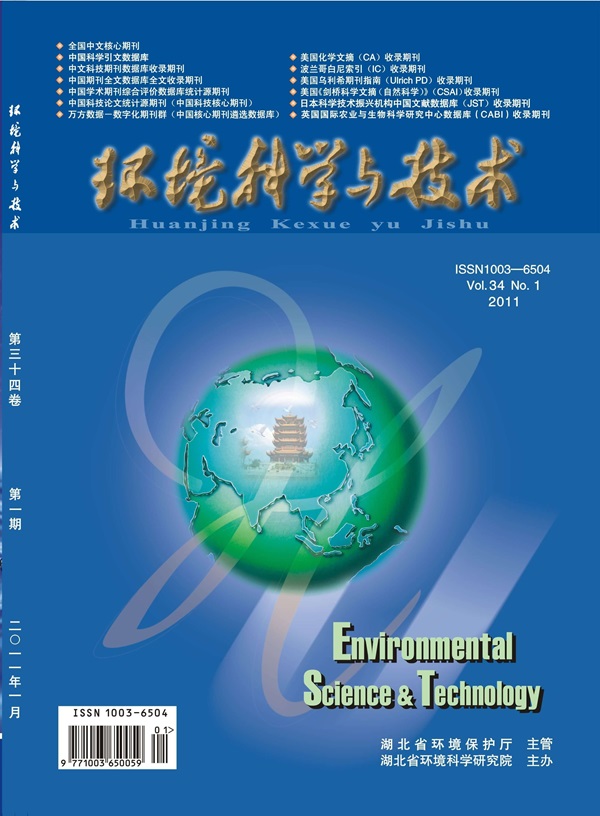
Environmental Science & Technology (ES&T) is a co-sponsored academic and technical magazine by the Hubei Provincial Environmental Protection Bureau and the Hubei Provincial Academy of Environmental Sciences.
Environmental Science & Technology (ES&T) holds the status of Chinese core journals, scientific papers source journals of China, Chinese Science Citation Database source journals, and Chinese Academic Journal Comprehensive Evaluation Database source journals. This publication focuses on the academic field of environmental protection, featuring articles related to environmental protection and technical advancements.

 求助内容:
 应助结果提醒方式:


 京公网安备 11010802042870号


