{"title":"Taming Biotic-Abiotic Interface with Atomic Defects for Efficient Hydrogen Production from Wastewater","authors":"Furong Guo, Minzi Liao, Jiahao Wang, Hao Zhang, Jundi Cheng, Chenglin Hao, Sicong Ma, Biao Zhou, Bing Zhou, Jinming Luo, Yitao Pan, Yancai Yao, Hao Li, Lizhi Zhang","doi":"10.1021/acs.est.6c04332","DOIUrl":null,"url":null,"abstract":"<p>Sluggish interfacial kinetics at the bio-abiotic junction\r\nfundamentally\r\nbottleneck the efficiency of microbial electrochemical hydrogen production\r\nfrom wastewater, as electronic barriers and rigid water networks obstruct\r\nthe seamless transport of electrons and protons. We surmount these\r\nsynergistic challenges by coupling <em>Shewanella oneidensis</em> MR-1 with vacancy-engineered pyrite (FeS<sub>2</sub>), achieving\r\nan impressive H<sub>2</sub> evolution rate of 1.92 mmol h<sup>–1</sup> with high operational stability (100 h at 60 mA cm<sup>–2</sup>). <em>In situ</em> spectroscopy and molecular dynamics (MD)\r\nsimulations suggest that under-coordinated Fe sites associated with\r\nsulfur vacancies facilitate electron transfer through coordination-assisted\r\ninteractions with microbial cytochromes, while localized charge polarization\r\ndisrupts the ordered four-coordinate water network to facilitate interfacial\r\nproton transfer. A solar-powered prototype treating authentic food\r\nwaste leachate demonstrates a 4.7% solar-to-hydrogen efficiency. Life-cycle\r\nand techno-economic analyses confirm the system’s sustainability,\r\nyielding a net profit of \\$0.70 per ton of wastewater and a minimized\r\ncarbon emissions potential of 0.33 kg CO<sub>2</sub> equivalent. This\r\nwork establishes vacancy-enabled biotic-abiotic interface engineering\r\nas a transformative strategy for optimizing interfacial microenvironments\r\nin high-performance noble-metal-free bio-electrochemical energy recovery.</p>","PeriodicalId":36,"journal":{"name":"环境科学与技术","volume":"60 41","pages":"29618–29628"},"PeriodicalIF":12.2000,"publicationDate":"2026-10-20","publicationTypes":"Journal Article","fieldsOfStudy":null,"isOpenAccess":false,"openAccessPdf":"","citationCount":"0","resultStr":null,"platform":"Semanticscholar","paperid":null,"PeriodicalName":"环境科学与技术","FirstCategoryId":"1","ListUrlMain":"https://pubs.acs.org/doi/10.1021/acs.est.6c04332","RegionNum":1,"RegionCategory":"环境科学与生态学","ArticlePicture":[],"TitleCN":null,"AbstractTextCN":null,"PMCID":null,"EPubDate":"2026/10/6 0:00:00","PubModel":"Epub","JCR":"Q1","JCRName":"ENGINEERING, ENVIRONMENTAL","Score":null,"Total":0}
引用次数: 0
Abstract
Sluggish interfacial kinetics at the bio-abiotic junction
fundamentally
bottleneck the efficiency of microbial electrochemical hydrogen production
from wastewater, as electronic barriers and rigid water networks obstruct
the seamless transport of electrons and protons. We surmount these
synergistic challenges by coupling Shewanella oneidensis MR-1 with vacancy-engineered pyrite (FeS2), achieving
an impressive H2 evolution rate of 1.92 mmol h–1 with high operational stability (100 h at 60 mA cm–2). In situ spectroscopy and molecular dynamics (MD)
simulations suggest that under-coordinated Fe sites associated with
sulfur vacancies facilitate electron transfer through coordination-assisted
interactions with microbial cytochromes, while localized charge polarization
disrupts the ordered four-coordinate water network to facilitate interfacial
proton transfer. A solar-powered prototype treating authentic food
waste leachate demonstrates a 4.7% solar-to-hydrogen efficiency. Life-cycle
and techno-economic analyses confirm the system’s sustainability,
yielding a net profit of \$0.70 per ton of wastewater and a minimized
carbon emissions potential of 0.33 kg CO2 equivalent. This
work establishes vacancy-enabled biotic-abiotic interface engineering
as a transformative strategy for optimizing interfacial microenvironments
in high-performance noble-metal-free bio-electrochemical energy recovery.
由于电子屏障和刚性的水网络阻碍了电子和质子的无缝传输,生物-非生物连接处缓慢的界面动力学从根本上制约了微生物电化学废水制氢的效率。我们通过将希瓦氏菌MR-1与空位工程黄铁矿(FeS2)偶联,克服了这些协同挑战,实现了令人惊叹的1.92 mmol h -1的氢气析出速率和高操作稳定性(60 mA cm-2下100小时)。原位光谱和分子动力学(MD)模拟表明,与硫空位相关的低配位铁位点通过与微生物细胞色素的配位辅助相互作用促进电子转移,而局部电荷极化破坏有序的四配位水网络以促进界面质子转移。一个太阳能驱动的原型机处理真正的食物垃圾渗滤液,展示了4.7%的太阳能制氢效率。生命周期和技术经济分析证实了该系统的可持续性,每吨废水的净利润为0.70美元,最大限度地减少了0.33千克二氧化碳当量的碳排放潜力。这项工作建立了空缺激活的生物-非生物界面工程,作为优化界面微环境的一种变革策略,用于高性能无贵金属生物电化学能量回收。
期刊介绍:
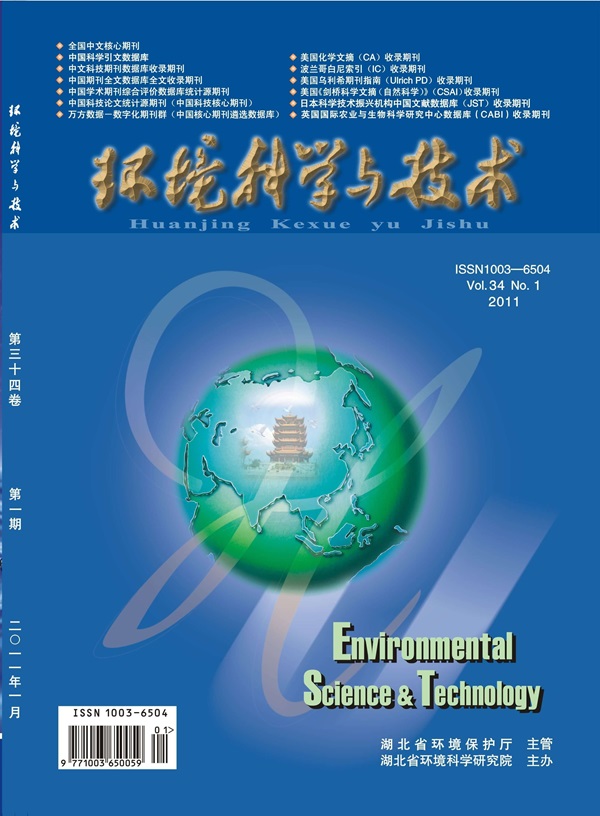
Environmental Science & Technology (ES&T) is a co-sponsored academic and technical magazine by the Hubei Provincial Environmental Protection Bureau and the Hubei Provincial Academy of Environmental Sciences.
Environmental Science & Technology (ES&T) holds the status of Chinese core journals, scientific papers source journals of China, Chinese Science Citation Database source journals, and Chinese Academic Journal Comprehensive Evaluation Database source journals. This publication focuses on the academic field of environmental protection, featuring articles related to environmental protection and technical advancements.

 求助内容:
 应助结果提醒方式:


 京公网安备 11010802042870号


