
Electrochemically Generated Single-Atom Centers of MXenes for Energy Conversion

IF 14.1 Q1 CHEMISTRY, MULTIDISCIPLINARY
Diwakar Singh,Totan Mondal,Ling Meng,Francesc Viñes,Francesc Illas,Kai S. Exner
{"title":"Electrochemically\nGenerated Single-Atom Centers of\nMXenes for Energy Conversion","authors":"Diwakar Singh,Totan Mondal,Ling Meng,Francesc Viñes,Francesc Illas,Kai S. Exner","doi":"10.1021/accountsmr.6c00164","DOIUrl":null,"url":null,"abstract":"Conspectus Single-atom catalysts (SACs) have attracted significant attention in electrocatalysis due to their ability to maximize atomic efficiency and provide well-defined active sites. However, their practical use is often limited by stability issues, since the anchored atom serving as the active site may dissolve or restructure under applied potential conditions. The material class of MXenes, two-dimensional transition-metal carbides and nitrides, offers a fundamentally different route toward SAC-like catalytic motifs. Under anodic polarization in aqueous environments, MXene basal planes can undergo water-mediated surface reconstruction to forms an electrochemically generated MXene–single-atom-center-like (MXene–SAC-like) motif in situ. These dynamically generated centers resemble archetypal SACs in their local coordination environment but differ fundamentally in that they are not created through synthetic anchoring strategies, but emerge directly under electrochemical operating conditions. In this Account, we summarize the progress of our group in understanding electrochemically generated MXene–SAC-like motifs for energy conversion processes using electronic structure theory. Pristine MXene basal planes are catalytically inactive under anodic polarization; reconstruction under applied bias generates isolated metal centers whose stability, activity, and selectivity we have mapped across the MXene compositional space. We discuss thermodynamic frameworks based on surface Pourbaix analysis and dissolution thermodynamics that provide insight into the conditions under which single-atom centers become accessible and catalytically active. These stability maps reveal a scenario-dependent W–Mo–Ta progression: W-based motifs dissolve spontaneously, Ta-based motifs are particularly robust under pre-OER conditions, whereas Mo-based motifs retain the wider OER-specific stability window at pH = 0. In addition to oxygen-, chlorine-, and nitrogen-containing reactions under anodic polarization, we also describe the use of electrochemically generated MXene–SAC-like motifs for cathodic processes by pulsing the electrochemical potential. While activity trends in electrocatalysis are commonly interpreted using adsorption free-energy descriptors, we further introduce a dual-descriptor framework that incorporates transition-state energetics into the activity ranking of homologous catalyst series. This approach provides a more complete description of activity and selectivity trends, particularly for proton-coupled electron-transfer processes involving competing reaction channels. For ammonia oxidation specifically, Brønsted–Evans–Polanyi scaling breaks down for dehydrogenated N–N coupling intermediates, and thermodynamic descriptors alone incorrectly predict the preferred coupling pathway for most MXene–SAC-like motifs. By connecting adsorption thermodynamics with reaction kinetics, this framework offers a different perspective on catalytic selectivity at electrified interfaces. The concept of electrochemically generated MXene–SAC-like motifs could provide an alternative to conventional SACs in energy conversion by providing a synthesis route based on fundamental principles of nature. While the pristine form of MXenes is catalytically inactive under anodic polarization, MXenes are easily activated by applying an electrode potential, and the electrochemically generated MXene–SAC-like motifs show high activity and selectivity in the case of competing reaction channels. This could pave the way for a sustainable design concept of durable SAC-based electrocatalysts for energy conversion.","PeriodicalId":72040,"journal":{"name":"Accounts of materials research","volume":"25 1","pages":""},"PeriodicalIF":14.1000,"publicationDate":"2026-10-05","publicationTypes":"Journal Article","fieldsOfStudy":null,"isOpenAccess":false,"openAccessPdf":"","citationCount":"0","resultStr":null,"platform":"Semanticscholar","paperid":null,"PeriodicalName":"Accounts of materials research","FirstCategoryId":"1085","ListUrlMain":"https://doi.org/10.1021/accountsmr.6c00164","RegionNum":0,"RegionCategory":null,"ArticlePicture":[],"TitleCN":null,"AbstractTextCN":null,"PMCID":null,"EPubDate":"","PubModel":"","JCR":"Q1","JCRName":"CHEMISTRY, MULTIDISCIPLINARY","Score":null,"Total":0}
引用次数: 0

Abstract

Conspectus Single-atom catalysts (SACs) have attracted significant attention in electrocatalysis due to their ability to maximize atomic efficiency and provide well-defined active sites. However, their practical use is often limited by stability issues, since the anchored atom serving as the active site may dissolve or restructure under applied potential conditions. The material class of MXenes, two-dimensional transition-metal carbides and nitrides, offers a fundamentally different route toward SAC-like catalytic motifs. Under anodic polarization in aqueous environments, MXene basal planes can undergo water-mediated surface reconstruction to forms an electrochemically generated MXene–single-atom-center-like (MXene–SAC-like) motif in situ. These dynamically generated centers resemble archetypal SACs in their local coordination environment but differ fundamentally in that they are not created through synthetic anchoring strategies, but emerge directly under electrochemical operating conditions. In this Account, we summarize the progress of our group in understanding electrochemically generated MXene–SAC-like motifs for energy conversion processes using electronic structure theory. Pristine MXene basal planes are catalytically inactive under anodic polarization; reconstruction under applied bias generates isolated metal centers whose stability, activity, and selectivity we have mapped across the MXene compositional space. We discuss thermodynamic frameworks based on surface Pourbaix analysis and dissolution thermodynamics that provide insight into the conditions under which single-atom centers become accessible and catalytically active. These stability maps reveal a scenario-dependent W–Mo–Ta progression: W-based motifs dissolve spontaneously, Ta-based motifs are particularly robust under pre-OER conditions, whereas Mo-based motifs retain the wider OER-specific stability window at pH = 0. In addition to oxygen-, chlorine-, and nitrogen-containing reactions under anodic polarization, we also describe the use of electrochemically generated MXene–SAC-like motifs for cathodic processes by pulsing the electrochemical potential. While activity trends in electrocatalysis are commonly interpreted using adsorption free-energy descriptors, we further introduce a dual-descriptor framework that incorporates transition-state energetics into the activity ranking of homologous catalyst series. This approach provides a more complete description of activity and selectivity trends, particularly for proton-coupled electron-transfer processes involving competing reaction channels. For ammonia oxidation specifically, Brønsted–Evans–Polanyi scaling breaks down for dehydrogenated N–N coupling intermediates, and thermodynamic descriptors alone incorrectly predict the preferred coupling pathway for most MXene–SAC-like motifs. By connecting adsorption thermodynamics with reaction kinetics, this framework offers a different perspective on catalytic selectivity at electrified interfaces. The concept of electrochemically generated MXene–SAC-like motifs could provide an alternative to conventional SACs in energy conversion by providing a synthesis route based on fundamental principles of nature. While the pristine form of MXenes is catalytically inactive under anodic polarization, MXenes are easily activated by applying an electrode potential, and the electrochemically generated MXene–SAC-like motifs show high activity and selectivity in the case of competing reaction channels. This could pave the way for a sustainable design concept of durable SAC-based electrocatalysts for energy conversion.
用于能量转换的电化学生成的mxenes单原子中心
单原子催化剂(SACs)由于能够最大限度地提高原子效率和提供明确的活性位点而引起了电催化领域的广泛关注。然而,它们的实际应用往往受到稳定性问题的限制,因为作为活性位点的锚定原子可能在应用的潜在条件下溶解或重组。MXenes的材料类别,二维过渡金属碳化物和氮化物,为sac类催化基序提供了一种完全不同的途径。在水环境的阳极极化下,MXene基面可以进行水介导的表面重建,从而原位形成电化学生成的MXene单原子中心(MXene - sac -like)基序。这些动态生成的中心类似于局部协调环境中的原型sac,但根本不同的是,它们不是通过合成锚定策略产生的,而是直接在电化学操作条件下产生的。在这篇文章中,我们总结了我们的团队在利用电子结构理论理解电化学生成的mxene - sac类基序的能量转换过程方面的进展。原始MXene基面在阳极极化条件下不具有催化活性;应用偏压下的重建产生了孤立的金属中心,其稳定性、活性和选择性我们已经在MXene组成空间中绘制了地图。我们讨论了基于表面Pourbaix分析和溶解热力学的热力学框架,提供了对单原子中心变得可接近和催化活性的条件的见解。这些稳定性图揭示了W-Mo-Ta的情景依赖性进展:w基基基基自发溶解,ta基基基基基在预oer条件下特别坚固,而mo基基基基在pH = 0时保持更宽的oer特异性稳定性窗口。除了在阳极极化下的含氧、含氯和含氮反应外,我们还描述了通过脉冲电化学电位在阴极过程中使用电化学生成的mxene - sac类基序。虽然电催化的活性趋势通常使用吸附自由能描述符来解释,但我们进一步引入了一个双描述符框架,该框架将过渡态能量学纳入了同源催化剂系列的活性排名。这种方法提供了对活性和选择性趋势的更完整的描述,特别是对于涉及竞争反应通道的质子耦合电子转移过程。特别是对于氨氧化,Brønsted-Evans-Polanyi缩放会破坏脱氢的N-N偶联中间体,并且热力学描述符单独错误地预测了大多数mxene - sac类基序的首选偶联途径。通过将吸附热力学与反应动力学联系起来,该框架为带电界面上的催化选择性提供了不同的视角。电化学生成mxene - sac样基序的概念可以提供一种基于自然基本原理的合成路线,在能量转换方面替代传统的sac。虽然原始形式的MXenes在阳极极化下具有催化活性,但MXenes很容易通过施加电极电位激活,并且电化学生成的mxene - sac样基序在竞争反应通道的情况下显示出高活性和选择性。这可能为可持续设计概念铺平道路,这种可持续设计概念是基于sac的耐用电催化剂,用于能量转换。
本文章由计算机程序翻译,如有差异,请以英文原文为准。
求助全文
约1分钟内获得全文 求助全文
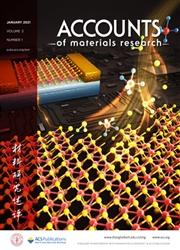
来源期刊
CiteScore
17.70
自引率
0.00%
发文量
0
×
引用
GB/T 7714-2015
复制
MLA
复制
APA
复制
导出至
BibTeX EndNote RefMan NoteFirst NoteExpress
×
提示
您的信息不完整,为了账户安全,请先补充。
现在去补充
×
提示
您因"违规操作"
具体请查看互助需知
我知道了
×
提示
确定
请完成安全验证×
copy
已复制链接
快去分享给好友吧!
我知道了
右上角分享
点击右上角分享
0
联系我们:info@booksci.cn Book学术提供免费学术资源搜索服务,方便国内外学者检索中英文文献。致力于提供最便捷和优质的服务体验。 Copyright © 2023 布克学术 All rights reserved.
京ICP备2023020795号-1
ghs 京公网安备 11010802042870号
Book学术文献互助
Book学术文献互助群
群 号:604180095
Book学术官方微信
小红书



