Zhen Lu, Zhi Yan, Bin Liu, Jiao Wang, Yaxi Li, Ke Li
{"title":"Behavior-Based Thresholds Support Screening-Level Prioritization of Caffeine as a Neuroactive Wastewater Micropollutant in Coastal Waters","authors":"Zhen Lu, Zhi Yan, Bin Liu, Jiao Wang, Yaxi Li, Ke Li","doi":"10.1021/acs.est.6c10032","DOIUrl":null,"url":null,"abstract":"<p>Sensitive functional end points reveal\r\nearly responses to neuroactive\r\nwastewater contaminants but are rarely translated into screening thresholds.\r\nUsing caffeine as a sentinel, we evaluated a behavior-based framework\r\nfor coastal waters. Systematic searches of Web of Science Core Collection,\r\nPubMed, and Embase through 24 August 2026 identified 66 eligible studies\r\nand 2181 effect sizes for meta-analysis. The near-zero grand pooled\r\nsigned ln <em>RR</em> may reflect cancellation among\r\nend points with opposing response directions. Responses varied by\r\nlife stage, exposure duration, concentration, and end point category.\r\nStandardized light–dark assays across eight aquatic species\r\nrevealed taxon- and context-dependent behavioral disruptions, including\r\nresponses at low concentration and non-monotonic patterns. Species\r\nsensitivity distributions based on behavioral benchmark concentrations\r\nyielded a conservative hazardous concentration affecting 5% of species\r\n(HC5; 0.0585 μg L<sup>–1</sup>) and a screening-level\r\nbehavior-based predicted no-effect concentration (PNEC; 0.0195 μg\r\nL<sup>–1</sup>). A separate systematic literature search, supplemented\r\nwith NORMAN EMPODAT records, compiled 1421 quantifiable caffeine measurements\r\nin coastal and estuarine waters. Concentrations were right-skewed\r\n(median, 44.9 ng L<sup>–1</sup>; IQR, 14.60–190.00 ng\r\nL<sup>–1</sup>), and 69.88% of measurements fell into the high-priority\r\nrisk quotient category (RQ ≥ 1). These findings support behavior-based\r\nthresholds for prioritizing neuroactive wastewater pollution in coastal\r\nwaters.</p>","PeriodicalId":36,"journal":{"name":"环境科学与技术","volume":"60 41","pages":"29342–29354"},"PeriodicalIF":12.2000,"publicationDate":"2026-10-20","publicationTypes":"Journal Article","fieldsOfStudy":null,"isOpenAccess":false,"openAccessPdf":"","citationCount":"0","resultStr":null,"platform":"Semanticscholar","paperid":null,"PeriodicalName":"环境科学与技术","FirstCategoryId":"1","ListUrlMain":"https://pubs.acs.org/doi/10.1021/acs.est.6c10032","RegionNum":1,"RegionCategory":"环境科学与生态学","ArticlePicture":[],"TitleCN":null,"AbstractTextCN":null,"PMCID":null,"EPubDate":"2026/10/7 0:00:00","PubModel":"Epub","JCR":"Q1","JCRName":"ENGINEERING, ENVIRONMENTAL","Score":null,"Total":0}
引用次数: 0
Abstract
Sensitive functional end points reveal
early responses to neuroactive
wastewater contaminants but are rarely translated into screening thresholds.
Using caffeine as a sentinel, we evaluated a behavior-based framework
for coastal waters. Systematic searches of Web of Science Core Collection,
PubMed, and Embase through 24 August 2026 identified 66 eligible studies
and 2181 effect sizes for meta-analysis. The near-zero grand pooled
signed ln RR may reflect cancellation among
end points with opposing response directions. Responses varied by
life stage, exposure duration, concentration, and end point category.
Standardized light–dark assays across eight aquatic species
revealed taxon- and context-dependent behavioral disruptions, including
responses at low concentration and non-monotonic patterns. Species
sensitivity distributions based on behavioral benchmark concentrations
yielded a conservative hazardous concentration affecting 5% of species
(HC5; 0.0585 μg L–1) and a screening-level
behavior-based predicted no-effect concentration (PNEC; 0.0195 μg
L–1). A separate systematic literature search, supplemented
with NORMAN EMPODAT records, compiled 1421 quantifiable caffeine measurements
in coastal and estuarine waters. Concentrations were right-skewed
(median, 44.9 ng L–1; IQR, 14.60–190.00 ng
L–1), and 69.88% of measurements fell into the high-priority
risk quotient category (RQ ≥ 1). These findings support behavior-based
thresholds for prioritizing neuroactive wastewater pollution in coastal
waters.
期刊介绍:
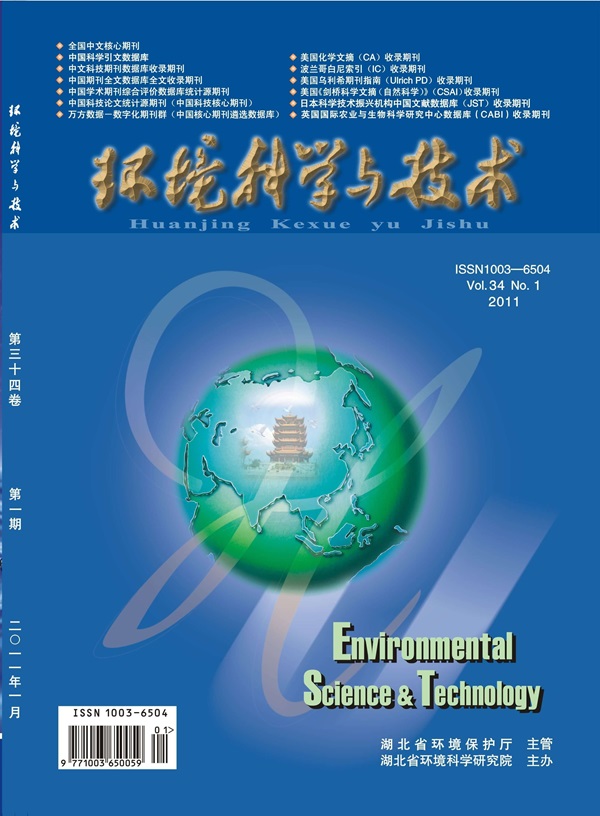
Environmental Science & Technology (ES&T) is a co-sponsored academic and technical magazine by the Hubei Provincial Environmental Protection Bureau and the Hubei Provincial Academy of Environmental Sciences.
Environmental Science & Technology (ES&T) holds the status of Chinese core journals, scientific papers source journals of China, Chinese Science Citation Database source journals, and Chinese Academic Journal Comprehensive Evaluation Database source journals. This publication focuses on the academic field of environmental protection, featuring articles related to environmental protection and technical advancements.

 求助内容:
 应助结果提醒方式:


 京公网安备 11010802042870号


