Alexandra Schaffert, Sivakumar Murugadoss, Tom Roos, Nunzia Linzalone, Gabriele Donzelli, Ronette Gehring, Birgit Mertens, Martin Paparella
{"title":"A Data-Driven Approach for the Development of a Time-Informed Adverse Outcome Pathway Network for the Cardiotoxicity of Environmental Chemicals","authors":"Alexandra Schaffert, Sivakumar Murugadoss, Tom Roos, Nunzia Linzalone, Gabriele Donzelli, Ronette Gehring, Birgit Mertens, Martin Paparella","doi":"10.1021/acs.est.6c00396","DOIUrl":null,"url":null,"abstract":"<p>We developed a bottom-up, data-driven approach for constructing\r\na time-informed adverse outcome pathway (AOP) network for environmental\r\nchemical-induced cardiotoxicity. Mechanistic end points were systematically\r\nextracted from 339 in vitro and in vivo studies, yielding 1759 Key\r\nEvent (KE) entries and 4938 Key Event Relationship (KER) entries,\r\ntogether with study metadata and essentiality evidence from intervention\r\nexperiments. After quality filtering and minimum support thresholding,\r\n62 unique KEs and 256 unique KERs were retained for network construction.\r\nNetwork analysis highlighted oxidative stress and mitochondrial dysfunction\r\nas prominent, highly connected KEs linking diverse upstream perturbations\r\nto downstream cardiomyocyte injury, inflammation, cardiac remodeling\r\n(fibrosis and hypertrophy), decreased myocardial contractility, and\r\nreduced left ventricular function. A central methodological finding\r\nwas that temporal information was more informative at the level of\r\nKERs than at the level of KEs. The same KE could occur across multiple\r\ndurations depending on the relationship in which it was embedded,\r\nwhereas KER-level time-scale annotation resolved distinct acute, subacute,\r\nand chronic pathway patterns not apparent from KE timing alone. This\r\nframework provides an evidence-weighted synthesis of the most consistently\r\nsupported cardiotoxicity mechanisms and introduces a temporal layer\r\nfor the mechanistic interpretation of heterogeneous evidence.</p>","PeriodicalId":36,"journal":{"name":"环境科学与技术","volume":"60 41","pages":"29273–29284"},"PeriodicalIF":12.2000,"publicationDate":"2026-10-20","publicationTypes":"Journal Article","fieldsOfStudy":null,"isOpenAccess":false,"openAccessPdf":"","citationCount":"0","resultStr":null,"platform":"Semanticscholar","paperid":null,"PeriodicalName":"环境科学与技术","FirstCategoryId":"1","ListUrlMain":"https://pubs.acs.org/doi/10.1021/acs.est.6c00396","RegionNum":1,"RegionCategory":"环境科学与生态学","ArticlePicture":[],"TitleCN":null,"AbstractTextCN":null,"PMCID":null,"EPubDate":"2026/10/2 0:00:00","PubModel":"Epub","JCR":"Q1","JCRName":"ENGINEERING, ENVIRONMENTAL","Score":null,"Total":0}
引用次数: 0
Abstract
We developed a bottom-up, data-driven approach for constructing
a time-informed adverse outcome pathway (AOP) network for environmental
chemical-induced cardiotoxicity. Mechanistic end points were systematically
extracted from 339 in vitro and in vivo studies, yielding 1759 Key
Event (KE) entries and 4938 Key Event Relationship (KER) entries,
together with study metadata and essentiality evidence from intervention
experiments. After quality filtering and minimum support thresholding,
62 unique KEs and 256 unique KERs were retained for network construction.
Network analysis highlighted oxidative stress and mitochondrial dysfunction
as prominent, highly connected KEs linking diverse upstream perturbations
to downstream cardiomyocyte injury, inflammation, cardiac remodeling
(fibrosis and hypertrophy), decreased myocardial contractility, and
reduced left ventricular function. A central methodological finding
was that temporal information was more informative at the level of
KERs than at the level of KEs. The same KE could occur across multiple
durations depending on the relationship in which it was embedded,
whereas KER-level time-scale annotation resolved distinct acute, subacute,
and chronic pathway patterns not apparent from KE timing alone. This
framework provides an evidence-weighted synthesis of the most consistently
supported cardiotoxicity mechanisms and introduces a temporal layer
for the mechanistic interpretation of heterogeneous evidence.
期刊介绍:
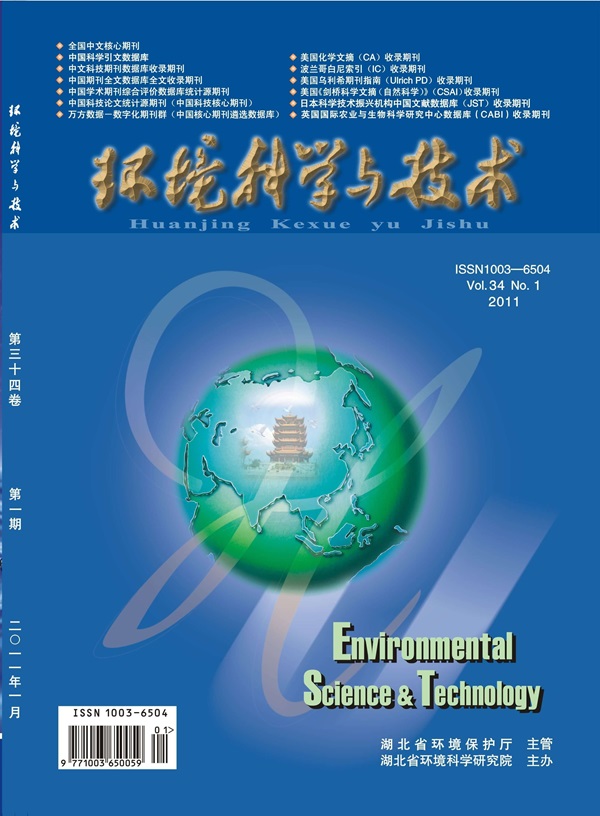
Environmental Science & Technology (ES&T) is a co-sponsored academic and technical magazine by the Hubei Provincial Environmental Protection Bureau and the Hubei Provincial Academy of Environmental Sciences.
Environmental Science & Technology (ES&T) holds the status of Chinese core journals, scientific papers source journals of China, Chinese Science Citation Database source journals, and Chinese Academic Journal Comprehensive Evaluation Database source journals. This publication focuses on the academic field of environmental protection, featuring articles related to environmental protection and technical advancements.

 求助内容:
 应助结果提醒方式:


 京公网安备 11010802042870号


