{"title":"Ebullition-Enhanced Release of Microplastics from Aquatic Sediment to Overlying Water: An Overlooked Transport Pathway","authors":"Shengdong Liu, Zhuoqing Zhou, Yang Li, Xinghui Xia, Xinjie Wang, Jiahe Zhang, Baoshan Xing, Shoichiro Hamamoto, Peng Zhang, Wen Zhang","doi":"10.1021/acs.est.6c06432","DOIUrl":null,"url":null,"abstract":"<p>Microplastics\r\n(MPs) in aquatic systems are typically\r\nattributed\r\nto wastewater, runoff and atmospheric inputs, whereas the remobilization\r\nof sediment-associated MPs by benthic gas ebullition remains poorly\r\nunderstood. Here, we show that air-purged ebullition mobilized four\r\ncommon MPs, polyethylene (PE), polyethylene terephthalate (PET), polyvinyl\r\nchloride (PVC), and polylactic acid (PLA), from sediments into the\r\noverlying water, with release ratios of 8.9%–12.1% over 9 d.\r\nSuspended MP concentrations in the overlying water increased rapidly\r\nduring the first 48 h, followed by slower release and eventual plateauing,\r\nwith the decelerating release behavior empirically described by a\r\npower-law model. Theoretical calculations suggest that aggregation\r\nwith suspended sediment can reduce the flotation velocities of MPs\r\nfrom 9.38–9.99 cm·s<sup>–1</sup> to 8.64–9.95\r\ncm·s<sup>–1</sup>. Combined experimental observations\r\nand theoretical analyses support a coupled flotation mechanism involving\r\nMPs attachment to rising bubbles, bubble-driven flow that counteracts\r\ngravitational settling, and transient pressure gradients. These processes\r\ncould convert sediments from a long-term sink into a secondary source\r\nof MPs during ebullition. Overall, this study identifies benthic gas\r\nebullition as an underappreciated pathway for MP remobilization and\r\nprovides a mechanistic framework for understanding the fate and transport\r\nof sediment-associated MPs in aquatic environments.</p>","PeriodicalId":36,"journal":{"name":"环境科学与技术","volume":"60 41","pages":"29583–29595"},"PeriodicalIF":12.2000,"publicationDate":"2026-10-20","publicationTypes":"Journal Article","fieldsOfStudy":null,"isOpenAccess":false,"openAccessPdf":"","citationCount":"0","resultStr":null,"platform":"Semanticscholar","paperid":null,"PeriodicalName":"环境科学与技术","FirstCategoryId":"1","ListUrlMain":"https://pubs.acs.org/doi/10.1021/acs.est.6c06432","RegionNum":1,"RegionCategory":"环境科学与生态学","ArticlePicture":[],"TitleCN":null,"AbstractTextCN":null,"PMCID":null,"EPubDate":"2026/10/5 0:00:00","PubModel":"Epub","JCR":"Q1","JCRName":"ENGINEERING, ENVIRONMENTAL","Score":null,"Total":0}
引用次数: 0
Abstract
Microplastics
(MPs) in aquatic systems are typically
attributed
to wastewater, runoff and atmospheric inputs, whereas the remobilization
of sediment-associated MPs by benthic gas ebullition remains poorly
understood. Here, we show that air-purged ebullition mobilized four
common MPs, polyethylene (PE), polyethylene terephthalate (PET), polyvinyl
chloride (PVC), and polylactic acid (PLA), from sediments into the
overlying water, with release ratios of 8.9%–12.1% over 9 d.
Suspended MP concentrations in the overlying water increased rapidly
during the first 48 h, followed by slower release and eventual plateauing,
with the decelerating release behavior empirically described by a
power-law model. Theoretical calculations suggest that aggregation
with suspended sediment can reduce the flotation velocities of MPs
from 9.38–9.99 cm·s–1 to 8.64–9.95
cm·s–1. Combined experimental observations
and theoretical analyses support a coupled flotation mechanism involving
MPs attachment to rising bubbles, bubble-driven flow that counteracts
gravitational settling, and transient pressure gradients. These processes
could convert sediments from a long-term sink into a secondary source
of MPs during ebullition. Overall, this study identifies benthic gas
ebullition as an underappreciated pathway for MP remobilization and
provides a mechanistic framework for understanding the fate and transport
of sediment-associated MPs in aquatic environments.
期刊介绍:
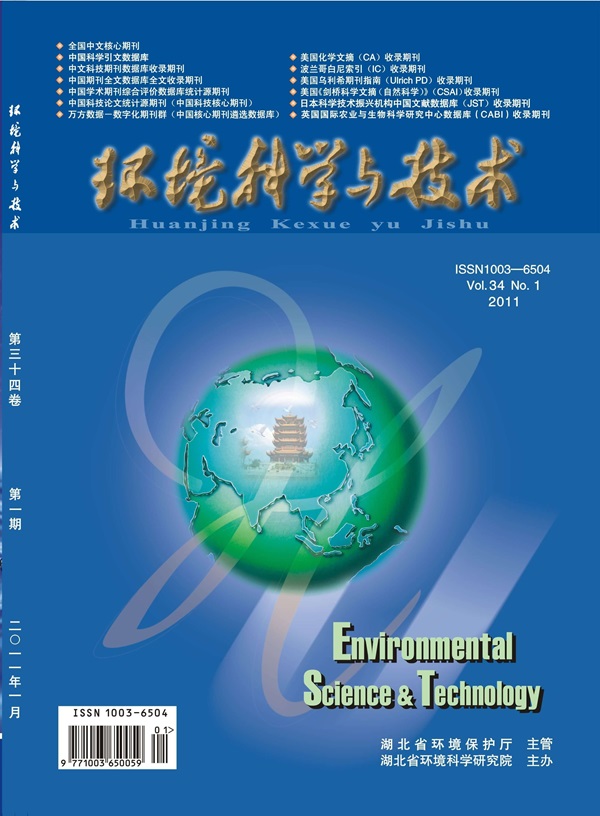
Environmental Science & Technology (ES&T) is a co-sponsored academic and technical magazine by the Hubei Provincial Environmental Protection Bureau and the Hubei Provincial Academy of Environmental Sciences.
Environmental Science & Technology (ES&T) holds the status of Chinese core journals, scientific papers source journals of China, Chinese Science Citation Database source journals, and Chinese Academic Journal Comprehensive Evaluation Database source journals. This publication focuses on the academic field of environmental protection, featuring articles related to environmental protection and technical advancements.

 求助内容:
 应助结果提醒方式:


 京公网安备 11010802042870号


