
Wildfire-Emitted Particulate Matter Induces Ovarian Hyperandrogenism through Aryl Hydrocarbon Receptor Activation

IF 10.9 1区 环境科学与生态学 Q1 ENVIRONMENTAL SCIENCES
Kuhelika Mali,Delong Zhang,Lila Bazina,Kunlin Ou,Elena Abramova,Jiyang Zhang,Tingjie Zhan,Pawat Pattarawat,Constantinos Moularas,Congcong Zhang,Qiang Zhang,Audrey J. Gaskins,Andrew Gow,Philip Demokritou,Shuo Xiao
{"title":"Wildfire-Emitted Particulate\nMatter Induces Ovarian\nHyperandrogenism through Aryl Hydrocarbon Receptor Activation","authors":"Kuhelika Mali,Delong Zhang,Lila Bazina,Kunlin Ou,Elena Abramova,Jiyang Zhang,Tingjie Zhan,Pawat Pattarawat,Constantinos Moularas,Congcong Zhang,Qiang Zhang,Audrey J. Gaskins,Andrew Gow,Philip Demokritou,Shuo Xiao","doi":"10.1021/ehp.6c00189","DOIUrl":null,"url":null,"abstract":"Abstract Wildfires have become more frequent and intense worldwide, and this trend is projected to continue in the coming years. Wildfire-emitted particulate matter (WFPM) can be more toxic than urban background PM due to its greater content of nanosized PM (WFPM0.1) and more polar organic compounds, including polycyclic aromatic hydrocarbons (PAHs). While exposure to WFPMs has been linked to cardiovascular and respiratory diseases, their impact on female reproductive health remains elusive. We examined the female reproductive impacts of lab-synthesized (LS-) and real-world Canadian WFPM0.1 (C-WFPM0,1) collected during the June 2023 Canadian wildfires and investigated the toxic mechanisms involved. An in vivo mouse model through intratracheal exposure and a 3D in vitro ovarian follicle culture system, together with molecular, transcriptomic, and computational approaches, was used to examine the ovarian disrupting effects of LS- and C-WFPM0.1. Intratracheal in vivo exposure to an environmentally relevant dose of LS-WFPM0.1 disrupted mouse ovarian estrus cycles and elevated serum concentrations of testosterone. RT-qPCR and RNA-sequencing (RNA-seq) analyses revealed altered expression of steroidogenic genes, transcriptomic changes, and activation of the aryl hydrocarbon receptor (AhR) in antral follicles from mice treated with LS-WFPM0.1. LS-WFPM0.1 consistently increased testosterone secretion and stimulated genes related to androgen synthesis and AhR in vitro. Single-follicle and single-oocyte RNA-seq analyses identified differentially expressed genes related to inflammation in follicular somatic cells and mitochondrial health in oocytes. Both C-WFPM0.1 and established AhR agonists, including benzo[a]pyrene (BaP) and 2,3,7,8-tetrachlorodibenzo-p-dioxin (TCDD), reproduced these ovarian defects. Mechanistically, inhibition of AhR reversed the WFPM0.1-induced transcriptional changes of steroidogenic genes and ovarian hyperandrogenism. Together, our study suggests that exposure to WFPM0.1 disrupts ovarian hormone secretion by inducing hyperandrogenism, which is associated with AhR activation, underscoring an urgent need for further mechanistic and epidemiological studies to define the reproductive risks of wildfire smoke exposure in humans.","PeriodicalId":11862,"journal":{"name":"Environmental Health Perspectives","volume":"25 2 1","pages":""},"PeriodicalIF":10.9000,"publicationDate":"2026-10-06","publicationTypes":"Journal Article","fieldsOfStudy":null,"isOpenAccess":false,"openAccessPdf":"","citationCount":"0","resultStr":null,"platform":"Semanticscholar","paperid":null,"PeriodicalName":"Environmental Health Perspectives","FirstCategoryId":"93","ListUrlMain":"https://doi.org/10.1021/ehp.6c00189","RegionNum":1,"RegionCategory":"环境科学与生态学","ArticlePicture":[],"TitleCN":null,"AbstractTextCN":null,"PMCID":null,"EPubDate":"","PubModel":"","JCR":"Q1","JCRName":"ENVIRONMENTAL SCIENCES","Score":null,"Total":0}
引用次数: 0

Abstract

Abstract Wildfires have become more frequent and intense worldwide, and this trend is projected to continue in the coming years. Wildfire-emitted particulate matter (WFPM) can be more toxic than urban background PM due to its greater content of nanosized PM (WFPM0.1) and more polar organic compounds, including polycyclic aromatic hydrocarbons (PAHs). While exposure to WFPMs has been linked to cardiovascular and respiratory diseases, their impact on female reproductive health remains elusive. We examined the female reproductive impacts of lab-synthesized (LS-) and real-world Canadian WFPM0.1 (C-WFPM0,1) collected during the June 2023 Canadian wildfires and investigated the toxic mechanisms involved. An in vivo mouse model through intratracheal exposure and a 3D in vitro ovarian follicle culture system, together with molecular, transcriptomic, and computational approaches, was used to examine the ovarian disrupting effects of LS- and C-WFPM0.1. Intratracheal in vivo exposure to an environmentally relevant dose of LS-WFPM0.1 disrupted mouse ovarian estrus cycles and elevated serum concentrations of testosterone. RT-qPCR and RNA-sequencing (RNA-seq) analyses revealed altered expression of steroidogenic genes, transcriptomic changes, and activation of the aryl hydrocarbon receptor (AhR) in antral follicles from mice treated with LS-WFPM0.1. LS-WFPM0.1 consistently increased testosterone secretion and stimulated genes related to androgen synthesis and AhR in vitro. Single-follicle and single-oocyte RNA-seq analyses identified differentially expressed genes related to inflammation in follicular somatic cells and mitochondrial health in oocytes. Both C-WFPM0.1 and established AhR agonists, including benzo[a]pyrene (BaP) and 2,3,7,8-tetrachlorodibenzo-p-dioxin (TCDD), reproduced these ovarian defects. Mechanistically, inhibition of AhR reversed the WFPM0.1-induced transcriptional changes of steroidogenic genes and ovarian hyperandrogenism. Together, our study suggests that exposure to WFPM0.1 disrupts ovarian hormone secretion by inducing hyperandrogenism, which is associated with AhR activation, underscoring an urgent need for further mechanistic and epidemiological studies to define the reproductive risks of wildfire smoke exposure in humans.
野火释放颗粒物质通过芳烃受体激活诱导卵巢高雄激素症
野火在世界范围内变得越来越频繁和激烈,预计这一趋势将在未来几年持续下去。野火排放的颗粒物(WFPM)可能比城市背景颗粒物毒性更大,因为其纳米级颗粒物(WFPM0.1)和极性有机化合物(包括多环芳烃(PAHs))的含量更高。虽然接触WFPMs与心血管和呼吸系统疾病有关,但它们对女性生殖健康的影响仍然难以捉摸。研究了2023年6月加拿大野火中采集的实验室合成(LS-)和真实世界的加拿大WFPM0.1 (C-WFPM0,1)对雌性生殖的影响,并探讨了其中的毒性机制。通过气管内暴露的小鼠体内模型和体外3D卵巢卵泡培养系统,结合分子、转录组学和计算方法,研究了LS-和C-WFPM0.1对卵巢的破坏作用。经气管内暴露于环境相关剂量的LS-WFPM0.1会破坏小鼠卵巢发情周期并升高血清睾酮浓度。RT-qPCR和rna测序(RNA-seq)分析显示,LS-WFPM0.1处理小鼠的中腔卵泡中类固醇基因的表达、转录组学变化和芳烃受体(AhR)的激活发生了改变。LS-WFPM0.1在体外持续增加睾酮分泌,刺激雄激素合成和AhR相关基因。单卵泡和单卵母细胞RNA-seq分析鉴定了与卵泡体细胞炎症和卵母细胞线粒体健康相关的差异表达基因。C-WFPM0.1和已建立的AhR激动剂,包括苯并[a]芘(BaP)和2,3,7,8-四氯二苯并-对二恶英(TCDD),均可复制这些卵巢缺陷。从机制上讲,抑制AhR可逆转wfpm0.1诱导的类固醇基因转录变化和卵巢高雄激素症。总之,我们的研究表明,暴露于WFPM0.1通过诱导与AhR激活相关的高雄激素症来破坏卵巢激素分泌,这强调了迫切需要进一步的机制和流行病学研究来确定人类野火烟雾暴露的生殖风险。
本文章由计算机程序翻译,如有差异,请以英文原文为准。
求助全文
约1分钟内获得全文 求助全文
来源期刊
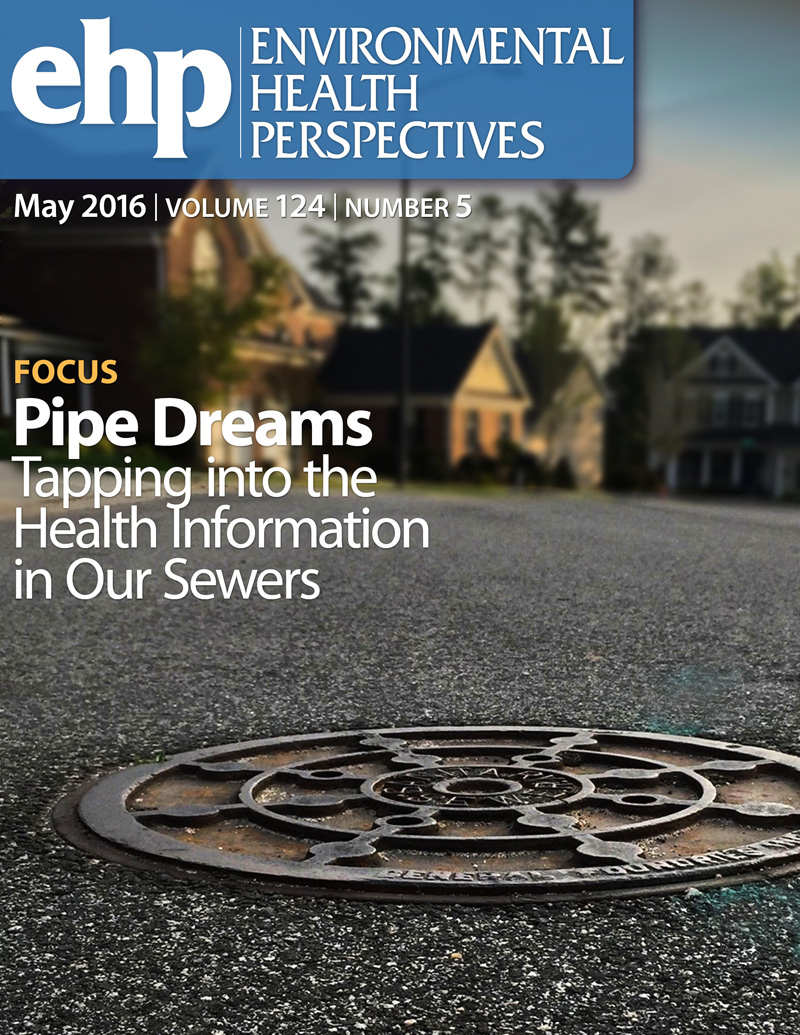
Environmental Health Perspectives
Environmental Health Perspectives 环境科学-公共卫生、环境卫生与职业卫生
CiteScore
14.40
自引率
2.90%
发文量
388
审稿时长
6 months
期刊介绍: Environmental Health Perspectives (EHP) is a monthly peer-reviewed journal supported by the National Institute of Environmental Health Sciences, part of the National Institutes of Health under the U.S. Department of Health and Human Services. Its mission is to facilitate discussions on the connections between the environment and human health by publishing top-notch research and news. EHP ranks third in Public, Environmental, and Occupational Health, fourth in Toxicology, and fifth in Environmental Sciences.

×
引用
GB/T 7714-2015
复制
MLA
复制
APA
复制
导出至
BibTeX EndNote RefMan NoteFirst NoteExpress
×
提示
您的信息不完整,为了账户安全,请先补充。
现在去补充
×
提示
您因"违规操作"
具体请查看互助需知
我知道了
×
提示
确定
请完成安全验证×
copy
已复制链接
快去分享给好友吧!
我知道了
右上角分享
点击右上角分享
0
联系我们:info@booksci.cn Book学术提供免费学术资源搜索服务,方便国内外学者检索中英文文献。致力于提供最便捷和优质的服务体验。 Copyright © 2023 布克学术 All rights reserved.
京ICP备2023020795号-1
ghs 京公网安备 11010802042870号
Book学术文献互助
Book学术文献互助群
群 号:604180095
Book学术官方微信
小红书


