
Comprehensive Aortic Stenosis Characterization Using Multiview Deep Learning
IF 19
1区 医学
Q1 CARDIAC & CARDIOVASCULAR SYSTEMS
JACC. Cardiovascular imaging
Pub Date : 2026-10-01
Epub Date: 2026-10-05
DOI:10.1016/j.jcmg.2026.07.013
引用次数: 0
Abstract
Background
Accurate assessment of aortic stenosis (AS) requires integration of both structural and functional information characterized by visual traits as well as quantitation of gradients. Existing artificial intelligence models use solely either structural or functional information.
Objectives
The authors aimed to develop and validate an automated multiview deep learning framework to assess AS severity.
Methods
The authors developed EchoNet-AS, an open-source end-to-end integrated approach combining video-based convolutional neural networks to assess valve motion with segmentation models to automate measurement of aortic valve peak velocity and classify AS severity.
Results
EchoNet-AS was trained on 210,193 images from 16,076 studies from KPNC (Kaiser Permanente Northern California) and validated on 1,588 held-out test studies and a temporally distinct cohort of 19,202 studies. The final model was also externally validated on 2,415 studies from SHC (Stanford Healthcare) and 9,038 studies from CSMC (Cedars-Sinai Medical Center). Combining assessments from multiple echocardiographic videos and Doppler measurements, EchoNet-AS achieved excellent discrimination of severe AS with an area under the receiver-operating characteristic curve of 0.964 (95% CI: 0.952-0.973) in the KPNC held-out cohort and 0.986 (0.983-0.989) in the temporally distinct cohort, which was superior to models using single views or only Doppler measurements. The performance was consistently robust in distinct external cohorts with an area under the receiver-operating characteristic curve of 0.985 (0.975-0.992) at SHC and 0.989 (0.986-0.992) at CSMC.
Conclusions
EchoNet-AS synthesizes information from both B-mode videos and Doppler images to accurately assess AS severity. Its strong performance generalizes robustly to external validation cohorts and shows potential as an automated clinical decision support tool.
使用多视图深度学习的主动脉狭窄综合表征
主动脉瓣狭窄(aortic stenosis, AS)的准确评估需要结合以视觉特征和梯度定量为特征的结构和功能信息。现有的人工智能模型只使用结构或功能信息。作者旨在开发和验证一个自动化的多视图深度学习框架来评估AS的严重程度。方法:作者开发了EchoNet-AS,这是一种开源的端到端集成方法,将基于视频的卷积神经网络与分割模型相结合,以评估瓣膜运动,自动测量主动脉瓣峰值速度并对AS严重程度进行分类。结果:sechonet - as在来自KPNC (Kaiser Permanente Northern California)的16,076项研究中的210,193张图像上进行了训练,并在1,588项测试研究和19,202项研究的暂时不同队列中进行了验证。最终模型也在SHC(斯坦福医疗保健)的2,415项研究和CSMC(雪松-西奈医学中心)的9,038项研究中进行了外部验证。结合多个超声心动图视频和多普勒测量结果的评估,EchoNet-AS对严重AS的鉴别效果很好,在KPNC不存在的队列中,受者工作特征曲线下面积为0.964 (95% CI: 0.952-0.973),在时间不同的队列中,受者工作特征曲线下面积为0.986(0.983-0.989),优于单视图或仅多普勒测量的模型。在不同的外部队列中,受试者-工作特征曲线下的面积在SHC为0.985 (0.975-0.992),CSMC为0.989(0.986-0.992)。结论sechonet -AS综合了b模视频和多普勒图像信息,能准确评估AS的严重程度。其强大的性能可广泛应用于外部验证队列,并显示出作为自动化临床决策支持工具的潜力。
本文章由计算机程序翻译,如有差异,请以英文原文为准。
求助全文
约1分钟内获得全文
求助全文
来源期刊
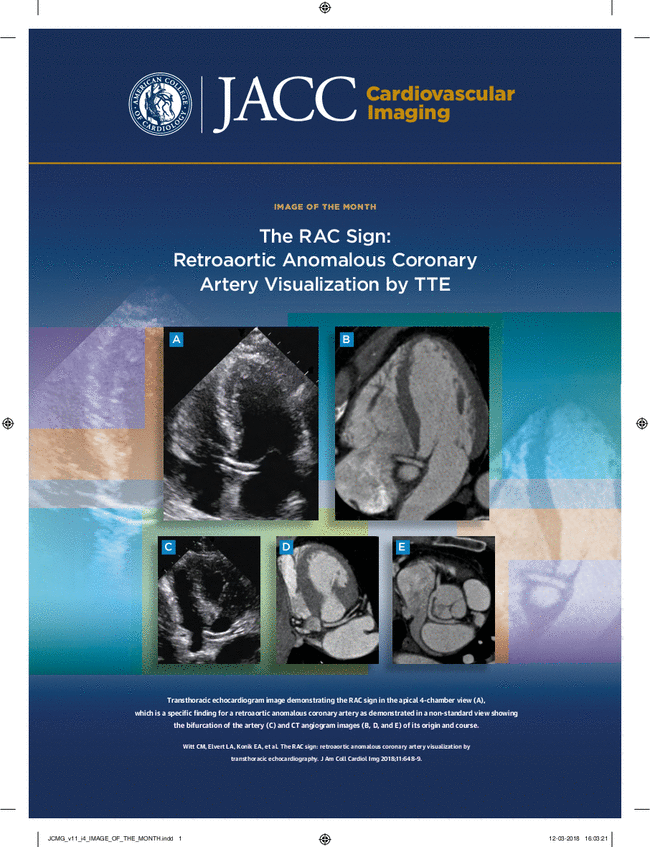
JACC. Cardiovascular imaging
CARDIAC & CARDIOVASCULAR SYSTEMS-RADIOLOGY, NUCLEAR MEDICINE & MEDICAL IMAGING
CiteScore
24.90
自引率
5.70%
发文量
330
审稿时长
4-8 weeks
期刊介绍:
JACC: Cardiovascular Imaging, part of the prestigious Journal of the American College of Cardiology (JACC) family, offers readers a comprehensive perspective on all aspects of cardiovascular imaging. This specialist journal covers original clinical research on both non-invasive and invasive imaging techniques, including echocardiography, CT, CMR, nuclear, optical imaging, and cine-angiography.
JACC. Cardiovascular imaging highlights advances in basic science and molecular imaging that are expected to significantly impact clinical practice in the next decade. This influence encompasses improvements in diagnostic performance, enhanced understanding of the pathogenetic basis of diseases, and advancements in therapy.
In addition to cutting-edge research,the content of JACC: Cardiovascular Imaging emphasizes practical aspects for the practicing cardiologist, including advocacy and practice management.The journal also features state-of-the-art reviews, ensuring a well-rounded and insightful resource for professionals in the field of cardiovascular imaging.
 求助内容:
 应助结果提醒方式:


 京公网安备 11010802042870号


