
Human-in-the-loop AI in analytical chemistry: a critical review from large language models to agentic systems
IF 6.1
2区 化学
Q1 CHEMISTRY, ANALYTICAL
引用次数: 0
Abstract
Artificial intelligence (AI) has moved from a research topic to an operating tool across the chemical sciences, where large language models (LLMs), generative deep learning and agentic systems are now embedded in drug discovery, materials design and mass spectrometry (MS)-based analysis at a pace that has outstripped the peer-reviewed literature. Based on studies published between 2021 and 2026, this critical review argues that AI extends a recent lineage of disruptive tools in chemistry. It further proposes the human-in-the-loop agentic system, in which the chemist orchestrates and validates while the agent executes, as a candidate operative architecture for the coming decade, in preference to autonomous AI. Three converging streams (LLMs as scientific instruments, generative models for chemical design, and agentic systems with tool use and planning) are mapped onto a four-level spectrum of autonomy, from the single-LLM copilot to the autonomous robotic chemist. Practical implementation is illustrated through compound annotation in non-targeted MS, LLM-driven spectroscopic copilots, retrieval-augmented knowledge graphs, and AI coding assistants in routine methods development. On the debates over AI-assisted writing, publisher policies and peer review, it has been argued that transparent disclosure is a more robust path than detection or prohibition. It concludes by examining a possible productivity bifurcation between AI-adopting and AI-resistant groups by 2030 and proposing AI literacy as a core competency for analytical chemists in training.分析化学中的人工智能:从大型语言模型到代理系统的批判性回顾
人工智能(AI)已经从一个研究课题转变为跨化学科学的操作工具,在化学科学中,大型语言模型(llm)、生成式深度学习和代理系统现在以超过同行评审文献的速度嵌入药物发现、材料设计和基于质谱(MS)的分析中。基于2021年至2026年之间发表的研究,这篇批判性评论认为,人工智能扩展了化学领域最近一系列颠覆性工具。它进一步提出了人类在循环中的代理系统,其中化学家在代理执行时进行协调和验证,作为未来十年的候选操作架构,优先于自主AI。三个汇合的流(llm作为科学仪器,化学设计的生成模型,以及具有工具使用和规划的代理系统)被映射到四个级别的自治光谱,从单llm副驾驶到自主机器人化学家。通过非目标MS, llm驱动的光谱副驾驶,检索增强知识图和人工智能编码助手在常规方法开发中的复合注释来说明实际实现。在关于人工智能辅助写作、出版商政策和同行评议的争论中,有人认为,透明披露是比检测或禁止更有力的途径。最后,研究了到2030年采用人工智能和反对人工智能的群体之间可能出现的生产力分歧,并建议将人工智能素养作为培训中的分析化学家的核心能力。
本文章由计算机程序翻译,如有差异,请以英文原文为准。
求助全文
约1分钟内获得全文
求助全文
来源期刊
Analytica Chimica Acta
化学-分析化学
CiteScore
10.40
自引率
6.50%
发文量
1081
审稿时长
38 days
期刊介绍:
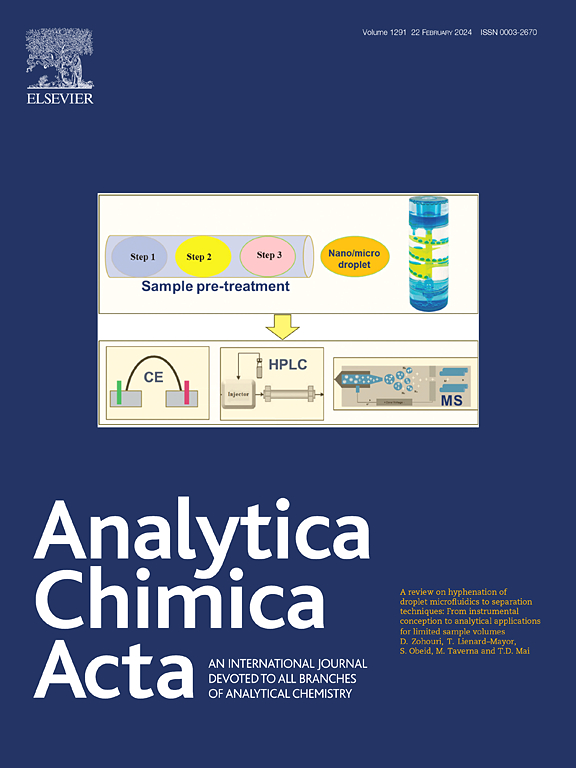
Analytica Chimica Acta has an open access mirror journal Analytica Chimica Acta: X, sharing the same aims and scope, editorial team, submission system and rigorous peer review.
Analytica Chimica Acta provides a forum for the rapid publication of original research, and critical, comprehensive reviews dealing with all aspects of fundamental and applied modern analytical chemistry. The journal welcomes the submission of research papers which report studies concerning the development of new and significant analytical methodologies. In determining the suitability of submitted articles for publication, particular scrutiny will be placed on the degree of novelty and impact of the research and the extent to which it adds to the existing body of knowledge in analytical chemistry.
 求助内容:
 应助结果提醒方式:


 京公网安备 11010802042870号


