Y Fan, X L Tan, D M Huang, Y H Liang, J Q Ling, Z Chen, J Y Li, X Y Wang, Q Yu, B X Hou, L H Qiu, W X Chen, X Wei, Z Z Huang, L Cheng, Q Su, X Xu, X Zheng, J Zhao, J Yang, X Y Zou, H Li, J Zou, H K Wu, Y Gao, B Guo, X B Chen, Z M Lin, T M Wang, Z Chen, L Zhang, D Q Yang, J P Ge, Y H Pan, J H Yu, L Y Miao, S Pan, W D Niu, X J Huang, D Y Liu, X P Meng, J Zhang, Z Chen, J Y Wu, X Z Wang, L Yue, X D Zhou
{"title":"[Expert consensus on difficulty assessment of root canal therapy and clinical application].","authors":"Y Fan, X L Tan, D M Huang, Y H Liang, J Q Ling, Z Chen, J Y Li, X Y Wang, Q Yu, B X Hou, L H Qiu, W X Chen, X Wei, Z Z Huang, L Cheng, Q Su, X Xu, X Zheng, J Zhao, J Yang, X Y Zou, H Li, J Zou, H K Wu, Y Gao, B Guo, X B Chen, Z M Lin, T M Wang, Z Chen, L Zhang, D Q Yang, J P Ge, Y H Pan, J H Yu, L Y Miao, S Pan, W D Niu, X J Huang, D Y Liu, X P Meng, J Zhang, Z Chen, J Y Wu, X Z Wang, L Yue, X D Zhou","doi":"10.3760/cma.j.cn112144-20260715-00396","DOIUrl":null,"url":null,"abstract":"<p><p>Root canal therapy (RCT) is the most effective treatments for pulp and periradicular diseases. Its primary goals are to eliminate the infectious sources within the root canal system, cure the disease, and preserve the natural teeth. The therapeutic outcomes of RCT are influenced by multiple factors, including the patient's systemic health, tooth position, root canal anatomy, severity of infection, and the choice of instruments and treatment techniques. Establishing a difficulty assessment standard for RCT based on the anatomical characteristics of the Chinese root canal systems is crucial. By comprehensively considering the basic and additional factors related to intraoperative procedures, determining the distribution range of difficulty coefficients for each tooth position, and setting the grading criteria for RCT difficulty, clinicians can conduct pre-treatment assessments of the patient's systemic and oral conditions, as well as the specific conditions of the affected tooth and root canals. This pre-treatment evaluations and outcome predictions are keys to improve therapeutic efficacy. In 2004, Zhou Xuedong with her team spearheaded the formulation of the Difficulty Assessment Criteria for Root Canal Therapy by the Endodontics Committee of the Chinese Stomatological Association, which had since been widely promoted and applied. Based on advances in the understanding of the pathogenesis of endodontic diseases, Huang et al. proposed difficulty assessment for endodontic therapy in 2024. Building on recent evidence regarding tooth development and the anatomical characteristics of root canal system in the Chinese population, as well as in accordance with national requirements for clinical pathways and hierarchical diagnosis and treatment of RCT, this expert consensus was developed by 47 experts from 28 institutions across China. It further refines the clinical definitions and grading criteria for relevant risk factors. Through quantitative assessment, the consensus aims to identify potential treatment difficulties and risks before treatment, guide the selection of appropriate treatment strategies and operative techniques, and provide an objective preoperative assessment of case difficulty and treatment prognosis. It also establishes the correspondence between different levels of treatment difficulty and clinician competency, case referral, and clinical education. These measures are intended to facilitate effective clinician-patient communication, mitigate clinical risks, standardize clinical treatment pathways, and support hierarchical diagnosis and treatment of pulp and periradicular diseases based on treatment difficulty. Ultimately, the expert consensus aims to improve the success rate of RCT and tooth preservation, promoting the high-quality development of endodontics in China.</p>","PeriodicalId":23965,"journal":{"name":"中华口腔医学杂志","volume":"61 10","pages":"1409-1418"},"PeriodicalIF":0.0000,"publicationDate":"2026-10-09","publicationTypes":"Journal Article","fieldsOfStudy":null,"isOpenAccess":false,"openAccessPdf":"","citationCount":"0","resultStr":null,"platform":"Semanticscholar","paperid":null,"PeriodicalName":"中华口腔医学杂志","FirstCategoryId":"3","ListUrlMain":"https://doi.org/10.3760/cma.j.cn112144-20260715-00396","RegionNum":0,"RegionCategory":null,"ArticlePicture":[],"TitleCN":null,"AbstractTextCN":null,"PMCID":null,"EPubDate":"","PubModel":"","JCR":"Q4","JCRName":"Medicine","Score":null,"Total":0}
引用次数: 0
Abstract
Root canal therapy (RCT) is the most effective treatments for pulp and periradicular diseases. Its primary goals are to eliminate the infectious sources within the root canal system, cure the disease, and preserve the natural teeth. The therapeutic outcomes of RCT are influenced by multiple factors, including the patient's systemic health, tooth position, root canal anatomy, severity of infection, and the choice of instruments and treatment techniques. Establishing a difficulty assessment standard for RCT based on the anatomical characteristics of the Chinese root canal systems is crucial. By comprehensively considering the basic and additional factors related to intraoperative procedures, determining the distribution range of difficulty coefficients for each tooth position, and setting the grading criteria for RCT difficulty, clinicians can conduct pre-treatment assessments of the patient's systemic and oral conditions, as well as the specific conditions of the affected tooth and root canals. This pre-treatment evaluations and outcome predictions are keys to improve therapeutic efficacy. In 2004, Zhou Xuedong with her team spearheaded the formulation of the Difficulty Assessment Criteria for Root Canal Therapy by the Endodontics Committee of the Chinese Stomatological Association, which had since been widely promoted and applied. Based on advances in the understanding of the pathogenesis of endodontic diseases, Huang et al. proposed difficulty assessment for endodontic therapy in 2024. Building on recent evidence regarding tooth development and the anatomical characteristics of root canal system in the Chinese population, as well as in accordance with national requirements for clinical pathways and hierarchical diagnosis and treatment of RCT, this expert consensus was developed by 47 experts from 28 institutions across China. It further refines the clinical definitions and grading criteria for relevant risk factors. Through quantitative assessment, the consensus aims to identify potential treatment difficulties and risks before treatment, guide the selection of appropriate treatment strategies and operative techniques, and provide an objective preoperative assessment of case difficulty and treatment prognosis. It also establishes the correspondence between different levels of treatment difficulty and clinician competency, case referral, and clinical education. These measures are intended to facilitate effective clinician-patient communication, mitigate clinical risks, standardize clinical treatment pathways, and support hierarchical diagnosis and treatment of pulp and periradicular diseases based on treatment difficulty. Ultimately, the expert consensus aims to improve the success rate of RCT and tooth preservation, promoting the high-quality development of endodontics in China.
期刊介绍:
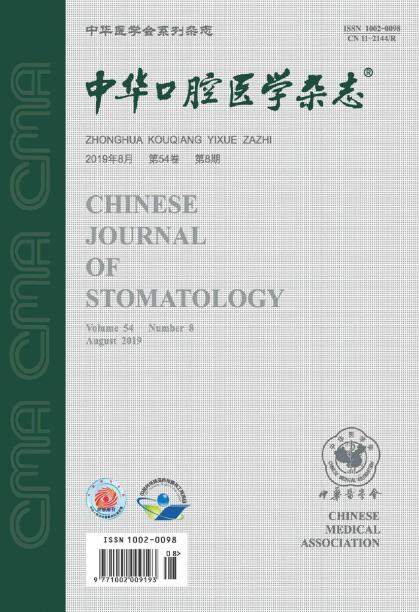
Founded in August 1953, Chinese Journal of Stomatology is a monthly academic journal of stomatology published publicly at home and abroad, sponsored by the Chinese Medical Association and co-sponsored by the Chinese Stomatology Association. It mainly reports the leading scientific research results and clinical diagnosis and treatment experience in the field of oral medicine, as well as the basic theoretical research that has a guiding role in oral clinical practice and is closely combined with oral clinical practice.
Chinese Journal of Over the years, Stomatology has been published in Medline, Scopus database, Toxicology Abstracts Database, Chemical Abstracts Database, American Cancer database, Russian Abstracts database, China Core Journal of Science and Technology, Peking University Core Journal, CSCD and other more than 20 important journals at home and abroad Physical medicine database and retrieval system included.

 求助内容:
 应助结果提醒方式:


 京公网安备 11010802042870号


