{"title":"[Periodontitis: epithelial cells-fibroblasts pathological reprogramming and inflammatory memory].","authors":"Y N Yang, L J Luo","doi":"10.3760/cma.j.cn112144-20251120-00457","DOIUrl":null,"url":null,"abstract":"<p><p>Gingival epithelial cells and fibroblasts maintain oral mucosal homeostasis. In periodontitis, these cells undergo pathological reprogramming to drive chronic inflammation and tissue destruction. This review outlines the mechanisms underlying this transformation. Epithelial barrier disruption initiates inflammation, activating gingival fibroblasts via epithelial-derived extracellular vesicles, microbial engagement, and cytokines. These gingival fibroblasts differentiate into pro-inflammatory gingival fibroblasts such as those highly expressing serum amyloid A1 and those with a senescence-associated secretory phenotype. Cellular senescence, its associated secretory phenotype and epigenetic modifications synergistically stabilize these pathological phenotypes. Reprogrammed cells, including epithelial cells undergoing epithelial-mesenchymal transition and fibroblasts with a senescence-associated secretory phenotype, ultimately drive extracellular matrix degradation and alveolar bone resorption by overproducing matrix metalloproteinases and upregulating receptor activator of NF-κB ligand. Targeting pro-inflammatory gingival fibroblasts subpopulations may offer precision interventions for periodontitis.</p>","PeriodicalId":23965,"journal":{"name":"中华口腔医学杂志","volume":"61 10","pages":"1530-1535"},"PeriodicalIF":0.0000,"publicationDate":"2026-10-09","publicationTypes":"Journal Article","fieldsOfStudy":null,"isOpenAccess":false,"openAccessPdf":"","citationCount":"0","resultStr":null,"platform":"Semanticscholar","paperid":null,"PeriodicalName":"中华口腔医学杂志","FirstCategoryId":"3","ListUrlMain":"https://doi.org/10.3760/cma.j.cn112144-20251120-00457","RegionNum":0,"RegionCategory":null,"ArticlePicture":[],"TitleCN":null,"AbstractTextCN":null,"PMCID":null,"EPubDate":"","PubModel":"","JCR":"Q4","JCRName":"Medicine","Score":null,"Total":0}
引用次数: 0
Abstract
Gingival epithelial cells and fibroblasts maintain oral mucosal homeostasis. In periodontitis, these cells undergo pathological reprogramming to drive chronic inflammation and tissue destruction. This review outlines the mechanisms underlying this transformation. Epithelial barrier disruption initiates inflammation, activating gingival fibroblasts via epithelial-derived extracellular vesicles, microbial engagement, and cytokines. These gingival fibroblasts differentiate into pro-inflammatory gingival fibroblasts such as those highly expressing serum amyloid A1 and those with a senescence-associated secretory phenotype. Cellular senescence, its associated secretory phenotype and epigenetic modifications synergistically stabilize these pathological phenotypes. Reprogrammed cells, including epithelial cells undergoing epithelial-mesenchymal transition and fibroblasts with a senescence-associated secretory phenotype, ultimately drive extracellular matrix degradation and alveolar bone resorption by overproducing matrix metalloproteinases and upregulating receptor activator of NF-κB ligand. Targeting pro-inflammatory gingival fibroblasts subpopulations may offer precision interventions for periodontitis.
期刊介绍:
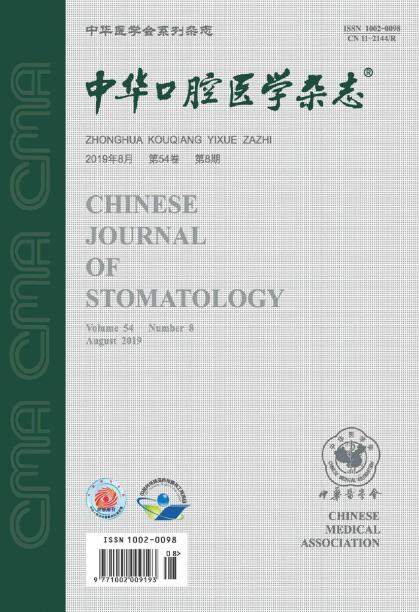
Founded in August 1953, Chinese Journal of Stomatology is a monthly academic journal of stomatology published publicly at home and abroad, sponsored by the Chinese Medical Association and co-sponsored by the Chinese Stomatology Association. It mainly reports the leading scientific research results and clinical diagnosis and treatment experience in the field of oral medicine, as well as the basic theoretical research that has a guiding role in oral clinical practice and is closely combined with oral clinical practice.
Chinese Journal of Over the years, Stomatology has been published in Medline, Scopus database, Toxicology Abstracts Database, Chemical Abstracts Database, American Cancer database, Russian Abstracts database, China Core Journal of Science and Technology, Peking University Core Journal, CSCD and other more than 20 important journals at home and abroad Physical medicine database and retrieval system included.

 求助内容:
 应助结果提醒方式:


 京公网安备 11010802042870号


