{"title":"Interventions for treatment of herpes labialis (cold sores on the lips).","authors":"Huang-Shen Lin, Pei-Tzu Lin, I-Chieh Shih, Meng-Lin Lu, Yu-Shiun Tsai, Ching-Chi Chi","doi":"10.1002/14651858.CD015216.pub2","DOIUrl":null,"url":null,"abstract":"<p><strong>Rationale: </strong>Herpes labialis (also known as cold sores or fever blisters) is a highly prevalent recurrent infection caused by the herpes simplex virus. Recurrences arise from varied triggers. Standard treatments usually involve nucleoside antivirals. Several studies have investigated alternative treatments such as zinc, honey, and photodynamic therapy for their potential to shorten lesion duration and relieve symptoms, but most reviews exclude these therapies. We wished to address this evidence gap by evaluating both conventional and alternative approaches, synthesising evidence on efficacy and safety to inform clinical practice and guide patient decisions.</p><p><strong>Objectives: </strong>To assess the benefits and harms of interventions for treating herpes labialis in immunocompetent people.</p><p><strong>Search methods: </strong>We searched CENTRAL, MEDLINE, and Embase on 23 September 2025, and we searched two clinical trial registries (ClinicalTrials.gov and World Health Organization International Clinical Trials Registry Platform) on 1 October 2025.</p><p><strong>Eligibility criteria: </strong>We included randomised controlled trials (RCTs) enrolling immunocompetent people with herpes labialis. Eligible interventions included topical, oral, and physical therapies (e.g. nucleoside antivirals, anti-inflammatory agents, phototherapy, photodynamic therapy). Eligible comparators were placebo, no treatment, or another active intervention. We applied no restrictions related to publication language or status (published, unpublished, in press, or in progress).</p><p><strong>Outcomes: </strong>Our critical outcomes were healing time (with healing defined as loss of crusts or all symptoms), rated by participants or investigators; and any adverse events leading to treatment cessation. Our important outcomes were participant-rated improvement of signs and symptoms (e.g. global rate of change scales), change from baseline in clinical episode severity (e.g. lesion size), change from baseline in pain severity, and any mild or moderate adverse events not leading to treatment cessation.</p><p><strong>Risk of bias: </strong>We assessed the risk of bias using the Cochrane RoB 2 tool.</p><p><strong>Synthesis methods: </strong>We synthesised outcomes descriptively and pooled data with a random-effects meta-analysis using the inverse-variance method where appropriate. We reported dichotomous outcomes as risk ratios (RRs), continuous outcomes as mean differences (MDs), and time-to-event data as hazard ratios (HRs), all with 95% confidence intervals (CIs). For rare outcomes, we calculated the Peto odds ratio (OR). We assessed heterogeneity using the I² statistic and performed subgroup analyses by intervention or dose. We also conducted sensitivity analyses, excluding trials with high risk of bias. We rated the certainty of evidence using the GRADE approach.</p><p><strong>Included studies: </strong>We included 87 RCTs with 22,631 participants. Forty-two trials were conducted in multiple centres and 39 in a single centre (the remaining 6 trials did not report number of centres). Most participants were adults (≥ 18 years), though some trials also enrolled younger individuals. The trials covered 58 interventions: 37 topical, eight oral, and 12 other therapies. Forty-three trials were industry funded, 25 received funding from non-profit organisations, one received no funding, and 18 did not report funding sources.</p><p><strong>Synthesis of results: </strong>No studies in our main comparisons reported participant-rated improvement of signs and symptoms, change from baseline in clinical episode severity, or change from baseline in pain severity. Topical aciclovir versus placebo Topical aciclovir probably reduces healing time compared with placebo (MD -0.88 days, 95% CI -1.43 to -0.33; I<sup>2</sup> = 74%; 7 studies, 3475 participants; moderate-certainty evidence). The risk of adverse events leading to treatment cessation and the risk of mild or moderate adverse events are probably similar with topical aciclovir and placebo. Topical penciclovir versus placebo Topical penciclovir probably reduces healing time compared with placebo (MD -1.20 days, 95% CI -1.80 to -0.60; 528 participants; moderate-certainty evidence). The risk of adverse events leading to treatment cessation and the risk of mild or moderate adverse events are probably similar with topical penciclovir and placebo. Oral aciclovir versus placebo Oral aciclovir may result in little to no difference in healing time compared with placebo (MD -0.86 days, 95% CI -2.02 to 0.3; 1 study, 145 participants; low-certainty evidence). No studies in this comparison reported data for adverse effects. Oral valaciclovir versus placebo Oral valaciclovir reduces healing time compared with placebo (MD -1.05 days, 95% CI -1.40 to -0.70; P < 0.001, I² = 0%; 2 studies, 1218 participants). The trials evaluating this comparison reported no adverse events leading to treatment cessation. The risk of mild or moderate adverse events is probably similar with oral valaciclovir and placebo. Topical penciclovir versus topical aciclovir Topical penciclovir and topical aciclovir may have similar effects on healing time (hazard ratio (HR) 0.88, 95% CI 0.67 to 1.16; 1 study, 225 participants; low-certainty evidence). The trial evaluating this comparison reported no adverse events leading to treatment cessation. The risk of mild or moderate adverse events may be similar with topical penciclovir and topical aciclovir. Topical aciclovir versus oral aciclovir No trials compared topical aciclovir with oral aciclovir.</p><p><strong>Authors' conclusions: </strong>Compared with placebo, topical nucleoside antivirals (aciclovir and penciclovir) probably reduce cold sore healing time by about one day. A study that compared topical penciclovir with topical aciclovir found that they may have similar effects on healing time. For oral nucleoside antivirals, we found that oral aciclovir compared with placebo may have little or no effect on healing time, while oral valaciclovir reduces healing time by about one day. The clinical importance of all reported reductions in healing time is uncertain, as no minimally important difference has been defined for this outcome in herpes labialis. Severe adverse events were rare, and mild or moderate adverse events were uncommon. Adverse events were generally balanced between treatments. From an equity standpoint, most studies focused on adults, predominantly women, with limited East Asian and paediatric representation. Future research should address these gaps by including under-represented groups and standardising outcomes for robust comparisons. Developing core outcome sets for recurrent herpes labialis would enhance consistency, support evidence synthesis, and guide clinicians towards more effective, equitable treatments globally.</p><p><strong>Funding: </strong>This review had no dedicated funding.</p><p><strong>Registration: </strong>Protocol (2022) DOI: 10.1002/14651858.CD015216.</p>","PeriodicalId":10473,"journal":{"name":"Cochrane Database of Systematic Reviews","volume":"9 ","pages":"CD015216"},"PeriodicalIF":11.1000,"publicationDate":"2026-09-30","publicationTypes":"Journal Article","fieldsOfStudy":null,"isOpenAccess":false,"openAccessPdf":"https://www.ncbi.nlm.nih.gov/pmc/articles/PMC13625171/pdf/","citationCount":"0","resultStr":null,"platform":"Semanticscholar","paperid":null,"PeriodicalName":"Cochrane Database of Systematic Reviews","FirstCategoryId":"3","ListUrlMain":"https://doi.org/10.1002/14651858.CD015216.pub2","RegionNum":2,"RegionCategory":"医学","ArticlePicture":[],"TitleCN":null,"AbstractTextCN":null,"PMCID":null,"EPubDate":"","PubModel":"","JCR":"Q1","JCRName":"MEDICINE, GENERAL & INTERNAL","Score":null,"Total":0}
引用次数: 0
Abstract
Rationale: Herpes labialis (also known as cold sores or fever blisters) is a highly prevalent recurrent infection caused by the herpes simplex virus. Recurrences arise from varied triggers. Standard treatments usually involve nucleoside antivirals. Several studies have investigated alternative treatments such as zinc, honey, and photodynamic therapy for their potential to shorten lesion duration and relieve symptoms, but most reviews exclude these therapies. We wished to address this evidence gap by evaluating both conventional and alternative approaches, synthesising evidence on efficacy and safety to inform clinical practice and guide patient decisions.
Objectives: To assess the benefits and harms of interventions for treating herpes labialis in immunocompetent people.
Search methods: We searched CENTRAL, MEDLINE, and Embase on 23 September 2025, and we searched two clinical trial registries (ClinicalTrials.gov and World Health Organization International Clinical Trials Registry Platform) on 1 October 2025.
Eligibility criteria: We included randomised controlled trials (RCTs) enrolling immunocompetent people with herpes labialis. Eligible interventions included topical, oral, and physical therapies (e.g. nucleoside antivirals, anti-inflammatory agents, phototherapy, photodynamic therapy). Eligible comparators were placebo, no treatment, or another active intervention. We applied no restrictions related to publication language or status (published, unpublished, in press, or in progress).
Outcomes: Our critical outcomes were healing time (with healing defined as loss of crusts or all symptoms), rated by participants or investigators; and any adverse events leading to treatment cessation. Our important outcomes were participant-rated improvement of signs and symptoms (e.g. global rate of change scales), change from baseline in clinical episode severity (e.g. lesion size), change from baseline in pain severity, and any mild or moderate adverse events not leading to treatment cessation.
Risk of bias: We assessed the risk of bias using the Cochrane RoB 2 tool.
Synthesis methods: We synthesised outcomes descriptively and pooled data with a random-effects meta-analysis using the inverse-variance method where appropriate. We reported dichotomous outcomes as risk ratios (RRs), continuous outcomes as mean differences (MDs), and time-to-event data as hazard ratios (HRs), all with 95% confidence intervals (CIs). For rare outcomes, we calculated the Peto odds ratio (OR). We assessed heterogeneity using the I² statistic and performed subgroup analyses by intervention or dose. We also conducted sensitivity analyses, excluding trials with high risk of bias. We rated the certainty of evidence using the GRADE approach.
Included studies: We included 87 RCTs with 22,631 participants. Forty-two trials were conducted in multiple centres and 39 in a single centre (the remaining 6 trials did not report number of centres). Most participants were adults (≥ 18 years), though some trials also enrolled younger individuals. The trials covered 58 interventions: 37 topical, eight oral, and 12 other therapies. Forty-three trials were industry funded, 25 received funding from non-profit organisations, one received no funding, and 18 did not report funding sources.
Synthesis of results: No studies in our main comparisons reported participant-rated improvement of signs and symptoms, change from baseline in clinical episode severity, or change from baseline in pain severity. Topical aciclovir versus placebo Topical aciclovir probably reduces healing time compared with placebo (MD -0.88 days, 95% CI -1.43 to -0.33; I2 = 74%; 7 studies, 3475 participants; moderate-certainty evidence). The risk of adverse events leading to treatment cessation and the risk of mild or moderate adverse events are probably similar with topical aciclovir and placebo. Topical penciclovir versus placebo Topical penciclovir probably reduces healing time compared with placebo (MD -1.20 days, 95% CI -1.80 to -0.60; 528 participants; moderate-certainty evidence). The risk of adverse events leading to treatment cessation and the risk of mild or moderate adverse events are probably similar with topical penciclovir and placebo. Oral aciclovir versus placebo Oral aciclovir may result in little to no difference in healing time compared with placebo (MD -0.86 days, 95% CI -2.02 to 0.3; 1 study, 145 participants; low-certainty evidence). No studies in this comparison reported data for adverse effects. Oral valaciclovir versus placebo Oral valaciclovir reduces healing time compared with placebo (MD -1.05 days, 95% CI -1.40 to -0.70; P < 0.001, I² = 0%; 2 studies, 1218 participants). The trials evaluating this comparison reported no adverse events leading to treatment cessation. The risk of mild or moderate adverse events is probably similar with oral valaciclovir and placebo. Topical penciclovir versus topical aciclovir Topical penciclovir and topical aciclovir may have similar effects on healing time (hazard ratio (HR) 0.88, 95% CI 0.67 to 1.16; 1 study, 225 participants; low-certainty evidence). The trial evaluating this comparison reported no adverse events leading to treatment cessation. The risk of mild or moderate adverse events may be similar with topical penciclovir and topical aciclovir. Topical aciclovir versus oral aciclovir No trials compared topical aciclovir with oral aciclovir.
Authors' conclusions: Compared with placebo, topical nucleoside antivirals (aciclovir and penciclovir) probably reduce cold sore healing time by about one day. A study that compared topical penciclovir with topical aciclovir found that they may have similar effects on healing time. For oral nucleoside antivirals, we found that oral aciclovir compared with placebo may have little or no effect on healing time, while oral valaciclovir reduces healing time by about one day. The clinical importance of all reported reductions in healing time is uncertain, as no minimally important difference has been defined for this outcome in herpes labialis. Severe adverse events were rare, and mild or moderate adverse events were uncommon. Adverse events were generally balanced between treatments. From an equity standpoint, most studies focused on adults, predominantly women, with limited East Asian and paediatric representation. Future research should address these gaps by including under-represented groups and standardising outcomes for robust comparisons. Developing core outcome sets for recurrent herpes labialis would enhance consistency, support evidence synthesis, and guide clinicians towards more effective, equitable treatments globally.
理由:唇疱疹(也被称为唇疱疹或发热水疱)是由单纯疱疹病毒引起的一种非常普遍的复发性感染。复发是由不同的触发因素引起的。标准治疗通常包括核苷类抗病毒药物。一些研究已经调查了替代疗法,如锌、蜂蜜和光动力疗法,因为它们有可能缩短病变持续时间和缓解症状,但大多数综述都排除了这些疗法。我们希望通过评估传统和替代方法来解决这一证据差距,综合有效性和安全性的证据,为临床实践提供信息并指导患者决策。目的:评价免疫功能正常人群唇疱疹干预治疗的利与弊。检索方法:我们于2025年9月23日检索了CENTRAL、MEDLINE和Embase,并于2025年10月1日检索了两个临床试验注册中心(ClinicalTrials.gov和世界卫生组织国际临床试验注册平台)。入选标准:我们纳入了随机对照试验(RCTs),纳入了免疫功能正常的唇疱疹患者。合格的干预措施包括局部、口服和物理治疗(如核苷类抗病毒药物、抗炎药物、光疗、光动力疗法)。符合条件的比较者是安慰剂、未治疗或其他积极干预。我们没有对出版语言或状态(已出版、未出版、出版中或进行中)施加任何限制。结果:我们的关键结果是愈合时间(愈合定义为结痂消失或所有症状),由参与者或研究者评定;以及任何导致停止治疗的不良事件。我们的重要结局是受试者评价的体征和症状的改善(如总体变化率量表),临床发作严重程度(如病变大小)与基线相比的变化,疼痛严重程度与基线相比的变化,以及未导致治疗停止的任何轻度或中度不良事件。偏倚风险:我们使用Cochrane RoB 2工具评估偏倚风险。综合方法:我们对结果进行描述性综合,并在适当的情况下使用反方差法进行随机效应荟萃分析。我们将二分类结果报告为风险比(rr),将连续结果报告为平均差异(MDs),将事件发生时间数据报告为风险比(hr),所有数据均有95%置信区间(ci)。对于罕见的结果,我们计算了Peto优势比(OR)。我们使用I²统计量评估异质性,并按干预或剂量进行亚组分析。我们还进行了敏感性分析,排除了高偏倚风险的试验。我们使用GRADE方法对证据的确定性进行评级。纳入研究:纳入87项随机对照试验,共22,631名受试者。42项试验在多个中心进行,39项在单个中心进行(其余6项试验未报告中心数量)。大多数参与者是成年人(≥18岁),尽管一些试验也招募了年轻人。试验涵盖了58种干预措施:37种局部治疗,8种口服治疗和12种其他治疗。43项试验由工业界资助,25项从非营利组织获得资助,1项没有获得资助,18项没有报告资金来源。综合结果:在我们的主要比较中,没有研究报告了受试者评价的体征和症状的改善,临床发作严重程度与基线相比的变化,或疼痛严重程度与基线相比的变化。局部阿昔洛韦与安慰剂相比,局部阿昔洛韦可能缩短愈合时间(MD -0.88天,95% CI -1.43至-0.33;I2 = 74%; 7项研究,3475名受试者;中等确定性证据)。导致停止治疗的不良事件的风险以及轻度或中度不良事件的风险可能与外用阿昔洛韦和安慰剂相似。局部喷昔洛韦与安慰剂相比,局部喷昔洛韦可能缩短愈合时间(MD -1.20天,95% CI -1.80至-0.60;528名受试者;中等确定性证据)。导致停止治疗的不良事件的风险以及轻度或中度不良事件的风险可能与局部喷昔洛韦和安慰剂相似。口服阿昔洛韦与安慰剂相比,口服阿昔洛韦可能导致愈合时间几乎没有差异(MD -0.86天,95% CI -2.02至0.3;1项研究,145名参与者;低确定性证据)。在此比较中没有研究报告不良反应的数据。口服伐昔洛韦与安慰剂相比,口服伐昔洛韦可缩短愈合时间(MD -1.05天,95% CI -1.40至-0.70;P < 0.001, I²= 0%;2项研究,1218名受试者)。评估这种比较的试验报告没有导致停止治疗的不良事件。轻度或中度不良事件的风险可能与口服伐昔洛韦和安慰剂相似。 局部喷昔洛韦和局部阿昔洛韦可能对愈合时间有相似的影响(风险比(HR) 0.88, 95% CI 0.67 ~ 1.16;1项研究,225名参与者;确定性的证据)。评估这种比较的试验报告没有导致停止治疗的不良事件。轻度或中度不良事件的风险可能与局部喷昔洛韦和局部阿昔洛韦相似。没有试验比较外用阿昔洛韦和口服阿昔洛韦。作者的结论是:与安慰剂相比,局部核苷类抗病毒药物(阿昔洛韦和penciclovir)可能使唇疱疹愈合时间缩短约一天。一项比较局部喷昔洛韦和局部阿昔洛韦的研究发现,它们在愈合时间上可能有相似的效果。对于口服核苷类抗病毒药物,我们发现口服阿昔洛韦与安慰剂相比可能对愈合时间影响很小或没有影响,而口服伐昔洛韦可使愈合时间缩短约一天。所有报道的愈合时间减少的临床重要性是不确定的,因为在唇疱疹的这个结果中没有定义最小的重要差异。严重不良事件罕见,轻度或中度不良事件罕见。不良事件在不同治疗之间基本平衡。从公平的角度来看,大多数研究集中于成年人,主要是妇女,东亚和儿科代表有限。未来的研究应该通过纳入代表性不足的群体和标准化结果来解决这些差距。制定复发性唇疱疹的核心结局集将加强一致性,支持证据合成,并指导临床医生在全球范围内进行更有效、更公平的治疗。经费:本综述没有专门的经费。注册:协议(2022)DOI: 10.1002/14651858.CD015216。
期刊介绍:
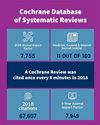
The Cochrane Database of Systematic Reviews (CDSR) stands as the premier database for systematic reviews in healthcare. It comprises Cochrane Reviews, along with protocols for these reviews, editorials, and supplements. Owned and operated by Cochrane, a worldwide independent network of healthcare stakeholders, the CDSR (ISSN 1469-493X) encompasses a broad spectrum of health-related topics, including health services.

 求助内容:
 应助结果提醒方式:


 京公网安备 11010802042870号


