Kaushadh Jayakody, Sarah Chuang, Shalmini Gunadasa, Roger Carl Gibson, Ajit Kumar, Philip Tune
{"title":"Zuclopenthixol acetate for acute schizophrenia and similar major mental illnesses.","authors":"Kaushadh Jayakody, Sarah Chuang, Shalmini Gunadasa, Roger Carl Gibson, Ajit Kumar, Philip Tune","doi":"10.1002/14651858.CD000525.pub4","DOIUrl":null,"url":null,"abstract":"<p><strong>Rationale: </strong>Schizophrenia is a serious mental health condition that can cause long-term disability and major disruption to daily life. People living with schizophrenia may experience psychosis, causing frightening and distressing experiences. At times, this distress may lead to aggressive or violent behaviour towards themselves or others. On such occasions, medications used for the management of aggression and agitation in psychiatric settings must have a rapid onset of action, low frequency of administration and exhibit a minimal adverse-effect profile. Zuclopenthixol acetate is reported to have these properties.</p><p><strong>Objectives: </strong>To evaluate the clinical effectiveness of zuclopenthixol acetate in the management of acute behavioural disturbance in people with acute schizophrenia and similar major mental illnesses, compared with other pharmacological agents used for the treatment of similar clinical presentations.</p><p><strong>Search methods: </strong>We searched the Cochrane Schizophrenia Study-Based Register of Randomised Controlled Trials, CENTRAL and MEDLINE, supplemented by citation searching and contacting study authors. The date of the last search was 8 September 2025.</p><p><strong>Eligibility criteria: </strong>Randomised controlled trials (RCTs) involving participants with major mental illnesses that compared zuclopenthixol acetate with standard pharmacological treatments were included, with predefined exclusion criteria applied.</p><p><strong>Outcomes: </strong>Our outcomes were tranquillisation, sedation (measured between 15 minutes and 48 hours), global state (including the need for additional medications), behaviour, mental state and adverse effects (evaluated up to seven days). These outcomes were also used to compare lower doses of zuclopenthixol acetate (25 mg to 50 mg per injection) with higher doses (50 mg to 100 mg per injection).</p><p><strong>Risk of bias: </strong>We used the Cochrane risk of bias tool (RoB 1).</p><p><strong>Synthesis methods: </strong>Data extraction and cross-checking were performed independently by the review authors, and the risk of bias in the included studies was systematically assessed. We synthesised results for each outcome using meta-analysis where possible. Review Manager and the GRADE profiler were used for data synthesis and evaluation of the certainty of evidence.</p><p><strong>Included studies: </strong>We included 11 studies with 714 participants. All studies were RCTs and investigated the effect of intramuscular zuclopenthixol acetate. The risk of bias was variable: two studies reported adequate random sequence generation, one confirmed allocation concealment, four reported participant blinding and five reported assessor blinding. Outcomes were clearly reported in three studies, but selective reporting was identified in 10 of 11 included studies. Overall, the certainty of evidence ranged from moderate to very low.</p><p><strong>Synthesis of results: </strong>Tranquillisation and sedation There may be no difference in the proportion of participants achieving tranquillisation at 15 minutes between zuclopenthixol acetate versus intramuscular haloperidol plus promethazine (risk ratio (RR) 2.27, 95% confidence interval (CI) 0.89 to 5.81; P = 0.09; 1 study, 74 participants; low-certainty evidence). Zuclopenthixol acetate may not differ from standard medications in the number of participants who were sedated at two hours (RR 0.60, CI 0.27 to 1.34; P = 0.21; 1 study, 40 participants); four hours (RR 1.04, CI 0.76 to 1.43; P = 0.81, I<sup>2</sup> = 85%; 2 studies, 114 participants); or eight hours (RR 0.72, CI 0.51 to 1.03; P = 0.07; 1 study, 40 participants). At 15 minutes, the evidence suggests that probably more participants in the haloperidol plus promethazine group were sedated than in the zuclopenthixol acetate group (RR 1.31, CI 1.06 to 1.63; P = 0.01; 1 study, 74 participants; moderate-certainty evidence). In contrast, probably more participants in the zuclopenthixol acetate group were sedated at 24 hours (RR 0.25, CI 0.11 to 0.54; P < 0.001; 1 study, 74 participants; moderate-certainty evidence; and at 48 hours (RR 0.62, CI 0.43 to 0.89; P = 0.009; 1 study, 74 participants). Global state No differences were identified between zuclopenthixol acetate and standard medications on the Clinical Global Impression scale, the Brief Psychiatric Rating Scale (BPRS) or the Nurses' Observational Scale for Inpatient Evaluation. No differences were identified between zuclopenthixol acetate and standard medications regarding the use of supplementary antipsychotics (RR 1.49, CI 0.97 to 2.30; P = 0.07, I<sup>2</sup> = 79%; 3 studies, 134 participants), although the use of additional benzodiazepines was lower in the zuclopenthixol acetate group (RR 0.03, CI 0.00 to 0.47; P = 0.01; 1 study, 50 participants); however, the evidence for these outcomes was very uncertain. There was no evidence of a difference between groups in aggressive or related behaviours among participants (2 studies). Adverse effects The evidence suggests that there may be no difference in adverse effects between zuclopenthixol acetate and standard medications (day 1: RR 0.62, CI 0.29 to 1.31; P = 0.21, I<sup>2</sup> = 0%; 2 studies, 222 participants; low-certainty evidence). Dose comparison Zuclopenthixol acetate doses of 25 mg to 50 mg per injection may be as effective as doses of 50 mg to 100 mg per injection for mental state outcomes (BPRS: RR 1.10, CI 0.69 to 1.76; P = 0.69; 1 study, 30 participants) and there may be no difference in adverse effects (Treatment Emergent Symptom Scale (TESS): RR 2.33, CI 0.74 to 7.35; P = 0.15; 1 study, 30 participants), but the evidence is very uncertain.</p><p><strong>Authors' conclusions: </strong>Based on the evidence in this review, there may be no difference between zuclopenthixol acetate and standard medications in the management of acute psychiatric symptoms, tranquillisation and adverse events. Zuclopenthixol acetate was probably associated with a greater degree of sedation at 24 and 48 hours of administration. The use of zuclopenthixol acetate may be associated with a lower requirement for adjunctive benzodiazepines, but this is uncertain. Doses of zuclopenthixol acetate of 25 mg to 50 mg per injection may be as effective as doses of 50 mg to 100 mg per injection (very low-certainty evidence). Recommendations favouring zuclopenthixol acetate over standard medications for the management of acute behavioural disturbance should be interpreted with caution, given the methodological limitations of most included studies.</p><p><strong>Funding: </strong>This study received no external funding.</p><p><strong>Registration: </strong>Original review (2001) DOI: 10.1002/14651858.CD000525 Review update (2004) DOI: 10.1002/14651858.CD000525.pub2 Review update (2012) DOI: 10.1002/14651858.CD000525.pub3.</p>","PeriodicalId":10473,"journal":{"name":"Cochrane Database of Systematic Reviews","volume":"9 ","pages":"CD000525"},"PeriodicalIF":11.1000,"publicationDate":"2026-09-24","publicationTypes":"Journal Article","fieldsOfStudy":null,"isOpenAccess":false,"openAccessPdf":"https://www.ncbi.nlm.nih.gov/pmc/articles/PMC13602363/pdf/","citationCount":"0","resultStr":null,"platform":"Semanticscholar","paperid":null,"PeriodicalName":"Cochrane Database of Systematic Reviews","FirstCategoryId":"3","ListUrlMain":"https://doi.org/10.1002/14651858.CD000525.pub4","RegionNum":2,"RegionCategory":"医学","ArticlePicture":[],"TitleCN":null,"AbstractTextCN":null,"PMCID":null,"EPubDate":"","PubModel":"","JCR":"Q1","JCRName":"MEDICINE, GENERAL & INTERNAL","Score":null,"Total":0}
引用次数: 0
Abstract
Rationale: Schizophrenia is a serious mental health condition that can cause long-term disability and major disruption to daily life. People living with schizophrenia may experience psychosis, causing frightening and distressing experiences. At times, this distress may lead to aggressive or violent behaviour towards themselves or others. On such occasions, medications used for the management of aggression and agitation in psychiatric settings must have a rapid onset of action, low frequency of administration and exhibit a minimal adverse-effect profile. Zuclopenthixol acetate is reported to have these properties.
Objectives: To evaluate the clinical effectiveness of zuclopenthixol acetate in the management of acute behavioural disturbance in people with acute schizophrenia and similar major mental illnesses, compared with other pharmacological agents used for the treatment of similar clinical presentations.
Search methods: We searched the Cochrane Schizophrenia Study-Based Register of Randomised Controlled Trials, CENTRAL and MEDLINE, supplemented by citation searching and contacting study authors. The date of the last search was 8 September 2025.
Eligibility criteria: Randomised controlled trials (RCTs) involving participants with major mental illnesses that compared zuclopenthixol acetate with standard pharmacological treatments were included, with predefined exclusion criteria applied.
Outcomes: Our outcomes were tranquillisation, sedation (measured between 15 minutes and 48 hours), global state (including the need for additional medications), behaviour, mental state and adverse effects (evaluated up to seven days). These outcomes were also used to compare lower doses of zuclopenthixol acetate (25 mg to 50 mg per injection) with higher doses (50 mg to 100 mg per injection).
Risk of bias: We used the Cochrane risk of bias tool (RoB 1).
Synthesis methods: Data extraction and cross-checking were performed independently by the review authors, and the risk of bias in the included studies was systematically assessed. We synthesised results for each outcome using meta-analysis where possible. Review Manager and the GRADE profiler were used for data synthesis and evaluation of the certainty of evidence.
Included studies: We included 11 studies with 714 participants. All studies were RCTs and investigated the effect of intramuscular zuclopenthixol acetate. The risk of bias was variable: two studies reported adequate random sequence generation, one confirmed allocation concealment, four reported participant blinding and five reported assessor blinding. Outcomes were clearly reported in three studies, but selective reporting was identified in 10 of 11 included studies. Overall, the certainty of evidence ranged from moderate to very low.
Synthesis of results: Tranquillisation and sedation There may be no difference in the proportion of participants achieving tranquillisation at 15 minutes between zuclopenthixol acetate versus intramuscular haloperidol plus promethazine (risk ratio (RR) 2.27, 95% confidence interval (CI) 0.89 to 5.81; P = 0.09; 1 study, 74 participants; low-certainty evidence). Zuclopenthixol acetate may not differ from standard medications in the number of participants who were sedated at two hours (RR 0.60, CI 0.27 to 1.34; P = 0.21; 1 study, 40 participants); four hours (RR 1.04, CI 0.76 to 1.43; P = 0.81, I2 = 85%; 2 studies, 114 participants); or eight hours (RR 0.72, CI 0.51 to 1.03; P = 0.07; 1 study, 40 participants). At 15 minutes, the evidence suggests that probably more participants in the haloperidol plus promethazine group were sedated than in the zuclopenthixol acetate group (RR 1.31, CI 1.06 to 1.63; P = 0.01; 1 study, 74 participants; moderate-certainty evidence). In contrast, probably more participants in the zuclopenthixol acetate group were sedated at 24 hours (RR 0.25, CI 0.11 to 0.54; P < 0.001; 1 study, 74 participants; moderate-certainty evidence; and at 48 hours (RR 0.62, CI 0.43 to 0.89; P = 0.009; 1 study, 74 participants). Global state No differences were identified between zuclopenthixol acetate and standard medications on the Clinical Global Impression scale, the Brief Psychiatric Rating Scale (BPRS) or the Nurses' Observational Scale for Inpatient Evaluation. No differences were identified between zuclopenthixol acetate and standard medications regarding the use of supplementary antipsychotics (RR 1.49, CI 0.97 to 2.30; P = 0.07, I2 = 79%; 3 studies, 134 participants), although the use of additional benzodiazepines was lower in the zuclopenthixol acetate group (RR 0.03, CI 0.00 to 0.47; P = 0.01; 1 study, 50 participants); however, the evidence for these outcomes was very uncertain. There was no evidence of a difference between groups in aggressive or related behaviours among participants (2 studies). Adverse effects The evidence suggests that there may be no difference in adverse effects between zuclopenthixol acetate and standard medications (day 1: RR 0.62, CI 0.29 to 1.31; P = 0.21, I2 = 0%; 2 studies, 222 participants; low-certainty evidence). Dose comparison Zuclopenthixol acetate doses of 25 mg to 50 mg per injection may be as effective as doses of 50 mg to 100 mg per injection for mental state outcomes (BPRS: RR 1.10, CI 0.69 to 1.76; P = 0.69; 1 study, 30 participants) and there may be no difference in adverse effects (Treatment Emergent Symptom Scale (TESS): RR 2.33, CI 0.74 to 7.35; P = 0.15; 1 study, 30 participants), but the evidence is very uncertain.
Authors' conclusions: Based on the evidence in this review, there may be no difference between zuclopenthixol acetate and standard medications in the management of acute psychiatric symptoms, tranquillisation and adverse events. Zuclopenthixol acetate was probably associated with a greater degree of sedation at 24 and 48 hours of administration. The use of zuclopenthixol acetate may be associated with a lower requirement for adjunctive benzodiazepines, but this is uncertain. Doses of zuclopenthixol acetate of 25 mg to 50 mg per injection may be as effective as doses of 50 mg to 100 mg per injection (very low-certainty evidence). Recommendations favouring zuclopenthixol acetate over standard medications for the management of acute behavioural disturbance should be interpreted with caution, given the methodological limitations of most included studies.
期刊介绍:
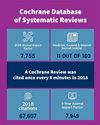
The Cochrane Database of Systematic Reviews (CDSR) stands as the premier database for systematic reviews in healthcare. It comprises Cochrane Reviews, along with protocols for these reviews, editorials, and supplements. Owned and operated by Cochrane, a worldwide independent network of healthcare stakeholders, the CDSR (ISSN 1469-493X) encompasses a broad spectrum of health-related topics, including health services.

 求助内容:
 应助结果提醒方式:


 京公网安备 11010802042870号


