Junyan Chen, Bin Guan, Lei Zhu, Tiankui Zhu, Shiying Chang, Jiangli Ma, Rong Wang, Dongxia Yang, Zhen Huang
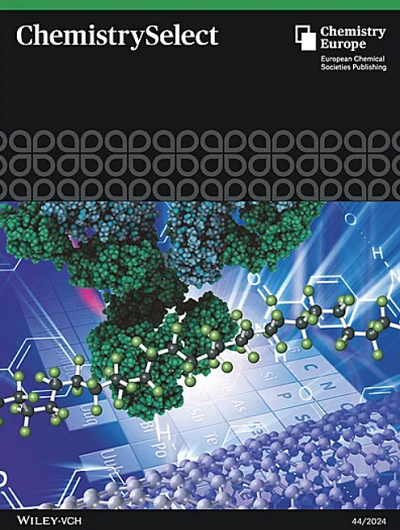
{"title":"Advances in Hydrocarbon Adsorptive Materials: Rational Design, Adsorption Chemistry, and Frontier Applications","authors":"Junyan Chen, Bin Guan, Lei Zhu, Tiankui Zhu, Shiying Chang, Jiangli Ma, Rong Wang, Dongxia Yang, Zhen Huang","doi":"10.1002/slct.74487","DOIUrl":null,"url":null,"abstract":"<div>\n \n <p>This review comprehensively and critically examines the research progress on hydrocarbon (HC) adsorbent materials in three key application scenarios: engine cold-start HC emission control, industrial VOC recovery, and petrochemical HC separation. Written in a general-to-specific structure, the review first outlines the sources and hazards of HC and the advantages of adsorption technology, then explores in detail the adsorption mechanisms, material design, and performance of zeolite molecular sieves, metal–organic frameworks (MOFs), carbon-based materials, and composites by section. In the application reviews, the review points out that zeolite molecular sieves (e.g., ZSM-5) are the mainstream materials for cold-start HC traps due to their unique channel structure, tunable hydrophobicity, and excellent hydrothermal stability; while for olefin/paraffin separation, metal–organic frameworks (such as MOF-74 series with open metal sites) exhibit ultra-high selectivity via π-complexation, making them potential alternatives to energy-intensive distillation. Finally, the review summarizes current challenges in the trade-off between adsorption capacity and selectivity, as well as issues of stability and cost for these materials, and looks ahead to future directions such as novel porous materials, machine learning-aided design, and integrated adsorption-catalysis technologies.</p>\n </div>","PeriodicalId":146,"journal":{"name":"ChemistrySelect","volume":"11 37","pages":""},"PeriodicalIF":2.3000,"publicationDate":"2026-09-23","publicationTypes":"Journal Article","fieldsOfStudy":null,"isOpenAccess":false,"openAccessPdf":"","citationCount":"0","resultStr":null,"platform":"Semanticscholar","paperid":null,"PeriodicalName":"ChemistrySelect","FirstCategoryId":"92","ListUrlMain":"https://onlinelibrary.wiley.com/doi/10.1002/slct.74487","RegionNum":4,"RegionCategory":"化学","ArticlePicture":[],"TitleCN":null,"AbstractTextCN":null,"PMCID":null,"EPubDate":"","PubModel":"","JCR":"Q3","JCRName":"CHEMISTRY, MULTIDISCIPLINARY","Score":null,"Total":0}
引用次数: 0
Abstract
This review comprehensively and critically examines the research progress on hydrocarbon (HC) adsorbent materials in three key application scenarios: engine cold-start HC emission control, industrial VOC recovery, and petrochemical HC separation. Written in a general-to-specific structure, the review first outlines the sources and hazards of HC and the advantages of adsorption technology, then explores in detail the adsorption mechanisms, material design, and performance of zeolite molecular sieves, metal–organic frameworks (MOFs), carbon-based materials, and composites by section. In the application reviews, the review points out that zeolite molecular sieves (e.g., ZSM-5) are the mainstream materials for cold-start HC traps due to their unique channel structure, tunable hydrophobicity, and excellent hydrothermal stability; while for olefin/paraffin separation, metal–organic frameworks (such as MOF-74 series with open metal sites) exhibit ultra-high selectivity via π-complexation, making them potential alternatives to energy-intensive distillation. Finally, the review summarizes current challenges in the trade-off between adsorption capacity and selectivity, as well as issues of stability and cost for these materials, and looks ahead to future directions such as novel porous materials, machine learning-aided design, and integrated adsorption-catalysis technologies.
期刊介绍:
ChemistrySelect is the latest journal from ChemPubSoc Europe and Wiley-VCH. It offers researchers a quality society-owned journal in which to publish their work in all areas of chemistry. Manuscripts are evaluated by active researchers to ensure they add meaningfully to the scientific literature, and those accepted are processed quickly to ensure rapid online publication.

 求助内容:
 应助结果提醒方式:


 京公网安备 11010802042870号


