Qiao-Sheng Zhang, Jun-Jie Xu, Zhen-Yu Sun, Zhao-Man Zhong, Jie Liu, Yan-Li Wu, Wan-Qin Li, Meng-Jie Hu, Hong-Peng Li
{"title":"A nonlinear multi-omics data integration and classification model based on pathway self-attention and graph convolutional networks.","authors":"Qiao-Sheng Zhang, Jun-Jie Xu, Zhen-Yu Sun, Zhao-Man Zhong, Jie Liu, Yan-Li Wu, Wan-Qin Li, Meng-Jie Hu, Hong-Peng Li","doi":"10.16288/j.yczz.25-275","DOIUrl":null,"url":null,"abstract":"<p><p>The abundance of omics data has significantly advanced the development of multi-omics data integration techniques. Non-linear embedding approaches for data integration have gradually become the mainstream in multi-omics research, as these approaches can substantially improve cancer analysis by enhancing the quality of the embeddings. However, current multi-omics data integration methods are typically confined to omics measurements, neglecting domain-specific prior knowledge encompassing biological pathways. In this study, we proposed a multi-omics integrated classification model, PathTransGCN, based on pathway self-attention and graph convolutional networks (GCN). The model integrated biological pathway information into multi-omics data analysis with the aim of enhancing the accuracy of cancer classification. Multi-omics data for breast cancer (BRCA), non-small cell lung cancer (NSCLC), and low-grade glioma (LGG) were obtained from The Cancer Genome Atlas (TCGA) and UCSC Xena databases. These data included gene mutations, DNA methylation, copy number variations, and gene expression, and were used to assess the model's generalizability across different cancers. First, PathTransGCN employed a pathway self-attention module to learn latent representations of samples across different pathways, thereby obtaining multi-omics integration vectors. Concurrently, a patient similarity network (PSN) was constructed using the similarity network fusion (SNF) approach. Second, the integrated vectors and the PSN were jointly fed into a GCN for end-to-end training, enabling precise classification of cancer subtypes. Through multi-omics data analysis of the BRCA dataset, PathTransGCN outperformed several popular algorithms (such as MoGCN and DeePathNet) in the five-class classification of cancer subtypes, achieving an accuracy rate of 87.6% and an F1 score of 86.4%. Moreover, the model demonstrated robust generalization capabilities across both NSCLC and LGG datasets, while effectively identifying key disease-associated biomarkers at the pathway level. Experimental results demonstrate that PathTransGCN exhibits outstanding performance in integrating omics data and delivering interpretable classification outcomes, presenting significant potential for clinical applications.</p>","PeriodicalId":35536,"journal":{"name":"遗传","volume":"48 9","pages":"931-945"},"PeriodicalIF":0.0000,"publicationDate":"2026-09-01","publicationTypes":"Journal Article","fieldsOfStudy":null,"isOpenAccess":false,"openAccessPdf":"","citationCount":"0","resultStr":null,"platform":"Semanticscholar","paperid":null,"PeriodicalName":"遗传","FirstCategoryId":"1091","ListUrlMain":"https://doi.org/10.16288/j.yczz.25-275","RegionNum":0,"RegionCategory":null,"ArticlePicture":[],"TitleCN":null,"AbstractTextCN":null,"PMCID":null,"EPubDate":"","PubModel":"","JCR":"Q3","JCRName":"Medicine","Score":null,"Total":0}
引用次数: 0
Abstract
The abundance of omics data has significantly advanced the development of multi-omics data integration techniques. Non-linear embedding approaches for data integration have gradually become the mainstream in multi-omics research, as these approaches can substantially improve cancer analysis by enhancing the quality of the embeddings. However, current multi-omics data integration methods are typically confined to omics measurements, neglecting domain-specific prior knowledge encompassing biological pathways. In this study, we proposed a multi-omics integrated classification model, PathTransGCN, based on pathway self-attention and graph convolutional networks (GCN). The model integrated biological pathway information into multi-omics data analysis with the aim of enhancing the accuracy of cancer classification. Multi-omics data for breast cancer (BRCA), non-small cell lung cancer (NSCLC), and low-grade glioma (LGG) were obtained from The Cancer Genome Atlas (TCGA) and UCSC Xena databases. These data included gene mutations, DNA methylation, copy number variations, and gene expression, and were used to assess the model's generalizability across different cancers. First, PathTransGCN employed a pathway self-attention module to learn latent representations of samples across different pathways, thereby obtaining multi-omics integration vectors. Concurrently, a patient similarity network (PSN) was constructed using the similarity network fusion (SNF) approach. Second, the integrated vectors and the PSN were jointly fed into a GCN for end-to-end training, enabling precise classification of cancer subtypes. Through multi-omics data analysis of the BRCA dataset, PathTransGCN outperformed several popular algorithms (such as MoGCN and DeePathNet) in the five-class classification of cancer subtypes, achieving an accuracy rate of 87.6% and an F1 score of 86.4%. Moreover, the model demonstrated robust generalization capabilities across both NSCLC and LGG datasets, while effectively identifying key disease-associated biomarkers at the pathway level. Experimental results demonstrate that PathTransGCN exhibits outstanding performance in integrating omics data and delivering interpretable classification outcomes, presenting significant potential for clinical applications.
期刊介绍:
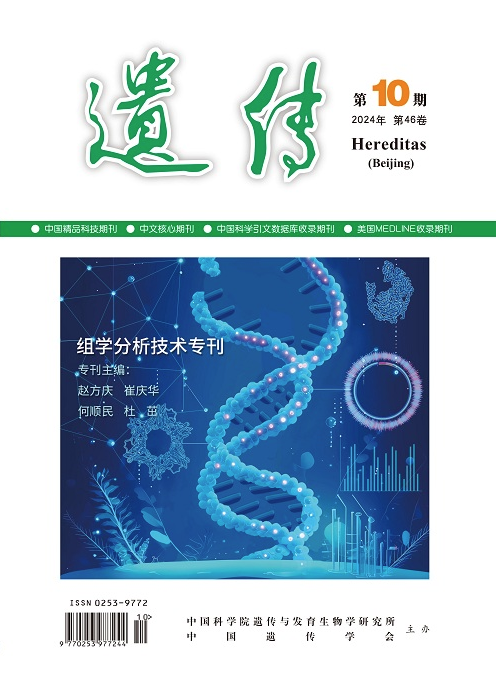
Hereditas is a national academic journal sponsored by the Institute of Genetics and Developmental Biology of the Chinese Academy of Sciences and the Chinese Society of Genetics and published by Science Press. It is a Chinese core journal and a Chinese high-quality scientific journal. The journal mainly publishes innovative research papers in the fields of genetics, genomics, cell biology, developmental biology, biological evolution, genetic engineering and biotechnology; new technologies and new methods; monographs and reviews on hot issues in the discipline; academic debates and discussions; experience in genetics teaching; introductions to famous geneticists at home and abroad; genetic counseling; information on academic conferences at home and abroad, etc. Main columns: review, frontier focus, research report, technology and method, resources and platform, experimental operation guide, genetic resources, genetics teaching, scientific news, etc.

 求助内容:
 应助结果提醒方式:


 京公网安备 11010802042870号


