
Determinants of Phase-Separation Propensities, Material States, and Material Properties of Biomolecular Condensates

IF 14.1 Q1 CHEMISTRY, MULTIDISCIPLINARY
Huan-Xiang Zhou
{"title":"Determinants of Phase-Separation Propensities, Material States, and Material Properties of Biomolecular Condensates","authors":"Huan-Xiang Zhou","doi":"10.1021/accountsmr.6c00147","DOIUrl":null,"url":null,"abstract":"Phase separation of various materials has been studied for one and a half centuries, laying foundational principles in materials science. In the last two decades, phase separation of proteins and nucleic acids has received enormous attention, due to its relevance to cellular functions. Despite this explosion of empirical data, many observations on the resulting biomolecular condensates lack a rigorous theoretical underpinning. The first goal of this Account is to put forward theoretical frameworks for the phase-separation propensities, material states, and material properties of biomolecular condensates. Using these frameworks, I rationalize mechanistic interpretations in our recent experimental and computational studies, and synthesize these studies with prior literature to draw novel, unifying conclusions. To evaluate phase-separation propensities, I establish a direct relationship between the threshold (or saturation) concentration (Cth) and the excess chemical potential in the dense phase (μIIex). μIIex is fundamentally dictated by the collective strength and valency of intermolecular interactions. The relationship between Cth and μIIex readily rationalizes the effects of amino-acid composition and solvent conditions like temperature, pH, and salt on phase-separation propensities. Regarding material states, I posit that liquid droplets represent the completion of phase separation, whereas other states─including amorphous dense liquids, reversible aggregates, and gels─arise from premature termination of spinodal decomposition. Specifically, amorphous dense liquids occur near the critical point and early during spinodal decomposition, kinetically trapped as overly weak interactions prevent further condensation. Gels and aggregates are different forms of dynamically arrested states, one driven by directional interactions that favor tip growth, extending outward into system-spanning networks, the other driven by monomer addition at interior sites to maximize valency, producing densely packed, amorphous particles. For material properties, I highlight the crucial roles of the stress relaxation time (τ1), which is determined by the mean lifetime of intermolecular bonds in a condensate. This relaxation time dictates how the condensate manifests viscoelasticity, including shear thickening and shear thinning, and accounts for the wide variation in zero-shear viscosity (ηz) among different condensates. Indeed, I propose a correlation between ηz and τ1, which is supported by available data. I also devise a theoretical model to explain the relative constancy of surface tension. Given this constancy, the inverse fusion speed can be used as an indicator of viscosity. Validating and expanding these conclusions will further strengthen the theoretical foundations of the biomolecular condensate field. Looking forward, several high-impact opportunities emerge. First, it may be possible to bridge the persistent gap between all-atom molecular dynamics (MD) simulations and in-vitro experiments, by extending the size and time limits of MD simulations via taking advantage of deep learning. Second, expanding the experimental toolkit, by borrowing techniques from materials research, will further push the study of biomolecular condensates from mesoscales to molecular scales. Finally, testing mechanistic hypotheses inside cells will connect the physics of phase separation to cellular functions.","PeriodicalId":72040,"journal":{"name":"Accounts of materials research","volume":"32 1","pages":""},"PeriodicalIF":14.1000,"publicationDate":"2026-09-16","publicationTypes":"Journal Article","fieldsOfStudy":null,"isOpenAccess":false,"openAccessPdf":"","citationCount":"0","resultStr":null,"platform":"Semanticscholar","paperid":null,"PeriodicalName":"Accounts of materials research","FirstCategoryId":"1085","ListUrlMain":"https://doi.org/10.1021/accountsmr.6c00147","RegionNum":0,"RegionCategory":null,"ArticlePicture":[],"TitleCN":null,"AbstractTextCN":null,"PMCID":null,"EPubDate":"","PubModel":"","JCR":"Q1","JCRName":"CHEMISTRY, MULTIDISCIPLINARY","Score":null,"Total":0}
引用次数: 0

Abstract

Phase separation of various materials has been studied for one and a half centuries, laying foundational principles in materials science. In the last two decades, phase separation of proteins and nucleic acids has received enormous attention, due to its relevance to cellular functions. Despite this explosion of empirical data, many observations on the resulting biomolecular condensates lack a rigorous theoretical underpinning. The first goal of this Account is to put forward theoretical frameworks for the phase-separation propensities, material states, and material properties of biomolecular condensates. Using these frameworks, I rationalize mechanistic interpretations in our recent experimental and computational studies, and synthesize these studies with prior literature to draw novel, unifying conclusions. To evaluate phase-separation propensities, I establish a direct relationship between the threshold (or saturation) concentration (Cth) and the excess chemical potential in the dense phase (μIIex). μIIex is fundamentally dictated by the collective strength and valency of intermolecular interactions. The relationship between Cth and μIIex readily rationalizes the effects of amino-acid composition and solvent conditions like temperature, pH, and salt on phase-separation propensities. Regarding material states, I posit that liquid droplets represent the completion of phase separation, whereas other states─including amorphous dense liquids, reversible aggregates, and gels─arise from premature termination of spinodal decomposition. Specifically, amorphous dense liquids occur near the critical point and early during spinodal decomposition, kinetically trapped as overly weak interactions prevent further condensation. Gels and aggregates are different forms of dynamically arrested states, one driven by directional interactions that favor tip growth, extending outward into system-spanning networks, the other driven by monomer addition at interior sites to maximize valency, producing densely packed, amorphous particles. For material properties, I highlight the crucial roles of the stress relaxation time (τ1), which is determined by the mean lifetime of intermolecular bonds in a condensate. This relaxation time dictates how the condensate manifests viscoelasticity, including shear thickening and shear thinning, and accounts for the wide variation in zero-shear viscosity (ηz) among different condensates. Indeed, I propose a correlation between ηz and τ1, which is supported by available data. I also devise a theoretical model to explain the relative constancy of surface tension. Given this constancy, the inverse fusion speed can be used as an indicator of viscosity. Validating and expanding these conclusions will further strengthen the theoretical foundations of the biomolecular condensate field. Looking forward, several high-impact opportunities emerge. First, it may be possible to bridge the persistent gap between all-atom molecular dynamics (MD) simulations and in-vitro experiments, by extending the size and time limits of MD simulations via taking advantage of deep learning. Second, expanding the experimental toolkit, by borrowing techniques from materials research, will further push the study of biomolecular condensates from mesoscales to molecular scales. Finally, testing mechanistic hypotheses inside cells will connect the physics of phase separation to cellular functions.

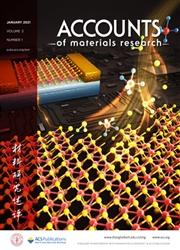
Abstract Image

生物分子凝聚物相分离倾向、物质状态和物质特性的决定因素
各种材料的相分离已经被研究了一个半世纪,奠定了材料科学的基本原理。在过去的二十年中,蛋白质和核酸的相分离由于其与细胞功能的相关性而受到了极大的关注。尽管有大量的经验数据,但许多对由此产生的生物分子凝聚物的观察缺乏严格的理论基础。本报告的第一个目标是为生物分子凝聚物的相分离倾向、物质状态和材料特性提出理论框架。利用这些框架,我在我们最近的实验和计算研究中合理化了机械解释,并将这些研究与先前的文献综合起来,得出新颖的、统一的结论。为了评价相分离倾向,我建立了阈值(或饱和)浓度(Cth)与致密相中过量化学势(μIIex)之间的直接关系。μIIex基本上是由分子间相互作用的集体强度和价决定的。Cth和μIIex之间的关系很容易解释氨基酸组成和溶剂条件(如温度、pH和盐)对相分离倾向的影响。关于物质状态,我假设液滴代表相分离的完成,而其他状态──包括无定形致密液体、可逆聚集体和凝胶──是由于spinodal分解的过早终止而产生的。具体来说,无定形致密液体发生在临界点附近和spinodal分解的早期,由于过于弱的相互作用阻止了进一步的冷凝,它们被动力学捕获。凝胶和聚集体是不同形式的动态捕获状态,一种是由有利于尖端生长的定向相互作用驱动的,向外扩展到系统跨越网络,另一种是由内部位点的单体添加驱动的,以最大化价,产生密集堆积的无定形颗粒。对于材料性质,我强调应力松弛时间(τ1)的关键作用,这是由冷凝物中分子间键的平均寿命决定的。这种弛豫时间决定了凝析油如何表现粘弹性,包括剪切增稠和剪切变薄,并解释了不同凝析油之间零剪切粘度(ηz)的巨大变化。事实上,我提出了ηz和τ1之间的相关性,这是由现有数据支持的。我还设计了一个理论模型来解释表面张力的相对常数。给定这个常数,反熔合速度可用作粘度的一个指标。验证和扩展这些结论将进一步加强生物分子凝析领域的理论基础。展望未来,将出现几个影响深远的机会。首先,利用深度学习扩大全原子分子动力学(MD)模拟的规模和时间限制,有可能弥合全原子分子动力学(MD)模拟与体外实验之间的持续差距。其次,通过借鉴材料研究的技术,扩大实验工具,将进一步推动生物分子凝聚物的研究从中尺度向分子尺度发展。最后,测试细胞内部的机械假设将相分离物理学与细胞功能联系起来。
本文章由计算机程序翻译,如有差异,请以英文原文为准。
求助全文
约1分钟内获得全文 求助全文
来源期刊
CiteScore
17.70
自引率
0.00%
发文量
0
×
引用
GB/T 7714-2015
复制
MLA
复制
APA
复制
导出至
BibTeX EndNote RefMan NoteFirst NoteExpress
×
提示
您的信息不完整,为了账户安全,请先补充。
现在去补充
×
提示
您因"违规操作"
具体请查看互助需知
我知道了
×
提示
确定
请完成安全验证×
copy
已复制链接
快去分享给好友吧!
我知道了
右上角分享
点击右上角分享
0
联系我们:info@booksci.cn Book学术提供免费学术资源搜索服务,方便国内外学者检索中英文文献。致力于提供最便捷和优质的服务体验。 Copyright © 2023 布克学术 All rights reserved.
京ICP备2023020795号-1
ghs 京公网安备 11010802042870号
Book学术文献互助
Book学术文献互助群
群 号:604180095
Book学术官方微信
小红书



