
Heterologous expression of soybean GmIAA9 enhances the tolerance of tobacco to low phosphorus stress
IF 8.1
Q1 PLANT SCIENCES
引用次数: 0
Abstract
Soybean (Glycine max [L.] Merr.) is highly sensitive to phosphorus deficiency, yet the role of AuxIAA genes in phosphorus efficiency remains unclear. Here, we cloned GmIAA9 from a soybean phosphorus-efficient near-isogenic line and investigated its function via heterologous overexpression in tobacco. Under low phosphorus stress (LP), GmIAA9-overexpressing tobacco exhibited markedly improved root architecture, with total root length and surface area increased by 25.4% and 19.4%, respectively, accompanied by a 54.9% increase in total biomass. Physiological analyses revealed that GmIAA9 overexpression elevated acid phosphatase and peroxidase activities by up to 51.6% and 136%, respectively, while reducing malondialdehyde content by 77.0%, indicating enhanced phosphorus mobilization and alleviated oxidative damage. Hormonal measurements showed that GmIAA9 promoted auxin (IAA) and abscisic acid (ABA) accumulation in roots by 245% and 59.4%, respectively, under low phosphorus conditions. qRT-PCR demonstrated rapid (within 1 h) and root-preferential induction of GmIAA9, peaking at 7 h. Transcriptomic profiling implicated differentially expressed genes in phenylpropanoid biosynthesis, cell cycle, and nuclear-cytoplasmic transport pathways. Collectively, these findings from the heterologous tobacco system suggest that GmIAA9 enhances low-phosphorus tolerance through coordinated regulation of root development, phosphorus mobilization, antioxidant defense, and hormone signaling, providing a candidate gene for phosphorus-efficient breeding in soybean.
大豆GmIAA9的异源表达增强了烟草对低磷胁迫的耐受性
大豆(甘氨酸max) [L];[Merr.])对磷缺乏高度敏感,但AuxIAA基因在磷效率中的作用尚不清楚。本研究从大豆磷高效近等基因系中克隆了GmIAA9,并通过烟草的异源过表达研究了其功能。低磷胁迫下,过表达gmiaa9的烟草根系构型显著改善,总根长和根表面积分别增加25.4%和19.4%,总生物量增加54.9%。生理分析显示,GmIAA9过表达使酸性磷酸酶和过氧化物酶活性分别提高了51.6%和136%,同时使丙二醛含量降低了77.0%,表明磷动员增强,氧化损伤减轻。激素测定结果表明,在低磷条件下,GmIAA9促进根系生长素(IAA)和脱落酸(ABA)的积累分别提高了245%和59.4%。qRT-PCR显示GmIAA9快速(在1小时内)和根优先诱导,在7小时达到峰值。转录组学分析涉及苯丙类生物合成、细胞周期和核质转运途径中差异表达的基因。综上所述,这些研究结果表明,GmIAA9通过协调调控根系发育、磷动员、抗氧化防御和激素信号传导,增强了大豆的低磷耐受性,为大豆的磷高效育种提供了候选基因。
本文章由计算机程序翻译,如有差异,请以英文原文为准。
求助全文
约1分钟内获得全文
求助全文
来源期刊
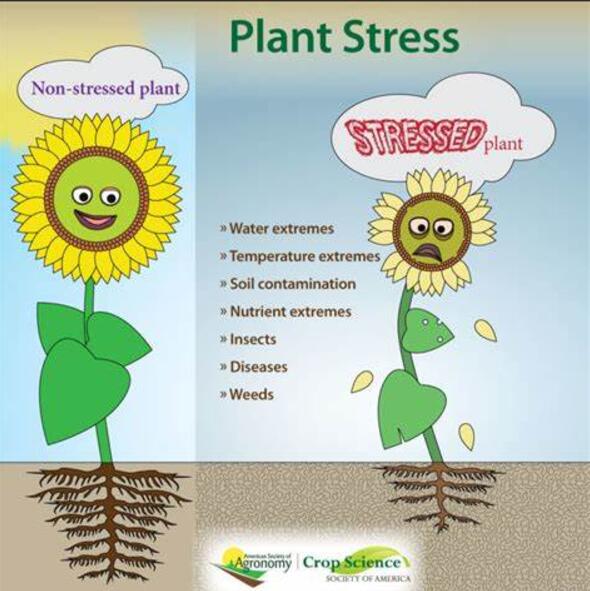
Plant Stress
PLANT SCIENCES-
CiteScore
5.20
自引率
8.00%
发文量
76
审稿时长
63 days
期刊介绍:
The journal Plant Stress deals with plant (or other photoautotrophs, such as algae, cyanobacteria and lichens) responses to abiotic and biotic stress factors that can result in limited growth and productivity. Such responses can be analyzed and described at a physiological, biochemical and molecular level. Experimental approaches/technologies aiming to improve growth and productivity with a potential for downstream validation under stress conditions will also be considered. Both fundamental and applied research manuscripts are welcome, provided that clear mechanistic hypotheses are made and descriptive approaches are avoided. In addition, high-quality review articles will also be considered, provided they follow a critical approach and stimulate thought for future research avenues.
Plant Stress welcomes high-quality manuscripts related (but not limited) to interactions between plants and:
Lack of water (drought) and excess (flooding),
Salinity stress,
Elevated temperature and/or low temperature (chilling and freezing),
Hypoxia and/or anoxia,
Mineral nutrient excess and/or deficiency,
Heavy metals and/or metalloids,
Plant priming (chemical, biological, physiological, nanomaterial, biostimulant) approaches for improved stress protection,
Viral, phytoplasma, bacterial and fungal plant-pathogen interactions.
The journal welcomes basic and applied research articles, as well as review articles and short communications. All submitted manuscripts will be subject to a thorough peer-reviewing process.
 求助内容:
 应助结果提醒方式:


 京公网安备 11010802042870号


