Thanh Tuan Nguyen, Kee Bong Yoon, Anh Dung Ha, Young Wha Ma
{"title":"Temperature Dependence of Creep Deformation and Microfracture Behavior of Aged T91 Steel Using Small Punch Creep Test","authors":"Thanh Tuan Nguyen, Kee Bong Yoon, Anh Dung Ha, Young Wha Ma","doi":"10.1007/s12540-025-02165-6","DOIUrl":null,"url":null,"abstract":"<div><p>This study investigates the applicability of the small punch creep (SPC) test for evaluating the creep properties and remaining service life of thermally aged T91 steel. Experimental campaigns were conducted over the temperature range of 550 °C to 650 °C to characterize the temperature-dependent creep deformation and microfracture mechanisms. The SPC results revealed a typical three-stage creep behavior, which was comparable to that observed in miniature tensile creep tests. A Norton–Bailey-type creep constitutive model was formulated using SPC-derived equivalent stress and strain rate data, showing excellent agreement with both SPC and miniature uniaxial tensile creep results. Fracture consistently initiated via circumferential cracking in the tensile-dominated region on the specimen's lower surface, characterized by significant localized thinning and a high density of creep voids, while the upper compressive region near the punch interface remained entirely void-free. Creep life assessment based on the Larson–Miller Parameter (LMP) demonstrated good correlation between SPC and reference data, confirming the reliability of the method for life prediction. Although thermally aged T91 exhibited a moderate reduction in creep rupture strength and activation energy due to microstructural degradation, SPC tests consistently predicted longer rupture lives than uniaxial tests, highlighting the need for appropriate correlation factors when applying SPC data for engineering assessment.</p><h3>Graphical Abstracts</h3><div><figure><div><div><picture><source><img></source></picture></div></div></figure></div></div>","PeriodicalId":703,"journal":{"name":"Metals and Materials International","volume":"32 10","pages":"3379 - 3399"},"PeriodicalIF":4.5000,"publicationDate":"2026-04-10","publicationTypes":"Journal Article","fieldsOfStudy":null,"isOpenAccess":false,"openAccessPdf":"","citationCount":"0","resultStr":null,"platform":"Semanticscholar","paperid":null,"PeriodicalName":"Metals and Materials International","FirstCategoryId":"88","ListUrlMain":"https://link.springer.com/article/10.1007/s12540-025-02165-6","RegionNum":3,"RegionCategory":"材料科学","ArticlePicture":[],"TitleCN":null,"AbstractTextCN":null,"PMCID":null,"EPubDate":"","PubModel":"","JCR":"Q2","JCRName":"MATERIALS SCIENCE, MULTIDISCIPLINARY","Score":null,"Total":0}
引用次数: 0
Abstract
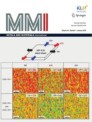
This study investigates the applicability of the small punch creep (SPC) test for evaluating the creep properties and remaining service life of thermally aged T91 steel. Experimental campaigns were conducted over the temperature range of 550 °C to 650 °C to characterize the temperature-dependent creep deformation and microfracture mechanisms. The SPC results revealed a typical three-stage creep behavior, which was comparable to that observed in miniature tensile creep tests. A Norton–Bailey-type creep constitutive model was formulated using SPC-derived equivalent stress and strain rate data, showing excellent agreement with both SPC and miniature uniaxial tensile creep results. Fracture consistently initiated via circumferential cracking in the tensile-dominated region on the specimen's lower surface, characterized by significant localized thinning and a high density of creep voids, while the upper compressive region near the punch interface remained entirely void-free. Creep life assessment based on the Larson–Miller Parameter (LMP) demonstrated good correlation between SPC and reference data, confirming the reliability of the method for life prediction. Although thermally aged T91 exhibited a moderate reduction in creep rupture strength and activation energy due to microstructural degradation, SPC tests consistently predicted longer rupture lives than uniaxial tests, highlighting the need for appropriate correlation factors when applying SPC data for engineering assessment.
期刊介绍:
Metals and Materials International publishes original papers and occasional critical reviews on all aspects of research and technology in materials engineering: physical metallurgy, materials science, and processing of metals and other materials. Emphasis is placed on those aspects of the science of materials that are concerned with the relationships among the processing, structure and properties (mechanical, chemical, electrical, electrochemical, magnetic and optical) of materials. Aspects of processing include the melting, casting, and fabrication with the thermodynamics, kinetics and modeling.

 求助内容:
 应助结果提醒方式:


 京公网安备 11010802042870号


