Seho Cheon, Jinyeong Yu, Seong Ho Lee, Jeonghoon Lee, Sung Hyuk Park, Taekyung Lee
{"title":"Role of Texture in Electropulsing Anisotropy of AZ31 Mg Alloy Rolled Sheet","authors":"Seho Cheon, Jinyeong Yu, Seong Ho Lee, Jeonghoon Lee, Sung Hyuk Park, Taekyung Lee","doi":"10.1007/s12540-025-02186-1","DOIUrl":null,"url":null,"abstract":"<div><p>Despite increased interest in electropulsing treatment (EPT), several of its fundamental principles remain unclear. This study investigated the profound effect of crystallographic texture on EPT-induced microstructural evolution. A hot-rolled AZ31 Mg alloy sheet was designed to have twin-free equiaxed grains, thereby isolating the texture as the sole variable. The results revealed significant electropulsing anisotropy in the alloy. EPT along the rolling direction (RD) remarkably accelerated grain growth and recovery, whereas EPT along the normal direction (ND) suppressed these changes, even under identical current densities. This anisotropy was clarified by separately investigating the thermal and athermal effects. Shifting the electropulsing direction from ND to RD increased the electrical resistivity of the material, producing a more pronounced thermal response (i.e., Joule heating). Furthermore, this directional shift increased the athermal contribution of EPT. It offset a significant current density difference of up to 6 A·mm<sup>− 2</sup> while maintaining similar microstructural evolution. Thus, both the thermal and athermal contributions of the EPT were anisotropic, consistently changing in the order RD > diagonal direction > ND. This study provides critical insights into the interplay between the texture and EPT mechanisms, which is crucial for optimizing the process and developing advanced metallic materials with precisely tailored microstructures.</p><div><figure><div><div><picture><source><img></source></picture></div></div></figure></div></div>","PeriodicalId":703,"journal":{"name":"Metals and Materials International","volume":"32 10","pages":"3610 - 3619"},"PeriodicalIF":4.5000,"publicationDate":"2026-02-26","publicationTypes":"Journal Article","fieldsOfStudy":null,"isOpenAccess":false,"openAccessPdf":"","citationCount":"0","resultStr":null,"platform":"Semanticscholar","paperid":null,"PeriodicalName":"Metals and Materials International","FirstCategoryId":"88","ListUrlMain":"https://link.springer.com/article/10.1007/s12540-025-02186-1","RegionNum":3,"RegionCategory":"材料科学","ArticlePicture":[],"TitleCN":null,"AbstractTextCN":null,"PMCID":null,"EPubDate":"","PubModel":"","JCR":"Q2","JCRName":"MATERIALS SCIENCE, MULTIDISCIPLINARY","Score":null,"Total":0}
引用次数: 0
Abstract
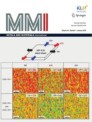
Despite increased interest in electropulsing treatment (EPT), several of its fundamental principles remain unclear. This study investigated the profound effect of crystallographic texture on EPT-induced microstructural evolution. A hot-rolled AZ31 Mg alloy sheet was designed to have twin-free equiaxed grains, thereby isolating the texture as the sole variable. The results revealed significant electropulsing anisotropy in the alloy. EPT along the rolling direction (RD) remarkably accelerated grain growth and recovery, whereas EPT along the normal direction (ND) suppressed these changes, even under identical current densities. This anisotropy was clarified by separately investigating the thermal and athermal effects. Shifting the electropulsing direction from ND to RD increased the electrical resistivity of the material, producing a more pronounced thermal response (i.e., Joule heating). Furthermore, this directional shift increased the athermal contribution of EPT. It offset a significant current density difference of up to 6 A·mm− 2 while maintaining similar microstructural evolution. Thus, both the thermal and athermal contributions of the EPT were anisotropic, consistently changing in the order RD > diagonal direction > ND. This study provides critical insights into the interplay between the texture and EPT mechanisms, which is crucial for optimizing the process and developing advanced metallic materials with precisely tailored microstructures.
期刊介绍:
Metals and Materials International publishes original papers and occasional critical reviews on all aspects of research and technology in materials engineering: physical metallurgy, materials science, and processing of metals and other materials. Emphasis is placed on those aspects of the science of materials that are concerned with the relationships among the processing, structure and properties (mechanical, chemical, electrical, electrochemical, magnetic and optical) of materials. Aspects of processing include the melting, casting, and fabrication with the thermodynamics, kinetics and modeling.

 求助内容:
 应助结果提醒方式:


 京公网安备 11010802042870号


