Huajing Zhou, Hongyan Ren, Lingxiang Zhao, Yu Lei, Xin Lei, Jiarui Han, Bo Pan
{"title":"Unraveling the Importance of Carboxyl Groups in Photochemically Excited Triplet Formation of Chromophoric Dissolved Organic Matter","authors":"Huajing Zhou, Hongyan Ren, Lingxiang Zhao, Yu Lei, Xin Lei, Jiarui Han, Bo Pan","doi":"10.1021/acs.est.6c09614","DOIUrl":null,"url":null,"abstract":"<p>Carboxylation\r\nand decarboxylation are among the most ubiquitous\r\nprocesses in chromophoric dissolved organic matter (CDOM) transformation,\r\noccurring during humification, photooxidation, and microbial activity.\r\nHowever, their impacts on the formation of excited triplet-state CDOM\r\n(<sup>3</sup>CDOM*) remain poorly constrained. Using more than 20\r\nmodel compounds representing common CDOM chromophores, we demonstrate\r\nthat carboxylation enhances triplet quantum yields (Φ) by 1.1–69-fold\r\nrelative to their parent compounds. Consistently, Φ values of\r\nCDOM isolates positively correlate with their carboxyl content. Theoretical\r\ncalculations reveal that carboxylation shifts the lowest excited state\r\nfrom locally excited π–π* character toward mixed\r\nn−π*/charge-transfer states and increases spin–orbit\r\ncoupling, thereby promoting intersystem crossing and triplet formation.\r\nBuilding on these insights, we developed quantitative models that\r\npredict Φ using thermodynamic and electronic descriptors and\r\nestablished empirical relationships between Φ and bulk CDOM\r\nproperties, including molecular weight and total antioxidant capacity.\r\nFurthermore, solar irradiation of humic acid induced decarboxylation\r\naccompanied by a decline in Φ, whereas carboxyl introduction\r\nenhanced the overall photochemical reactivity of CDOM toward organic\r\ncontaminant degradation. Together, these findings elucidate how carboxylation–decarboxylation\r\nmodulates <sup>3</sup>CDOM* formation, advancing mechanistic understanding\r\nof aquatic reactive species generation and natural attenuation of\r\norganic contaminants.</p>","PeriodicalId":36,"journal":{"name":"环境科学与技术","volume":"60 41","pages":"29608–29617"},"PeriodicalIF":12.2000,"publicationDate":"2026-10-20","publicationTypes":"Journal Article","fieldsOfStudy":null,"isOpenAccess":false,"openAccessPdf":"","citationCount":"0","resultStr":null,"platform":"Semanticscholar","paperid":null,"PeriodicalName":"环境科学与技术","FirstCategoryId":"1","ListUrlMain":"https://pubs.acs.org/doi/10.1021/acs.est.6c09614","RegionNum":1,"RegionCategory":"环境科学与生态学","ArticlePicture":[],"TitleCN":null,"AbstractTextCN":null,"PMCID":null,"EPubDate":"2026/9/9 0:00:00","PubModel":"Epub","JCR":"Q1","JCRName":"ENGINEERING, ENVIRONMENTAL","Score":null,"Total":0}
引用次数: 0
Abstract
Carboxylation
and decarboxylation are among the most ubiquitous
processes in chromophoric dissolved organic matter (CDOM) transformation,
occurring during humification, photooxidation, and microbial activity.
However, their impacts on the formation of excited triplet-state CDOM
(3CDOM*) remain poorly constrained. Using more than 20
model compounds representing common CDOM chromophores, we demonstrate
that carboxylation enhances triplet quantum yields (Φ) by 1.1–69-fold
relative to their parent compounds. Consistently, Φ values of
CDOM isolates positively correlate with their carboxyl content. Theoretical
calculations reveal that carboxylation shifts the lowest excited state
from locally excited π–π* character toward mixed
n−π*/charge-transfer states and increases spin–orbit
coupling, thereby promoting intersystem crossing and triplet formation.
Building on these insights, we developed quantitative models that
predict Φ using thermodynamic and electronic descriptors and
established empirical relationships between Φ and bulk CDOM
properties, including molecular weight and total antioxidant capacity.
Furthermore, solar irradiation of humic acid induced decarboxylation
accompanied by a decline in Φ, whereas carboxyl introduction
enhanced the overall photochemical reactivity of CDOM toward organic
contaminant degradation. Together, these findings elucidate how carboxylation–decarboxylation
modulates 3CDOM* formation, advancing mechanistic understanding
of aquatic reactive species generation and natural attenuation of
organic contaminants.
期刊介绍:
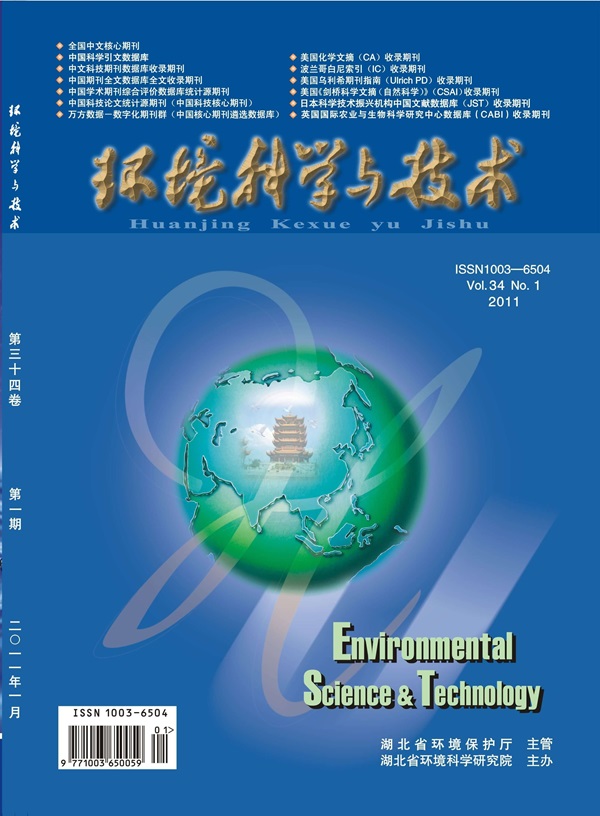
Environmental Science & Technology (ES&T) is a co-sponsored academic and technical magazine by the Hubei Provincial Environmental Protection Bureau and the Hubei Provincial Academy of Environmental Sciences.
Environmental Science & Technology (ES&T) holds the status of Chinese core journals, scientific papers source journals of China, Chinese Science Citation Database source journals, and Chinese Academic Journal Comprehensive Evaluation Database source journals. This publication focuses on the academic field of environmental protection, featuring articles related to environmental protection and technical advancements.

 求助内容:
 应助结果提醒方式:


 京公网安备 11010802042870号


