Baobao Li, Xiangrong Du, Yuan Liu, Hongtao Zhang, Shitong Liu, Shengshu Wang, Xihai Zhao, Fugeng Sheng, Mingming Lu, Jianming Cai
{"title":"Imaging‑based models for predicting cerebrovascular complications of carotid stenosis.","authors":"Baobao Li, Xiangrong Du, Yuan Liu, Hongtao Zhang, Shitong Liu, Shengshu Wang, Xihai Zhao, Fugeng Sheng, Mingming Lu, Jianming Cai","doi":"10.1002/14651858.CD016391","DOIUrl":null,"url":null,"abstract":"<p><strong>Objectives: </strong>This is a protocol for a Cochrane review (prognosis). The objectives are as follows: Primary objective To systematically review and critically appraise multivariable prognostic models developed for adults (≥ 18 years) with carotid stenosis in which imaging biomarkers (e.g. plaque characteristics derived from magnetic resonance imaging (MRI), computed tomography (CT), or ultrasound) constitute the core predictors. The primary focus is to evaluate the predictive performance of these models for cerebrovascular complications - specifically ipsilateral ischaemic stroke and transient ischaemic attack (TIA) - which are the clinical outcomes to be predicted. Where feasible, we will summarise and compare the models' discrimination (C‑statistic/area under the curve (AUC)) and calibration (calibration‑in‑the‑large, calibration slope, observed‑to‑expected ratio) across studies, and assess their potential for clinical application and external validation. For the purpose of defining symptomatic carotid stenosis as an eligibility criterion and subgroup variable, we will include studies that also considered retinal ischaemia (e.g. retinal embolism, amaurosis fugax) as a qualifying event. Secondary objectives To describe the combinations of imaging markers, modelling techniques, sample sizes, and variable‑selection strategies used in the development of the included models To evaluate the performance of these models for additional secondary clinical outcomes: plaque progression or regression, incident high‑risk imaging features, and the transition from asymptomatic to symptomatic disease To explore whether predictive performance differs according to imaging modality (MRI versus CT versus contrast‑enhanced ultrasound (CEUS)) or technical protocol (e.g. 3 T versus 1.5 T, spectral CT versus conventional CT) For studies that report both cerebrovascular and broader cardiovascular outcomes (major adverse cardiovascular events, myocardial infarction, etc.), we will only extract the performance metrics relating to cerebrovascular events for the primary analysis. Performance metrics for cardiovascular outcomes will be considered exploratory and will not form part of the main synthesis.</p>","PeriodicalId":10473,"journal":{"name":"Cochrane Database of Systematic Reviews","volume":"9 ","pages":"CD016391"},"PeriodicalIF":11.1000,"publicationDate":"2026-09-09","publicationTypes":"Journal Article","fieldsOfStudy":null,"isOpenAccess":false,"openAccessPdf":"https://www.ncbi.nlm.nih.gov/pmc/articles/PMC13555772/pdf/","citationCount":"0","resultStr":null,"platform":"Semanticscholar","paperid":null,"PeriodicalName":"Cochrane Database of Systematic Reviews","FirstCategoryId":"3","ListUrlMain":"https://doi.org/10.1002/14651858.CD016391","RegionNum":2,"RegionCategory":"医学","ArticlePicture":[],"TitleCN":null,"AbstractTextCN":null,"PMCID":null,"EPubDate":"","PubModel":"","JCR":"Q1","JCRName":"MEDICINE, GENERAL & INTERNAL","Score":null,"Total":0}
引用次数: 0
Abstract
Objectives: This is a protocol for a Cochrane review (prognosis). The objectives are as follows: Primary objective To systematically review and critically appraise multivariable prognostic models developed for adults (≥ 18 years) with carotid stenosis in which imaging biomarkers (e.g. plaque characteristics derived from magnetic resonance imaging (MRI), computed tomography (CT), or ultrasound) constitute the core predictors. The primary focus is to evaluate the predictive performance of these models for cerebrovascular complications - specifically ipsilateral ischaemic stroke and transient ischaemic attack (TIA) - which are the clinical outcomes to be predicted. Where feasible, we will summarise and compare the models' discrimination (C‑statistic/area under the curve (AUC)) and calibration (calibration‑in‑the‑large, calibration slope, observed‑to‑expected ratio) across studies, and assess their potential for clinical application and external validation. For the purpose of defining symptomatic carotid stenosis as an eligibility criterion and subgroup variable, we will include studies that also considered retinal ischaemia (e.g. retinal embolism, amaurosis fugax) as a qualifying event. Secondary objectives To describe the combinations of imaging markers, modelling techniques, sample sizes, and variable‑selection strategies used in the development of the included models To evaluate the performance of these models for additional secondary clinical outcomes: plaque progression or regression, incident high‑risk imaging features, and the transition from asymptomatic to symptomatic disease To explore whether predictive performance differs according to imaging modality (MRI versus CT versus contrast‑enhanced ultrasound (CEUS)) or technical protocol (e.g. 3 T versus 1.5 T, spectral CT versus conventional CT) For studies that report both cerebrovascular and broader cardiovascular outcomes (major adverse cardiovascular events, myocardial infarction, etc.), we will only extract the performance metrics relating to cerebrovascular events for the primary analysis. Performance metrics for cardiovascular outcomes will be considered exploratory and will not form part of the main synthesis.
目的:这是一个Cochrane评价(预后)的方案。主要目的系统回顾和批判性评估为颈动脉狭窄成人(≥ 18 岁)开发的多变量预后模型,其中成像生物标志物(如磁共振成像(MRI)、计算机断层扫描(CT)或超声得出的斑块特征)构成核心预测因子。主要重点是评估这些模型对脑血管并发症的预测性能-特别是同侧缺血性卒中和短暂性缺血性发作(TIA) -这是需要预测的临床结果。在可行的情况下,我们将总结和比较各研究中模型的区分(C统计量/曲线下面积(AUC))和校准(校准-大,校准斜率,观察到的期望比),并评估其临床应用和外部验证的潜力。为了将症状性颈动脉狭窄定义为合格标准和亚组变量,我们将纳入考虑视网膜缺血(如视网膜栓塞、黑朦)作为合格事件的研究。次要目标描述影像学标记物、建模技术、样本量和模型开发中使用的变量选择策略的组合,以评估这些模型的其他次要临床结果的性能:为了探讨成像方式(MRI vs CT vs超声造影(CEUS))或技术方案(例如3 T vs 1.5 T,频谱CT vs常规CT)对报告脑血管和更广泛心血管结局(主要不良心血管事件、心肌梗死、等),我们将只提取与脑血管事件有关的性能指标进行初步分析。心血管结果的表现指标将被认为是探索性的,不会构成主要综合的一部分。
期刊介绍:
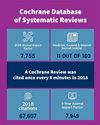
The Cochrane Database of Systematic Reviews (CDSR) stands as the premier database for systematic reviews in healthcare. It comprises Cochrane Reviews, along with protocols for these reviews, editorials, and supplements. Owned and operated by Cochrane, a worldwide independent network of healthcare stakeholders, the CDSR (ISSN 1469-493X) encompasses a broad spectrum of health-related topics, including health services.

 求助内容:
 应助结果提醒方式:


 京公网安备 11010802042870号


