{"title":"[Expert Consensus on Immunotherapy for Extensive-stage Small Cell Lung Cancer \u2029Based on Molecular Subtyping].","authors":"","doi":"10.3779/j.issn.1009-3419.2026.102.18","DOIUrl":null,"url":null,"abstract":"<p><p>Immune checkpoint inhibitors combined with Platinum-based Etopositde chemotherapy have become the first-line standard treatment for extensive-stage small cell lung cancer (ES-SCLC). However, treatment benefit varies substantially among patients, and the proportion of long-term survivors remains limited. In recent years, the molecular classification framework comprising SCLC-A, SCLC-N, SCLC-P and SCLC-I, based on the expression patterns of ASCL1, NEUROD1 and POU2F3 as well as immune-inflammatory status, has provided a new basis for understanding the heterogeneity of immunotherapy response and for developing precision stratified treatment in ES-SCLC. To standardize the clinical translation of molecular subtyping in ES-SCLC immunotherapy, this consensus was developed by multidisciplinary experts from respiratory medicine, oncology, pathology, radiation oncology, and basic medical sciences. Based on domestic and international evidence and clinical experience, the consensus provides recommendations on key issues, including first-line immunotherapy for ES-SCLC, molecular subtyping systems and immune microenvironment characteristics, testing and implementation pathways, immunotherapy-related biomarkers, subtype-informed treatment strategies, and dynamic monitoring. This consensus emphasizes that molecular subtyping should currently be positioned as a tool for biological and clinical research stratification based on standard treatment, and should not be used as an independent basis for treatment decisions. Immunohistochemistry can serve as an important method for qualified centers to conduct subtyping exploration and translational research. The SCLC-I subtype may provide a useful reference for biomarker-based stratification and immunotherapy benefit prediction. For different subtypes, delta-like ligand 3 (DLL3)-targeted therapy, epigenetic regulation, the MYC/AURKA axis, and poly (ADP-ribose) polymerase (PARP) inhibitors can be important choices for subsequent treatment optimization. This consensus aims to standardize pathological testing and clinical application of molecular subtyping in ES-SCLC, facilitate stratified management and individualized treatment optimization based on molecular subtypes, and provide a foundation for building a precision immunotherapy system.\u2029.</p>","PeriodicalId":39317,"journal":{"name":"中国肺癌杂志","volume":"29 7","pages":"475-490"},"PeriodicalIF":0.0000,"publicationDate":"2026-07-20","publicationTypes":"Journal Article","fieldsOfStudy":null,"isOpenAccess":false,"openAccessPdf":"https://www.ncbi.nlm.nih.gov/pmc/articles/PMC13559064/pdf/","citationCount":"0","resultStr":null,"platform":"Semanticscholar","paperid":null,"PeriodicalName":"中国肺癌杂志","FirstCategoryId":"3","ListUrlMain":"https://doi.org/10.3779/j.issn.1009-3419.2026.102.18","RegionNum":0,"RegionCategory":null,"ArticlePicture":[],"TitleCN":null,"AbstractTextCN":null,"PMCID":null,"EPubDate":"","PubModel":"","JCR":"Q4","JCRName":"Medicine","Score":null,"Total":0}
引用次数: 0
Abstract
Immune checkpoint inhibitors combined with Platinum-based Etopositde chemotherapy have become the first-line standard treatment for extensive-stage small cell lung cancer (ES-SCLC). However, treatment benefit varies substantially among patients, and the proportion of long-term survivors remains limited. In recent years, the molecular classification framework comprising SCLC-A, SCLC-N, SCLC-P and SCLC-I, based on the expression patterns of ASCL1, NEUROD1 and POU2F3 as well as immune-inflammatory status, has provided a new basis for understanding the heterogeneity of immunotherapy response and for developing precision stratified treatment in ES-SCLC. To standardize the clinical translation of molecular subtyping in ES-SCLC immunotherapy, this consensus was developed by multidisciplinary experts from respiratory medicine, oncology, pathology, radiation oncology, and basic medical sciences. Based on domestic and international evidence and clinical experience, the consensus provides recommendations on key issues, including first-line immunotherapy for ES-SCLC, molecular subtyping systems and immune microenvironment characteristics, testing and implementation pathways, immunotherapy-related biomarkers, subtype-informed treatment strategies, and dynamic monitoring. This consensus emphasizes that molecular subtyping should currently be positioned as a tool for biological and clinical research stratification based on standard treatment, and should not be used as an independent basis for treatment decisions. Immunohistochemistry can serve as an important method for qualified centers to conduct subtyping exploration and translational research. The SCLC-I subtype may provide a useful reference for biomarker-based stratification and immunotherapy benefit prediction. For different subtypes, delta-like ligand 3 (DLL3)-targeted therapy, epigenetic regulation, the MYC/AURKA axis, and poly (ADP-ribose) polymerase (PARP) inhibitors can be important choices for subsequent treatment optimization. This consensus aims to standardize pathological testing and clinical application of molecular subtyping in ES-SCLC, facilitate stratified management and individualized treatment optimization based on molecular subtypes, and provide a foundation for building a precision immunotherapy system. .
期刊介绍:
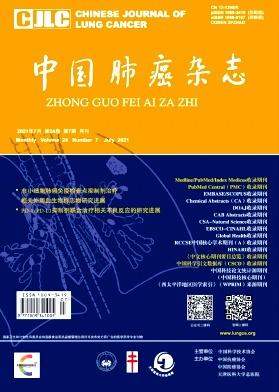
Chinese Journal of Lung Cancer(CJLC, pISSN 1009-3419, eISSN 1999-6187), a monthly Open Access journal, is hosted by Chinese Anti-Cancer Association, Chinese Antituberculosis Association, Tianjin Medical University General Hospital. CJLC was indexed in DOAJ, EMBASE/SCOPUS, Chemical Abstract(CA), CSA-Biological Science, HINARI, EBSCO-CINAHL,CABI Abstract, Global Health, CNKI, etc. Editor-in-Chief: Professor Qinghua ZHOU.

 求助内容:
 应助结果提醒方式:


 京公网安备 11010802042870号


