Jia-Zhi Su, Li-Na Zhu, Xue Chen, Xu Wang, Xi-Han Guo
{"title":"On the role of Y chromosome loss in malignancies: the driving mechanisms and potentials in precision oncology.","authors":"Jia-Zhi Su, Li-Na Zhu, Xue Chen, Xu Wang, Xi-Han Guo","doi":"10.16288/j.yczz.25-329","DOIUrl":null,"url":null,"abstract":"<p><p>Biological sex is a critical determinant influencing the incidence, progression, clinical presentation, and prognosis of human diseases. Beyond sex-specific tumors, men typically exhibit higher morbidity and mortality rates in nearly all tumors compared to women. However, the genetic mechanisms underlying the cancer sex bias are not definitive. Loss of Y chromosome (LOY), the most prevalent somatic mutation in healthy males, frequently occurs in individuals over 50 years of age. On one hand, LOY in peripheral blood immune cells is strongly associated with increased tumor susceptibility. On the other hand, LOY also frequently occurs within tumor cells themselves, leading to the loss of Y-chromosome-linked tumor suppressor genes and non-coding RNAs, thereby reshaping the tumor microenvironment through mechanisms such as metabolic reprogramming and altering tumor immunity. Strikingly, LOY is a \"contagious\" mutation, which means malignant cells with LOY cause the same mutation in tumor-infiltrating immune cells, and the synergistic interaction between two types of LOY cells accelerates tumor evolution. Given the widespread occurrence of LOY in tumors and its crucial role in malignant progression, LOY holds great promise as a biomarker for early diagnosis, classification, and staging, as well as a potential target for precision therapy. Here, we summarize the mechanisms by which LOY drives malignant progression in solid tumors from the perspectives of tumor-cell-intrinsic LOY, LOY in tumor-infiltrating immune cells, and their crosstalk. We also discuss the developmental opportunities and translational potential of LOY in precision oncology. This review aims to provide novel insights into the molecular basis of sex disparities in tumors and to identify potential molecular targets for precision prevention, diagnosis, and treatment.</p>","PeriodicalId":35536,"journal":{"name":"遗传","volume":"48 8","pages":"781-795"},"PeriodicalIF":0.0000,"publicationDate":"2026-08-01","publicationTypes":"Journal Article","fieldsOfStudy":null,"isOpenAccess":false,"openAccessPdf":"","citationCount":"0","resultStr":null,"platform":"Semanticscholar","paperid":null,"PeriodicalName":"遗传","FirstCategoryId":"1091","ListUrlMain":"https://doi.org/10.16288/j.yczz.25-329","RegionNum":0,"RegionCategory":null,"ArticlePicture":[],"TitleCN":null,"AbstractTextCN":null,"PMCID":null,"EPubDate":"","PubModel":"","JCR":"Q3","JCRName":"Medicine","Score":null,"Total":0}
引用次数: 0
Abstract
Biological sex is a critical determinant influencing the incidence, progression, clinical presentation, and prognosis of human diseases. Beyond sex-specific tumors, men typically exhibit higher morbidity and mortality rates in nearly all tumors compared to women. However, the genetic mechanisms underlying the cancer sex bias are not definitive. Loss of Y chromosome (LOY), the most prevalent somatic mutation in healthy males, frequently occurs in individuals over 50 years of age. On one hand, LOY in peripheral blood immune cells is strongly associated with increased tumor susceptibility. On the other hand, LOY also frequently occurs within tumor cells themselves, leading to the loss of Y-chromosome-linked tumor suppressor genes and non-coding RNAs, thereby reshaping the tumor microenvironment through mechanisms such as metabolic reprogramming and altering tumor immunity. Strikingly, LOY is a "contagious" mutation, which means malignant cells with LOY cause the same mutation in tumor-infiltrating immune cells, and the synergistic interaction between two types of LOY cells accelerates tumor evolution. Given the widespread occurrence of LOY in tumors and its crucial role in malignant progression, LOY holds great promise as a biomarker for early diagnosis, classification, and staging, as well as a potential target for precision therapy. Here, we summarize the mechanisms by which LOY drives malignant progression in solid tumors from the perspectives of tumor-cell-intrinsic LOY, LOY in tumor-infiltrating immune cells, and their crosstalk. We also discuss the developmental opportunities and translational potential of LOY in precision oncology. This review aims to provide novel insights into the molecular basis of sex disparities in tumors and to identify potential molecular targets for precision prevention, diagnosis, and treatment.
期刊介绍:
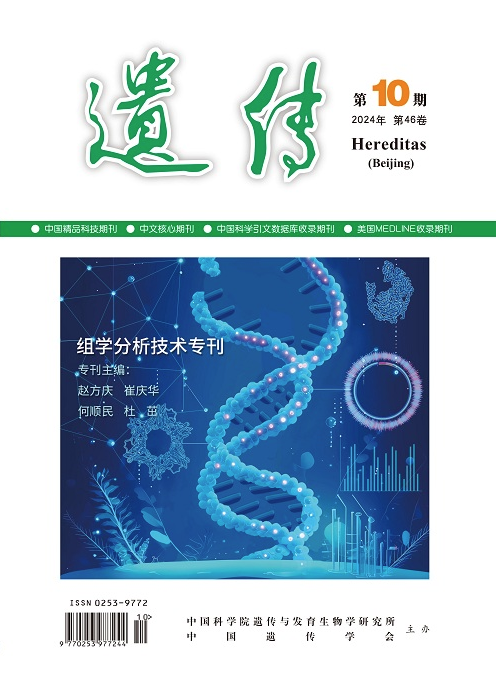
Hereditas is a national academic journal sponsored by the Institute of Genetics and Developmental Biology of the Chinese Academy of Sciences and the Chinese Society of Genetics and published by Science Press. It is a Chinese core journal and a Chinese high-quality scientific journal. The journal mainly publishes innovative research papers in the fields of genetics, genomics, cell biology, developmental biology, biological evolution, genetic engineering and biotechnology; new technologies and new methods; monographs and reviews on hot issues in the discipline; academic debates and discussions; experience in genetics teaching; introductions to famous geneticists at home and abroad; genetic counseling; information on academic conferences at home and abroad, etc. Main columns: review, frontier focus, research report, technology and method, resources and platform, experimental operation guide, genetic resources, genetics teaching, scientific news, etc.

 求助内容:
 应助结果提醒方式:


 京公网安备 11010802042870号


