{"title":"[Strategies, practices and challenges of integrated prevention and control of HIV/AIDS and other infectious diseases].","authors":"D Shan, Y Zhao, H Li, Y F Liu","doi":"10.3760/cma.j.cn112338-20260104-00002","DOIUrl":null,"url":null,"abstract":"<p><p>HIV/AIDS, viral hepatitis, and other infectious diseases are concurrently prevalent among some key populations and in certain service settings. Their routes of transmission and risk behaviors also overlap to some extent, exposing affected populations to multiple infection risks. Disease-specific prevention and control strategies have played an important role in controlling major infectious diseases. However, in the context of coexisting infections and highly overlapping target populations, limitations remain in service integration and coordinated implementation. After years of development, China has established a relatively comprehensive HIV/AIDS prevention and control system. Stable service networks for key populations have been formed in settings such as voluntary counseling and testing clinics, sexually transmitted infection clinics, methadone maintenance treatment clinics, HIV antiretroviral therapy clinics, and community-based organizations. These networks provide a foundation for the coordinated prevention and control of related infectious diseases. Against this background, it has become an important direction for optimizing the prevention and control system to explore integrated approaches to the prevention, testing, and management of HIV/AIDS, viral hepatitis, and other infectious diseases, based on shared transmission routes, key populations, and major service settings. This article reviews the theoretical basis and practical progress of integrated multi-disease prevention and control for HIV/AIDS, viral hepatitis, and other infectious diseases; summarizes relevant strategies and experiences in China and internationally; analyzes major challenges in institutional design, implementation pathways, and evidence generation; and discusses future directions for research and practice, with the aim of providing reference for improving China's integrated prevention and control system for related infectious diseases.</p>","PeriodicalId":23968,"journal":{"name":"中华流行病学杂志","volume":"47 8","pages":"1539-1544"},"PeriodicalIF":0.0000,"publicationDate":"2026-08-10","publicationTypes":"Journal Article","fieldsOfStudy":null,"isOpenAccess":false,"openAccessPdf":"","citationCount":"0","resultStr":null,"platform":"Semanticscholar","paperid":null,"PeriodicalName":"中华流行病学杂志","FirstCategoryId":"3","ListUrlMain":"https://doi.org/10.3760/cma.j.cn112338-20260104-00002","RegionNum":0,"RegionCategory":null,"ArticlePicture":[],"TitleCN":null,"AbstractTextCN":null,"PMCID":null,"EPubDate":"","PubModel":"","JCR":"Q1","JCRName":"Medicine","Score":null,"Total":0}
引用次数: 0
Abstract
HIV/AIDS, viral hepatitis, and other infectious diseases are concurrently prevalent among some key populations and in certain service settings. Their routes of transmission and risk behaviors also overlap to some extent, exposing affected populations to multiple infection risks. Disease-specific prevention and control strategies have played an important role in controlling major infectious diseases. However, in the context of coexisting infections and highly overlapping target populations, limitations remain in service integration and coordinated implementation. After years of development, China has established a relatively comprehensive HIV/AIDS prevention and control system. Stable service networks for key populations have been formed in settings such as voluntary counseling and testing clinics, sexually transmitted infection clinics, methadone maintenance treatment clinics, HIV antiretroviral therapy clinics, and community-based organizations. These networks provide a foundation for the coordinated prevention and control of related infectious diseases. Against this background, it has become an important direction for optimizing the prevention and control system to explore integrated approaches to the prevention, testing, and management of HIV/AIDS, viral hepatitis, and other infectious diseases, based on shared transmission routes, key populations, and major service settings. This article reviews the theoretical basis and practical progress of integrated multi-disease prevention and control for HIV/AIDS, viral hepatitis, and other infectious diseases; summarizes relevant strategies and experiences in China and internationally; analyzes major challenges in institutional design, implementation pathways, and evidence generation; and discusses future directions for research and practice, with the aim of providing reference for improving China's integrated prevention and control system for related infectious diseases.
期刊介绍:
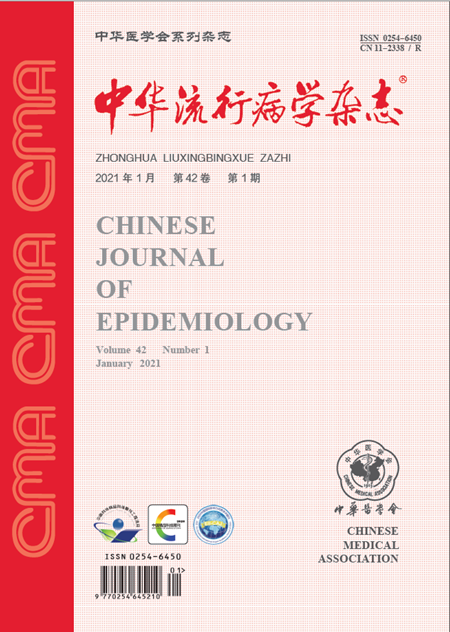
Chinese Journal of Epidemiology, established in 1981, is an advanced academic periodical in epidemiology and related disciplines in China, which, according to the principle of integrating theory with practice, mainly reports the major progress in epidemiological research. The columns of the journal include commentary, expert forum, original article, field investigation, disease surveillance, laboratory research, clinical epidemiology, basic theory or method and review, etc.
The journal is included by more than ten major biomedical databases and index systems worldwide, such as been indexed in Scopus, PubMed/MEDLINE, PubMed Central (PMC), Europe PubMed Central, Embase, Chemical Abstract, Chinese Science and Technology Paper and Citation Database (CSTPCD), Chinese core journal essentials overview, Chinese Science Citation Database (CSCD) core database, Chinese Biological Medical Disc (CBMdisc), and Chinese Medical Citation Index (CMCI), etc. It is one of the core academic journals and carefully selected core journals in preventive and basic medicine in China.

 求助内容:
 应助结果提醒方式:


 京公网安备 11010802042870号


