{"title":"Exerkines in precision management of metabolic diseases.","authors":"Leigang Jin, Yifen Lin, Yixuan Zheng, Anli Wang, Peng Liao, Yucheng Luo, Zhongheng Sui, Xiayun Ni, Jianan Zhang, Qing Shen, Aimin Xu","doi":"10.1097/CM9.0000000000004200","DOIUrl":null,"url":null,"abstract":"<p><strong>Abstract: </strong>Regular physical activity exerts systemic metabolic benefits that are pivotal for preventing and managing metabolic diseases. These effects are mediated in part by exerkines, which are signaling molecules released from various organs in response to exercise. Exerkines encompass polypeptides, nucleic acids, and bioactive lipids that collectively orchestrate metabolic adaptations. Recent metagenomic analyses have identified the gut microbiota as an additional source of exercise-responsive factors that modulate host metabolism and may influence individual responsiveness to training. Together, these diverse exerkines coordinate interorgan communication, enhance insulin sensitivity, maintain glucose and lipid homeostasis, and modulate inflammatory pathways. This review summarizes representative exerkines from skeletal muscle, adipose tissue, and liver, including interleukin-6, myostatin, fibroblast growth factor 21, adiponectin, and growth differentiation factor 15, which have shown promising therapeutic efficacy in preclinical studies and clinical trials for complex metabolic diseases. We also discuss microbiota-derived metabolites such as short-chain fatty acids that improve glucose and lipid metabolism, as well as host-derived metabolites including N-lactoyl-phenylalanine, betaine, and β-aminoisobutyric acid that regulate appetite, substrate utilization, and insulin action. Furthermore, we highlight recent progress in understanding how dynamic regulation of these exerkines mediates the metabolic benefits of exercise and their potential as targets for precision management of metabolic diseases. Understanding these molecular mediators of exercise provides a framework for integrating physical activity with pharmacological and nutritional strategies to improve metabolic health.</p>","PeriodicalId":10183,"journal":{"name":"Chinese Medical Journal","volume":" ","pages":"2885-2904"},"PeriodicalIF":9.1000,"publicationDate":"2026-10-05","publicationTypes":"Journal Article","fieldsOfStudy":null,"isOpenAccess":false,"openAccessPdf":"https://www.ncbi.nlm.nih.gov/pmc/articles/PMC13626689/pdf/","citationCount":"0","resultStr":null,"platform":"Semanticscholar","paperid":null,"PeriodicalName":"Chinese Medical Journal","FirstCategoryId":"3","ListUrlMain":"https://doi.org/10.1097/CM9.0000000000004200","RegionNum":3,"RegionCategory":"医学","ArticlePicture":[],"TitleCN":null,"AbstractTextCN":null,"PMCID":null,"EPubDate":"2026/8/19 0:00:00","PubModel":"Epub","JCR":"Q1","JCRName":"MEDICINE, GENERAL & INTERNAL","Score":null,"Total":0}
引用次数: 0
Abstract
Abstract: Regular physical activity exerts systemic metabolic benefits that are pivotal for preventing and managing metabolic diseases. These effects are mediated in part by exerkines, which are signaling molecules released from various organs in response to exercise. Exerkines encompass polypeptides, nucleic acids, and bioactive lipids that collectively orchestrate metabolic adaptations. Recent metagenomic analyses have identified the gut microbiota as an additional source of exercise-responsive factors that modulate host metabolism and may influence individual responsiveness to training. Together, these diverse exerkines coordinate interorgan communication, enhance insulin sensitivity, maintain glucose and lipid homeostasis, and modulate inflammatory pathways. This review summarizes representative exerkines from skeletal muscle, adipose tissue, and liver, including interleukin-6, myostatin, fibroblast growth factor 21, adiponectin, and growth differentiation factor 15, which have shown promising therapeutic efficacy in preclinical studies and clinical trials for complex metabolic diseases. We also discuss microbiota-derived metabolites such as short-chain fatty acids that improve glucose and lipid metabolism, as well as host-derived metabolites including N-lactoyl-phenylalanine, betaine, and β-aminoisobutyric acid that regulate appetite, substrate utilization, and insulin action. Furthermore, we highlight recent progress in understanding how dynamic regulation of these exerkines mediates the metabolic benefits of exercise and their potential as targets for precision management of metabolic diseases. Understanding these molecular mediators of exercise provides a framework for integrating physical activity with pharmacological and nutritional strategies to improve metabolic health.
期刊介绍:
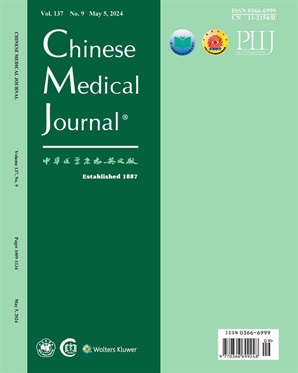
The Chinese Medical Journal (CMJ) is published semimonthly in English by the Chinese Medical Association, and is a peer reviewed general medical journal for all doctors, researchers, and health workers regardless of their medical specialty or type of employment. Established in 1887, it is the oldest medical periodical in China and is distributed worldwide. The journal functions as a window into China’s medical sciences and reflects the advances and progress in China’s medical sciences and technology. It serves the objective of international academic exchange. The journal includes Original Articles, Editorial, Review Articles, Medical Progress, Brief Reports, Case Reports, Viewpoint, Clinical Exchange, Letter,and News,etc. CMJ is abstracted or indexed in many databases including Biological Abstracts, Chemical Abstracts, Index Medicus/Medline, Science Citation Index (SCI), Current Contents, Cancerlit, Health Plan & Administration, Embase, Social Scisearch, Aidsline, Toxline, Biocommercial Abstracts, Arts and Humanities Search, Nuclear Science Abstracts, Water Resources Abstracts, Cab Abstracts, Occupation Safety & Health, etc. In 2007, the impact factor of the journal by SCI is 0.636, and the total citation is 2315.

 求助内容:
 应助结果提醒方式:


 京公网安备 11010802042870号


