
Genome-scale metabolic reconstruction of Botrytis cinerea for enhanced abscisic acid biosynthesis
IF 3.5
3区 工程技术
Q2 ENGINEERING, CHEMICAL
Chinese Journal of Chemical Engineering
Pub Date : 2026-08-01
Epub Date: 2026-06-22
DOI:10.1016/j.cjche.2026.05.012
引用次数: 0
Abstract
Abscisic acid (ABA), as one of the five major natural plant growth regulators, plays an important role in agricultural production. Botrytis cinerea is a natural strain for ABA production. However, the insufficient understanding of its metabolic network makes it difficult to further increase the yield, which limits its application in the fermentation industry. In this research, a genome-scale metabolic network model (GSMM, iDK916) of B. cinerea was constructed, which includes 916 genes, 2318 reactions and 1770 metabolites. Firstly, the model's accuracy was validated by analyzing its growth on 35 carbon sources and 25 nitrogen sources, along with the identification of 79 essential genes consistent with those in the DEG database. Subsequently, dynamic flux balance analysis (dynamic FBA) revealed that the carbon source plays a more critical role in ABA yield: when fructose was used as the sole carbon source, the simulated ABA yield reached 0.95 mmol·gDW−1·h−1, while the yield obtained from wet lab experiments was 0.41 g·L−1. Finally, using flux scanning based on enforced objective flux (FSEOF), 64 upregulated genes were identified. To validate the predictions, BCIN_12g04570 (Phosphomevalonate kinase, EC: 2.7.4.2) was selected for targeted overexpression in the strain, ultimately increasing ABA production to 1.35 g·L−1, representing a 49.8% improvement compared to the original strain. This provides a reliable reference for subsequent research aimed at enhancing ABA production.
灰霉病菌促进脱落酸生物合成的基因组尺度代谢重建
脱落酸(ABA)作为植物五大天然生长调节剂之一,在农业生产中发挥着重要作用。灰霉病菌是一种生产ABA的天然菌株。然而,由于对其代谢网络的认识不足,使其难以进一步提高产量,限制了其在发酵工业中的应用。本研究构建了一个包含916个基因、2318个反应和1770个代谢物的全基因组代谢网络模型(GSMM, iDK916)。首先,通过分析其在35个碳源和25个氮源上的生长情况,并鉴定出79个与DEG数据库一致的必需基因,验证了模型的准确性。随后,动态通量平衡分析(dynamic FBA)表明,碳源在ABA产量中起着更为关键的作用:当果糖作为唯一碳源时,模拟的ABA产量达到0.95 mmol·gDW−1·h−1,而湿法实验的产量为0.41 g·L−1。最后,利用基于强制客观通量(FSEOF)的通量扫描,鉴定出64个上调基因。为了验证预测,选择BCIN_12g04570 (Phosphomevalonate kinase, EC: 2.7.4.2)在菌株中进行靶向过表达,最终将ABA产量提高到1.35 g·L−1,比原始菌株提高了49.8%。为后续提高ABA产量的研究提供了可靠的参考。
本文章由计算机程序翻译,如有差异,请以英文原文为准。
求助全文
约1分钟内获得全文
求助全文
来源期刊
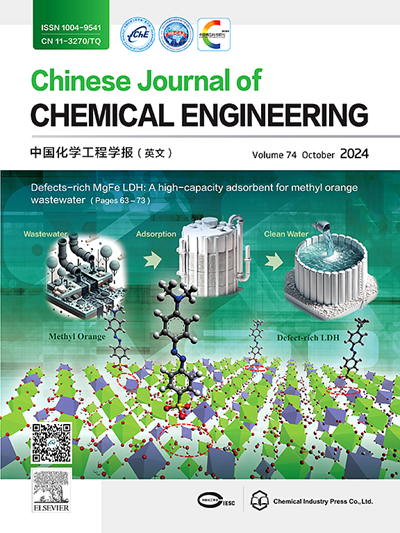
Chinese Journal of Chemical Engineering
工程技术-工程:化工
CiteScore
6.60
自引率
5.30%
发文量
4309
审稿时长
31 days
期刊介绍:
The Chinese Journal of Chemical Engineering (Monthly, started in 1982) is the official journal of the Chemical Industry and Engineering Society of China and published by the Chemical Industry Press Co. Ltd. The aim of the journal is to develop the international exchange of scientific and technical information in the field of chemical engineering. It publishes original research papers that cover the major advancements and achievements in chemical engineering in China as well as some articles from overseas contributors.
The topics of journal include chemical engineering, chemical technology, biochemical engineering, energy and environmental engineering and other relevant fields. Papers are published on the basis of their relevance to theoretical research, practical application or potential uses in the industry as Research Papers, Communications, Reviews and Perspectives. Prominent domestic and overseas chemical experts and scholars have been invited to form an International Advisory Board and the Editorial Committee. It enjoys recognition among Chinese academia and industry as a reliable source of information of what is going on in chemical engineering research, both domestic and abroad.
 求助内容:
 应助结果提醒方式:


 京公网安备 11010802042870号


