Yizhou Zhang, Ying Du, Martin Spillmann, Kazuto Akagi, Jiukai Tang, Shivaprakash N. Ramakrishna, Guangyu Qiu, Jing Wang
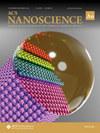
{"title":"Mismatch-Tuned Plasmonic Nanogap Networks on Block Copolymers for Ultrasensitive Nucleic Acid Quantification","authors":"Yizhou Zhang, Ying Du, Martin Spillmann, Kazuto Akagi, Jiukai Tang, Shivaprakash N. Ramakrishna, Guangyu Qiu, Jing Wang","doi":"10.1021/acsnanoscienceau.5c00190","DOIUrl":null,"url":null,"abstract":"<p>In localized surface plasmon resonance (LSPR), rational\r\nnanogap\r\nengineering in metallic nanostructures enables strong plasmonic coupling\r\nand efficient confinement of incident electromagnetic fields, thereby\r\nsignificantly enhancing optical responses for biosensing applications.\r\nTraditional approaches to fabricating small gaps have relied on localizing\r\ndielectric spacers between gold nanoparticles (AuNPs). However, doing\r\nso has encountered challenges in producing high-density, clean gaps\r\nacross large surface areas. Here, we demonstrate a straightforward,\r\nself-assembly-guided method for the consistent fabrication of topologically\r\nanchored AuNPs featuring sub-5 nm nanogaps, arranged on a nanostructured\r\nblock copolymer template. The solution-based method enables time-dependent\r\ntuning toward high plasmonic coupling density, resulting in an extensive\r\nnumber of hotspots, with an equivalent sensing enhancement factor\r\n(ESEF) exceeding that of thermally annealed gold nanoisland chips\r\nby 1 × 10<sup>5</sup>. Laser excitation of these densely packed\r\nAuNPs at their plasmonic resonance efficiently drives both nucleic\r\nacid hybridization and amplification-based cyclic fluorescence probe\r\ncleavage, enabling SARS-CoV-2 viral sequence quantification down to\r\nthe attomolar level. Our results demonstrate that a carefully engineered\r\ntemplate nanostructure and the AuNP diameter integrate plasmonic hotspots,\r\ntarget adsorption, thermoplasmonic heating, and signal transduction\r\nwithin a single platform. This facile strategy for densely packed\r\nhotspots offers a potentially scalable avenue for ultrasensitive biomolecular\r\nassays.</p>","PeriodicalId":29799,"journal":{"name":"ACS Nanoscience Au","volume":"6 4","pages":"570–581"},"PeriodicalIF":7.5000,"publicationDate":"2026-08-19","publicationTypes":"Journal Article","fieldsOfStudy":null,"isOpenAccess":false,"openAccessPdf":"","citationCount":"0","resultStr":null,"platform":"Semanticscholar","paperid":null,"PeriodicalName":"ACS Nanoscience Au","FirstCategoryId":"1085","ListUrlMain":"https://pubs.acs.org/doi/10.1021/acsnanoscienceau.5c00190","RegionNum":0,"RegionCategory":null,"ArticlePicture":[],"TitleCN":null,"AbstractTextCN":null,"PMCID":null,"EPubDate":"2026/4/14 0:00:00","PubModel":"Epub","JCR":"Q2","JCRName":"NANOSCIENCE & NANOTECHNOLOGY","Score":null,"Total":0}
引用次数: 0
Abstract
In localized surface plasmon resonance (LSPR), rational
nanogap
engineering in metallic nanostructures enables strong plasmonic coupling
and efficient confinement of incident electromagnetic fields, thereby
significantly enhancing optical responses for biosensing applications.
Traditional approaches to fabricating small gaps have relied on localizing
dielectric spacers between gold nanoparticles (AuNPs). However, doing
so has encountered challenges in producing high-density, clean gaps
across large surface areas. Here, we demonstrate a straightforward,
self-assembly-guided method for the consistent fabrication of topologically
anchored AuNPs featuring sub-5 nm nanogaps, arranged on a nanostructured
block copolymer template. The solution-based method enables time-dependent
tuning toward high plasmonic coupling density, resulting in an extensive
number of hotspots, with an equivalent sensing enhancement factor
(ESEF) exceeding that of thermally annealed gold nanoisland chips
by 1 × 10⁵. Laser excitation of these densely packed
AuNPs at their plasmonic resonance efficiently drives both nucleic
acid hybridization and amplification-based cyclic fluorescence probe
cleavage, enabling SARS-CoV-2 viral sequence quantification down to
the attomolar level. Our results demonstrate that a carefully engineered
template nanostructure and the AuNP diameter integrate plasmonic hotspots,
target adsorption, thermoplasmonic heating, and signal transduction
within a single platform. This facile strategy for densely packed
hotspots offers a potentially scalable avenue for ultrasensitive biomolecular
assays.
期刊介绍:
ACS Nanoscience Au is an open access journal that publishes original fundamental and applied research on nanoscience and nanotechnology research at the interfaces of chemistry biology medicine materials science physics and engineering.The journal publishes short letters comprehensive articles reviews and perspectives on all aspects of nanoscience and nanotechnology:synthesis assembly characterization theory modeling and simulation of nanostructures nanomaterials and nanoscale devicesdesign fabrication and applications of organic inorganic polymer hybrid and biological nanostructuresexperimental and theoretical studies of nanoscale chemical physical and biological phenomenamethods and tools for nanoscience and nanotechnologyself- and directed-assemblyzero- one- and two-dimensional materialsnanostructures and nano-engineered devices with advanced performancenanobiotechnologynanomedicine and nanotoxicologyACS Nanoscience Au also publishes original experimental and theoretical research of an applied nature that integrates knowledge in the areas of materials engineering physics bioscience and chemistry into important applications of nanomaterials.

 求助内容:
 应助结果提醒方式:


 京公网安备 11010802042870号


