Selin Gümrükçü, Baran Sarac, Jozef Keckes, Tolga Karazehir, Eray Yüce, Ekrem Kaplan, Radovan Černý, Jürgen Eckert, A. Sezai Sarac, İbrahim Özçeşmeci
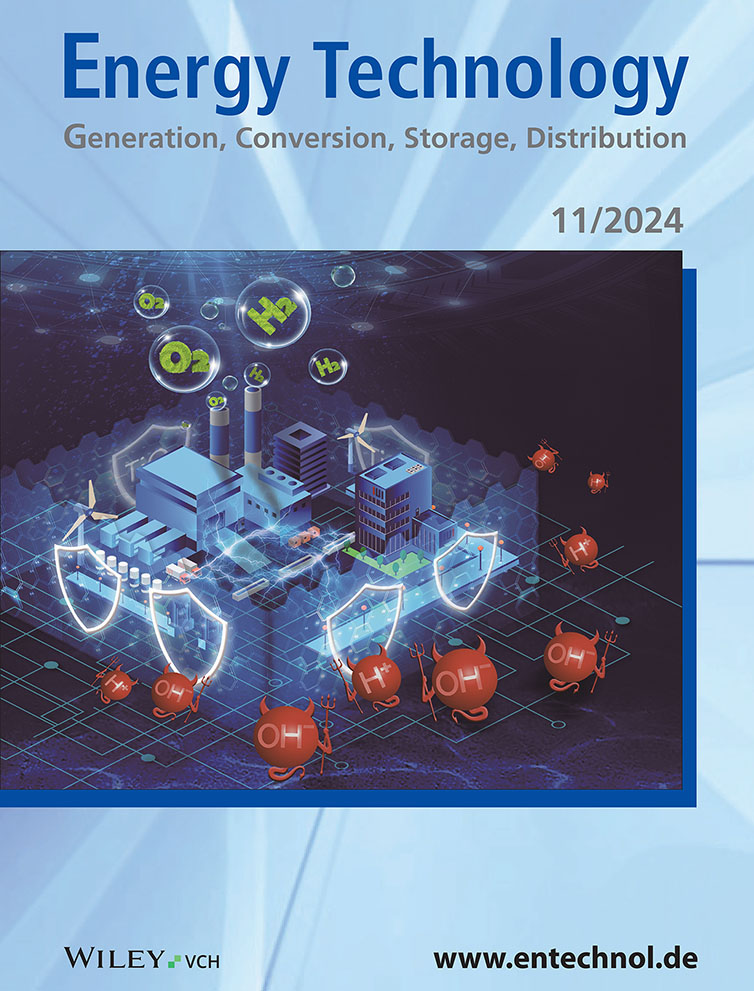
{"title":"Electrodeposited Cobalt Bis(pyridylimino)isoindolide Complex on Graphite: Synthesis, Characterization, and Electrocatalytic Activity Toward Hydrogen Evolution Reaction","authors":"Selin Gümrükçü, Baran Sarac, Jozef Keckes, Tolga Karazehir, Eray Yüce, Ekrem Kaplan, Radovan Černý, Jürgen Eckert, A. Sezai Sarac, İbrahim Özçeşmeci","doi":"10.1002/ente.70581","DOIUrl":null,"url":null,"abstract":"<p>Electrodeposited cobalt bis(pyridylimino)isoindolide (BPI) complexes on graphite combine the favorable coordination chemistry of the BPI framework with the excellent electrical conductivity and surface properties of graphite. Their tunable ligand environment allows for precise control over the metal's electronic structure, enhancing proton reduction kinetics. Furthermore, strong π–π interactions between the pyrene substituents and the graphitic surface promote robust adhesion and an extended active interface, making these materials attractive candidates for durable, high-performance electrocatalysts. In this work, we report the synthesis and full characterization of a novel pyrene-substituted BPI ligand and its corresponding cobalt complex. These BPI derivatives were electrodeposited onto a graphite substrate by cyclic voltammetry, and the resulting modified electrodes were evaluated for their hydrogen evolution reaction (HER) performance. Morphological, structural, and spectroscopic analyses, including scanning electron microscopy (SEM), energy dispersive X-ray (EDX) spectroscopy, X-ray photoelectron spectroscopy (XPS), and X-ray diffraction (XRD), provided detailed insight into the surface structure and composition of the electrodeposited films. Electrochemical impedance spectroscopy (EIS) highlighted the effective charge–transfer properties and double-layer capacitance of the cobalt BPI coatings. A comparative analysis of the electrochemical data with the structural findings confirmed that the electrodeposited cobalt BPI complexes form uniform, conductive layers on graphite, exhibiting promising catalytic activity for hydrogen evolution.</p>","PeriodicalId":11573,"journal":{"name":"Energy technology","volume":"14 8","pages":""},"PeriodicalIF":3.6000,"publicationDate":"2026-08-08","publicationTypes":"Journal Article","fieldsOfStudy":null,"isOpenAccess":false,"openAccessPdf":"https://onlinelibrary.wiley.com/doi/epdf/10.1002/ente.70581","citationCount":"0","resultStr":null,"platform":"Semanticscholar","paperid":null,"PeriodicalName":"Energy technology","FirstCategoryId":"5","ListUrlMain":"https://onlinelibrary.wiley.com/doi/10.1002/ente.70581","RegionNum":4,"RegionCategory":"工程技术","ArticlePicture":[],"TitleCN":null,"AbstractTextCN":null,"PMCID":null,"EPubDate":"","PubModel":"","JCR":"Q3","JCRName":"ENERGY & FUELS","Score":null,"Total":0}
引用次数: 0
Abstract
Electrodeposited cobalt bis(pyridylimino)isoindolide (BPI) complexes on graphite combine the favorable coordination chemistry of the BPI framework with the excellent electrical conductivity and surface properties of graphite. Their tunable ligand environment allows for precise control over the metal's electronic structure, enhancing proton reduction kinetics. Furthermore, strong π–π interactions between the pyrene substituents and the graphitic surface promote robust adhesion and an extended active interface, making these materials attractive candidates for durable, high-performance electrocatalysts. In this work, we report the synthesis and full characterization of a novel pyrene-substituted BPI ligand and its corresponding cobalt complex. These BPI derivatives were electrodeposited onto a graphite substrate by cyclic voltammetry, and the resulting modified electrodes were evaluated for their hydrogen evolution reaction (HER) performance. Morphological, structural, and spectroscopic analyses, including scanning electron microscopy (SEM), energy dispersive X-ray (EDX) spectroscopy, X-ray photoelectron spectroscopy (XPS), and X-ray diffraction (XRD), provided detailed insight into the surface structure and composition of the electrodeposited films. Electrochemical impedance spectroscopy (EIS) highlighted the effective charge–transfer properties and double-layer capacitance of the cobalt BPI coatings. A comparative analysis of the electrochemical data with the structural findings confirmed that the electrodeposited cobalt BPI complexes form uniform, conductive layers on graphite, exhibiting promising catalytic activity for hydrogen evolution.
期刊介绍:
Energy Technology provides a forum for researchers and engineers from all relevant disciplines concerned with the generation, conversion, storage, and distribution of energy.
This new journal shall publish articles covering all technical aspects of energy process engineering from different perspectives, e.g.,
new concepts of energy generation and conversion;
design, operation, control, and optimization of processes for energy generation (e.g., carbon capture) and conversion of energy carriers;
improvement of existing processes;
combination of single components to systems for energy generation;
design of systems for energy storage;
production processes of fuels, e.g., hydrogen, electricity, petroleum, biobased fuels;
concepts and design of devices for energy distribution.

 求助内容:
 应助结果提醒方式:


 京公网安备 11010802042870号


