
Clarifying the Labrisomus Conundrum: Deep Divergence, Cryptic Lineages, and a Genetic Melting Pot in the Atlantic Ocean (Teleostei, Labrisomidae)

IF 3.5 2区 环境科学与生态学 Q2 ECOLOGY
Gabriel Soares Araujo, João Luiz Gasparini, Luiz A. Rocha, Hudson T. Pinheiro, Marcelo V. Kitahara, Anderson V. Vilasboa, Carol A. Stepien, Sergio R. Floeter, Fabio Di Dario
{"title":"Clarifying the Labrisomus Conundrum: Deep Divergence, Cryptic Lineages, and a Genetic Melting Pot in the Atlantic Ocean (Teleostei, Labrisomidae)","authors":"Gabriel Soares Araujo,&nbsp;João Luiz Gasparini,&nbsp;Luiz A. Rocha,&nbsp;Hudson T. Pinheiro,&nbsp;Marcelo V. Kitahara,&nbsp;Anderson V. Vilasboa,&nbsp;Carol A. Stepien,&nbsp;Sergio R. Floeter,&nbsp;Fabio Di Dario","doi":"10.1111/jbi.70318","DOIUrl":null,"url":null,"abstract":"<div>\n \n \n <section>\n \n <h3> Aim</h3>\n \n <p>We evaluate the phylogenetic relationships and taxonomic validity of Atlantic species of <i>Labrisomus</i>, identifying the lineages currently assigned to <i>L. nuchipinnis</i>, and assessing the role of biogeographic barriers in shaping the evolutionary history and geographic distribution of the genus.</p>\n </section>\n \n <section>\n \n <h3> Location</h3>\n \n <p>Atlantic Ocean.</p>\n </section>\n \n <section>\n \n <h3> Taxon</h3>\n \n <p><i>Labrisomus</i>.</p>\n </section>\n \n <section>\n \n <h3> Methods</h3>\n \n <p>We assembled an extensive mitochondrial and nuclear DNA dataset of Atlantic species of <i>Labrisomus</i> to perform multi-locus phylogenetic divergence-time and historical biogeographic analyses, reconstruct haplotype networks, estimate genetic distances, implement lineage delimitation tests and estimate migration rates.</p>\n </section>\n \n <section>\n \n <h3> Results</h3>\n \n <p><i>Labrisomus nuchipinnis</i> is a species complex comprising three deeply divergent lineages: one broadly distributed in the western Atlantic, another restricted to Florida (USA), and a third mostly distributed in the eastern Atlantic. A new usage of <i>L. nuchipinnis</i> is proposed, with the species restricted to the western Atlantic, and with the revalidation of <i>Clinus canariensis</i> (as <i>L. canariensis</i>) for the mostly eastern Atlantic lineage. Despite their anatomical similarity, <i>L. nuchipinnis</i> and its Atlantic congeners diverge significantly genetically. Unusual genetic connectivity between samples of <i>L. canariensis</i> from the eastern Atlantic and southern Brazil suggests a potential trans-Atlantic genetic pathway.</p>\n </section>\n \n <section>\n \n <h3> Main Conclusion</h3>\n \n <p>The deep genetic divergence among lineages previously included in the <i>L. nuchipinnis</i> complex contrasts with their anatomical similarity, making <i>Labrisomus</i> one of the most challenging cases of cryptic diversification among reef fishes. The evolutionary history of the genus likely involved spatial segregation driven by ecological niche overlap. Ecological factors may influence distribution patterns among species of the genus more strongly than geographic distance. The apparently isolated population of <i>L. canariensis</i> off southern Brazil provides a well-documented case of disjunct distribution of a reef fish species between the eastern Atlantic and south Brazil, highlighting the potential of this region as a melting-pot of biodiversity.</p>\n </section>\n </div>","PeriodicalId":15299,"journal":{"name":"Journal of Biogeography","volume":"53 8","pages":""},"PeriodicalIF":3.5000,"publicationDate":"2026-08-03","publicationTypes":"Journal Article","fieldsOfStudy":null,"isOpenAccess":false,"openAccessPdf":"https://onlinelibrary.wiley.com/doi/epdf/10.1111/jbi.70318","citationCount":"0","resultStr":null,"platform":"Semanticscholar","paperid":null,"PeriodicalName":"Journal of Biogeography","FirstCategoryId":"93","ListUrlMain":"https://onlinelibrary.wiley.com/doi/10.1111/jbi.70318","RegionNum":2,"RegionCategory":"环境科学与生态学","ArticlePicture":[],"TitleCN":null,"AbstractTextCN":null,"PMCID":null,"EPubDate":"","PubModel":"","JCR":"Q2","JCRName":"ECOLOGY","Score":null,"Total":0}
引用次数: 0

Abstract

Aim

We evaluate the phylogenetic relationships and taxonomic validity of Atlantic species of Labrisomus, identifying the lineages currently assigned to L. nuchipinnis, and assessing the role of biogeographic barriers in shaping the evolutionary history and geographic distribution of the genus.

Location

Atlantic Ocean.

Taxon

Labrisomus.

Methods

We assembled an extensive mitochondrial and nuclear DNA dataset of Atlantic species of Labrisomus to perform multi-locus phylogenetic divergence-time and historical biogeographic analyses, reconstruct haplotype networks, estimate genetic distances, implement lineage delimitation tests and estimate migration rates.

Results

Labrisomus nuchipinnis is a species complex comprising three deeply divergent lineages: one broadly distributed in the western Atlantic, another restricted to Florida (USA), and a third mostly distributed in the eastern Atlantic. A new usage of L. nuchipinnis is proposed, with the species restricted to the western Atlantic, and with the revalidation of Clinus canariensis (as L. canariensis) for the mostly eastern Atlantic lineage. Despite their anatomical similarity, L. nuchipinnis and its Atlantic congeners diverge significantly genetically. Unusual genetic connectivity between samples of L. canariensis from the eastern Atlantic and southern Brazil suggests a potential trans-Atlantic genetic pathway.

Main Conclusion

The deep genetic divergence among lineages previously included in the L. nuchipinnis complex contrasts with their anatomical similarity, making Labrisomus one of the most challenging cases of cryptic diversification among reef fishes. The evolutionary history of the genus likely involved spatial segregation driven by ecological niche overlap. Ecological factors may influence distribution patterns among species of the genus more strongly than geographic distance. The apparently isolated population of L. canariensis off southern Brazil provides a well-documented case of disjunct distribution of a reef fish species between the eastern Atlantic and south Brazil, highlighting the potential of this region as a melting-pot of biodiversity.
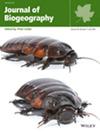

澄清唇形目难题:深分化、隐谱系和大西洋遗传大熔炉(唇形目,唇形目)
本文章由计算机程序翻译,如有差异,请以英文原文为准。
求助全文
约1分钟内获得全文 求助全文
来源期刊
Journal of Biogeography
Journal of Biogeography 环境科学-生态学
CiteScore
7.70
自引率
5.10%
发文量
203
审稿时长
2.2 months
期刊介绍: Papers dealing with all aspects of spatial, ecological and historical biogeography are considered for publication in Journal of Biogeography. The mission of the journal is to contribute to the growth and societal relevance of the discipline of biogeography through its role in the dissemination of biogeographical research.
×
引用
GB/T 7714-2015
复制
MLA
复制
APA
复制
导出至
BibTeX EndNote RefMan NoteFirst NoteExpress
×
提示
您的信息不完整,为了账户安全,请先补充。
现在去补充
×
提示
您因"违规操作"
具体请查看互助需知
我知道了
×
提示
确定
请完成安全验证×
copy
已复制链接
快去分享给好友吧!
我知道了
右上角分享
点击右上角分享
0
联系我们:info@booksci.cn Book学术提供免费学术资源搜索服务,方便国内外学者检索中英文文献。致力于提供最便捷和优质的服务体验。 Copyright © 2023 布克学术 All rights reserved.
京ICP备2023020795号-1
ghs 京公网安备 11010802042870号
Book学术文献互助
Book学术文献互助群
群 号:604180095
Book学术官方微信
小红书


