Hailiang Qin, Xinyan Guo, Yao Zhao, Meng Luo, Minqiao Feng, Haoqian Xue, Pengbo Zhang, Meilin Zhou, Na Wang, Shuxia Xu
{"title":"Split aptamer-regulated AuNF nanozymes for colorimetric and electrochemical dual-readout kanamycin biosensing.","authors":"Hailiang Qin, Xinyan Guo, Yao Zhao, Meng Luo, Minqiao Feng, Haoqian Xue, Pengbo Zhang, Meilin Zhou, Na Wang, Shuxia Xu","doi":"10.1016/j.talanta.2026.130380","DOIUrl":null,"url":null,"abstract":"<p><p>Kanamycin (Kana) residues released into aquatic environments due to its extensive use have raised increasing concerns because of their potential risks to ecosystems and human health. In this work, we report a label-free split aptamer-modified gold nanoflower (AuNF)-based aptasensing platform with colorimetric and electrochemical readouts for the determination of Kana in water. Two thiolated split aptamer fragments (SPA1 and SPA2) were immobilized on AuNFs through Au-S bonds. The flower-like AuNFs provided a high-surface-area scaffold for aptamer loading, while the DNA modification further enhanced the peroxidase-like activity of AuNFs toward TMB oxidation. In the presence of Kana, target-induced assembly of SPA1 and SPA2 promoted the aggregation of AuNFs, which inhibited their catalytic activity toward TMB oxidation, thereby reducing oxTMB formation and the resulting colorimetric and electrochemical signals. Based on this signal-off mechanism, the platform enabled quantitative detection of Kana with linear ranges of 100-3000 nM for colorimetry and 50-2000 nM for chronoamperometry, with limits of detection of 0.51 and 0.074 nM, respectively. The method also showed satisfactory selectivity, reproducibility, and storage stability. In spiked environmental water samples, recoveries ranged from 87.7% to 106.2% with relative standard deviations below 5.0%, and the electrochemical results were in acceptable agreement with those obtained by HPLC-MS. This study provides a simple and effective dual-readout aptasensing strategy for Kana determination in environmental water samples.</p>","PeriodicalId":435,"journal":{"name":"Talanta","volume":"312 Pt A","pages":"130380"},"PeriodicalIF":6.7000,"publicationDate":"2027-02-01","publicationTypes":"Journal Article","fieldsOfStudy":null,"isOpenAccess":false,"openAccessPdf":"","citationCount":"0","resultStr":null,"platform":"Semanticscholar","paperid":null,"PeriodicalName":"Talanta","FirstCategoryId":"92","ListUrlMain":"https://doi.org/10.1016/j.talanta.2026.130380","RegionNum":1,"RegionCategory":"化学","ArticlePicture":[],"TitleCN":null,"AbstractTextCN":null,"PMCID":null,"EPubDate":"2026/8/3 0:00:00","PubModel":"Epub","JCR":"Q1","JCRName":"CHEMISTRY, ANALYTICAL","Score":null,"Total":0}
引用次数: 0
Abstract
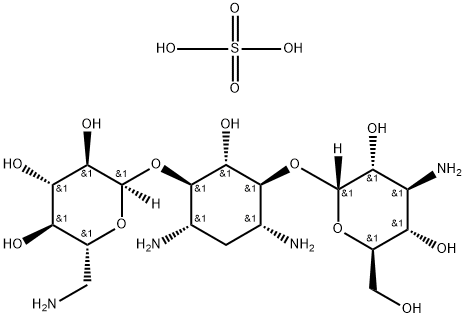
Kanamycin (Kana) residues released into aquatic environments due to its extensive use have raised increasing concerns because of their potential risks to ecosystems and human health. In this work, we report a label-free split aptamer-modified gold nanoflower (AuNF)-based aptasensing platform with colorimetric and electrochemical readouts for the determination of Kana in water. Two thiolated split aptamer fragments (SPA1 and SPA2) were immobilized on AuNFs through Au-S bonds. The flower-like AuNFs provided a high-surface-area scaffold for aptamer loading, while the DNA modification further enhanced the peroxidase-like activity of AuNFs toward TMB oxidation. In the presence of Kana, target-induced assembly of SPA1 and SPA2 promoted the aggregation of AuNFs, which inhibited their catalytic activity toward TMB oxidation, thereby reducing oxTMB formation and the resulting colorimetric and electrochemical signals. Based on this signal-off mechanism, the platform enabled quantitative detection of Kana with linear ranges of 100-3000 nM for colorimetry and 50-2000 nM for chronoamperometry, with limits of detection of 0.51 and 0.074 nM, respectively. The method also showed satisfactory selectivity, reproducibility, and storage stability. In spiked environmental water samples, recoveries ranged from 87.7% to 106.2% with relative standard deviations below 5.0%, and the electrochemical results were in acceptable agreement with those obtained by HPLC-MS. This study provides a simple and effective dual-readout aptasensing strategy for Kana determination in environmental water samples.
期刊介绍:
Talanta provides a forum for the publication of original research papers, short communications, and critical reviews in all branches of pure and applied analytical chemistry. Papers are evaluated based on established guidelines, including the fundamental nature of the study, scientific novelty, substantial improvement or advantage over existing technology or methods, and demonstrated analytical applicability. Original research papers on fundamental studies, and on novel sensor and instrumentation developments, are encouraged. Novel or improved applications in areas such as clinical and biological chemistry, environmental analysis, geochemistry, materials science and engineering, and analytical platforms for omics development are welcome.
Analytical performance of methods should be determined, including interference and matrix effects, and methods should be validated by comparison with a standard method, or analysis of a certified reference material. Simple spiking recoveries may not be sufficient. The developed method should especially comprise information on selectivity, sensitivity, detection limits, accuracy, and reliability. However, applying official validation or robustness studies to a routine method or technique does not necessarily constitute novelty. Proper statistical treatment of the data should be provided. Relevant literature should be cited, including related publications by the authors, and authors should discuss how their proposed methodology compares with previously reported methods.





 求助内容:
 应助结果提醒方式:


 京公网安备 11010802042870号


