Haitao Zhou, Jie Gu, Haiyun Zhou, Yihong Deng, Yafei Shi, Yang Yang, Chen Wang, Hongquan Gao, Jianchun Wu, Libo Wang, Xiangdong Huo
{"title":"Interfacial Solvent Molecular Engineering via High-Safety Dense Separators for High-Rate Lithium-Ion Batteries","authors":"Haitao Zhou, Jie Gu, Haiyun Zhou, Yihong Deng, Yafei Shi, Yang Yang, Chen Wang, Hongquan Gao, Jianchun Wu, Libo Wang, Xiangdong Huo","doi":"10.1002/eem2.70303","DOIUrl":null,"url":null,"abstract":"<p>To address the conflicting challenges of energy density, rate performance, and safety in lithium metal batteries and self-generated lithium metal anodes, we propose a synergistic optimization strategy that employs a high-density polyphenylene sulfide (PPS-separator) and a dimethyl carbonate-based electrolyte. Density functional theory calculations and experiments demonstrate that due to its weak polyphenylene sulfide adsorption energy (−0.3261 eV) and small molecular size, the dimethyl carbonate solvent can construct efficient ion hopping channels at the polyphenylene sulfide crystal interface, achieving a room-temperature ionic conductivity of 1.02 × 10<sup>−3</sup> S cm<sup>−1</sup> (3.5 times that of conventional ceramic separators). Functional additives (LiPO<sub>2</sub>F<sub>2</sub>/FEC/VC) are used to optimize the electrode interface, forming a LiF/Li<sub>2</sub>CO<sub>3</sub> dual-phase composite SEI, which drives uniform two-dimensional lithium metal deposition and reduces interfacial impedance. The system has been stably cycled 435 cycles under extreme conditions, maintaining a capacity retention of over 80%. The intrinsic flame retardancy of polyphenylene sulfide-separator, coupled with its minimal electrolyte requirements, facilitates electrolyte vaporization-induced self-blocking of ion channels during nail penetration tests. This effectively suppresses thermal runaway in 6-Ah high-nickel NCM811/SiC pouch cells, keeping peak temperatures below 50 °C and offering a novel approach to resolving the trade-off between high energy density and high safety.</p>","PeriodicalId":11554,"journal":{"name":"Energy & Environmental Materials","volume":"9 5","pages":""},"PeriodicalIF":13.8000,"publicationDate":"2026-08-06","publicationTypes":"Journal Article","fieldsOfStudy":null,"isOpenAccess":false,"openAccessPdf":"https://onlinelibrary.wiley.com/doi/epdf/10.1002/eem2.70303","citationCount":"0","resultStr":null,"platform":"Semanticscholar","paperid":null,"PeriodicalName":"Energy & Environmental Materials","FirstCategoryId":"88","ListUrlMain":"https://onlinelibrary.wiley.com/doi/10.1002/eem2.70303","RegionNum":2,"RegionCategory":"材料科学","ArticlePicture":[],"TitleCN":null,"AbstractTextCN":null,"PMCID":null,"EPubDate":"2026/2/13 0:00:00","PubModel":"Epub","JCR":"Q1","JCRName":"MATERIALS SCIENCE, MULTIDISCIPLINARY","Score":null,"Total":0}
引用次数: 0
Abstract
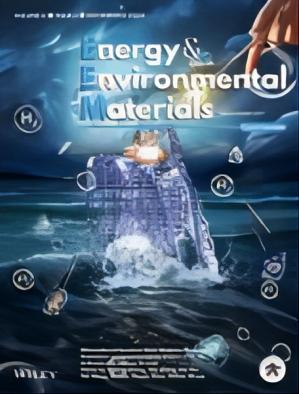
To address the conflicting challenges of energy density, rate performance, and safety in lithium metal batteries and self-generated lithium metal anodes, we propose a synergistic optimization strategy that employs a high-density polyphenylene sulfide (PPS-separator) and a dimethyl carbonate-based electrolyte. Density functional theory calculations and experiments demonstrate that due to its weak polyphenylene sulfide adsorption energy (−0.3261 eV) and small molecular size, the dimethyl carbonate solvent can construct efficient ion hopping channels at the polyphenylene sulfide crystal interface, achieving a room-temperature ionic conductivity of 1.02 × 10⁻³ S cm−1 (3.5 times that of conventional ceramic separators). Functional additives (LiPO2F2/FEC/VC) are used to optimize the electrode interface, forming a LiF/Li2CO3 dual-phase composite SEI, which drives uniform two-dimensional lithium metal deposition and reduces interfacial impedance. The system has been stably cycled 435 cycles under extreme conditions, maintaining a capacity retention of over 80%. The intrinsic flame retardancy of polyphenylene sulfide-separator, coupled with its minimal electrolyte requirements, facilitates electrolyte vaporization-induced self-blocking of ion channels during nail penetration tests. This effectively suppresses thermal runaway in 6-Ah high-nickel NCM811/SiC pouch cells, keeping peak temperatures below 50 °C and offering a novel approach to resolving the trade-off between high energy density and high safety.
期刊介绍:
Energy & Environmental Materials (EEM) is an international journal published by Zhengzhou University in collaboration with John Wiley & Sons, Inc. The journal aims to publish high quality research related to materials for energy harvesting, conversion, storage, and transport, as well as for creating a cleaner environment. EEM welcomes research work of significant general interest that has a high impact on society-relevant technological advances. The scope of the journal is intentionally broad, recognizing the complexity of issues and challenges related to energy and environmental materials. Therefore, interdisciplinary work across basic science and engineering disciplines is particularly encouraged. The areas covered by the journal include, but are not limited to, materials and composites for photovoltaics and photoelectrochemistry, bioprocessing, batteries, fuel cells, supercapacitors, clean air, and devices with multifunctionality. The readership of the journal includes chemical, physical, biological, materials, and environmental scientists and engineers from academia, industry, and policy-making.

 求助内容:
 应助结果提醒方式:


 京公网安备 11010802042870号


