
Total saponins from Panax ginseng delay aging and cellular senescence via PI3K-AKT pathway in a rapid dual-system screening model of aging
IF 7.5
2区 医学
Q1 CHEMISTRY, MEDICINAL
Journal of Ginseng Research
Pub Date : 2026-09-01
Epub Date: 2026-07-06
DOI:10.1016/j.jgr.2026.101105
引用次数: 0
Abstract
Background
Aging, as an inevitable biological process, is an inevitable process of multisystem functional decline, with cellular senescence being one of its hallmarks. Although total saponins from Panax ginseng (TSG) offer health benefits, its precise anti-aging mechanisms have not been fully elucidated.
Methods
A rapid dual-system screening model of aging was established using tert-butyl hydrogen peroxide (tBHP) to induce senescence in human umbilical vein endothelial cells (HUVECs) and Caenorhabditis elegans (C. elegans). Anti-aging effects and key components of TSG were evaluated via fluorescent staining, Western blotting (WB), and biochemical and behavioral analysis. Bioinformatics analysis, WB, AKT activator and loss-of-function mutants in C. elegans were used to clarify TSG's anti-aging and anti-cellular senescence effects via PI3K-AKT signaling.
Results
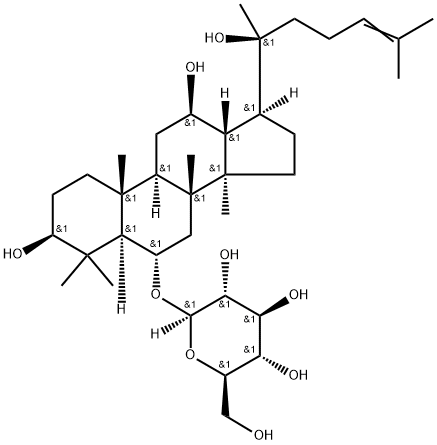
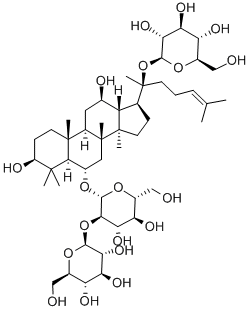
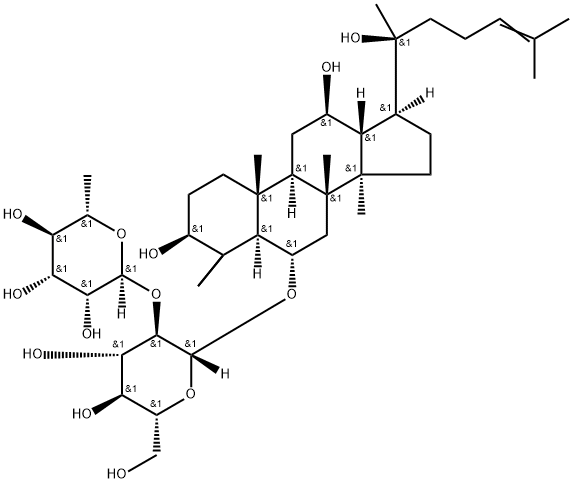
TSG alleviated oxidative stress, enhanced antioxidant capacity and reduced β-galactosidase activity, indicating delayed aging. It also modulated senescence-related markers and increased Ki-67, supporting its role in promoting proliferation and suppressing cellular senescence. Among 20 ginsenosides screened, PPD, F1 and Rh1 were identified as the principal active components. Network pharmacology and experimental validation revealed the PI3K-AKT pathway as central to TSG's effects. AKT1 and PI3K were confirmed as the targets, with decreased phosphorylation levels observed. TSG's anti-aging effects were partly abolished in loss-of-function mutant worms akt-1;akt-2 and age-1, substantiating the essential role of PI3K-AKT signaling in vivo.
Conclusion
This study establishes a rapid dual-system model for aging research, and demonstrates that TSG and its principal ginsenosides (PPD, F1 and Rh1) mitigate aging and cellular senescence through the PI3K-AKT pathway by downregulating PI3K/AKT phosphorylation.
在快速双系统筛选衰老模型中,人参总皂苷通过PI3K-AKT通路延缓衰老和细胞衰老
衰老是一种不可避免的生物过程,是多系统功能衰退的必然过程,细胞衰老是其特征之一。虽然人参总皂苷(TSG)提供健康益处,其确切的抗衰老机制尚未完全阐明。方法采用过氧化叔丁基氢(tBHP)诱导人脐静脉内皮细胞(HUVECs)和秀丽隐杆线虫(C. elegans)衰老,建立衰老快速双系统筛选模型。通过荧光染色、Western blotting (WB)、生化和行为学分析评价TSG的抗衰老作用和关键成分。通过生物信息学分析、WB、AKT激活剂和秀丽隐杆线虫的功能缺失突变体来阐明TSG通过PI3K-AKT信号通路的抗衰老和抗细胞衰老作用。结果TSG可减轻氧化应激,增强抗氧化能力,降低β-半乳糖苷酶活性,延缓衰老。它还能调节衰老相关标志物,增加Ki-67,支持其在促进细胞增殖和抑制细胞衰老中的作用。筛选的20种人参皂苷中,PPD、F1和Rh1为主要活性成分。网络药理学和实验验证表明PI3K-AKT通路是TSG作用的核心。AKT1和PI3K被确认为靶点,磷酸化水平下降。在功能缺失的突变体akt-1中,TSG的抗衰老作用部分消失;akt-2和age-1,证实了PI3K-AKT信号在体内的重要作用。结论本研究建立了衰老研究的快速双系统模型,并证明TSG及其主要人参皂苷(PPD、F1和Rh1)通过下调PI3K/AKT磷酸化,通过PI3K-AKT通路减缓衰老和细胞衰老。
本文章由计算机程序翻译,如有差异,请以英文原文为准。
求助全文
约1分钟内获得全文
求助全文
来源期刊
Journal of Ginseng Research
CHEMISTRY, MEDICINAL-INTEGRATIVE & COMPLEMENTARY MEDICINE
CiteScore
11.40
自引率
9.50%
发文量
111
审稿时长
6-12 weeks
期刊介绍:
Journal of Ginseng Research (JGR) is an official, open access journal of the Korean Society of Ginseng and is the only international journal publishing scholarly reports on ginseng research in the world. The journal is a bimonthly peer-reviewed publication featuring high-quality studies related to basic, pre-clinical, and clinical researches on ginseng to reflect recent progresses in ginseng research.
JGR publishes papers, either experimental or theoretical, that advance our understanding of ginseng science, including plant sciences, biology, chemistry, pharmacology, toxicology, pharmacokinetics, veterinary medicine, biochemistry, manufacture, and clinical study of ginseng since 1976. It also includes the new paradigm of integrative research, covering alternative medicinal approaches. Article types considered for publication include review articles, original research articles, and brief reports.
JGR helps researchers to understand mechanisms for traditional efficacy of ginseng and to put their clinical evidence together. It provides balanced information on basic science and clinical applications to researchers, manufacturers, practitioners, teachers, scholars, and medical doctors.
文献相关原料
原料信息
原料厂家






 求助内容:
 应助结果提醒方式:


 京公网安备 11010802042870号


