{"title":"From Kasha to Anti-Kasha: Nanomaterials Unlock Applications","authors":"Richardson Lawrance, Shunmuga Nathan Shunmuga Nainar, Partha Chowdhury, Meng-Huan Liu, Yang-Hsiang Chan, Hong-Cheu Lin","doi":"10.1021/acsaom.6c00220","DOIUrl":null,"url":null,"abstract":"<p>Precise controls over light emissions are essential for\r\nmodern\r\nphotonic technologies. However, conventional organic luminophores\r\nare fundamentally constrained by Kasha’s rule, which restricts\r\nemissions to the lowest excited states. Anti-Kasha emissions, where\r\nradiative decay occurs directly from higher excited states, break\r\nthis limitation and opens various spectral possibilities. Recent advances\r\ndemonstrate that organic nanomaterials provide powerful platforms\r\nto stabilize and exploit higher excited-state emissions through structural\r\nconfinements, symmetry breakings, and vibrational suppressions. These\r\nprinciples enable practical applications across diverse fields, including\r\nsensors, optoelectronics, bioimaging, cellular tracking, and photocatalysis.\r\nBy understanding how molecular-level strategies translate to nanoscale\r\narchitectures, scientists can utilize higher excited-state emissions\r\nfor next-generation photonic technologies.</p>","PeriodicalId":29803,"journal":{"name":"ACS Applied Optical Materials","volume":"4 7","pages":"1966–1991"},"PeriodicalIF":3.4000,"publicationDate":"2026-07-24","publicationTypes":"Journal Article","fieldsOfStudy":null,"isOpenAccess":false,"openAccessPdf":"","citationCount":"0","resultStr":null,"platform":"Semanticscholar","paperid":null,"PeriodicalName":"ACS Applied Optical Materials","FirstCategoryId":"1085","ListUrlMain":"https://pubs.acs.org/doi/10.1021/acsaom.6c00220","RegionNum":0,"RegionCategory":null,"ArticlePicture":[],"TitleCN":null,"AbstractTextCN":null,"PMCID":null,"EPubDate":"2026/6/22 0:00:00","PubModel":"Epub","JCR":"","JCRName":"","Score":null,"Total":0}
引用次数: 0
Abstract
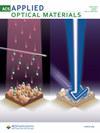
Precise controls over light emissions are essential for
modern
photonic technologies. However, conventional organic luminophores
are fundamentally constrained by Kasha’s rule, which restricts
emissions to the lowest excited states. Anti-Kasha emissions, where
radiative decay occurs directly from higher excited states, break
this limitation and opens various spectral possibilities. Recent advances
demonstrate that organic nanomaterials provide powerful platforms
to stabilize and exploit higher excited-state emissions through structural
confinements, symmetry breakings, and vibrational suppressions. These
principles enable practical applications across diverse fields, including
sensors, optoelectronics, bioimaging, cellular tracking, and photocatalysis.
By understanding how molecular-level strategies translate to nanoscale
architectures, scientists can utilize higher excited-state emissions
for next-generation photonic technologies.
期刊介绍:
ACS Applied Optical Materials is an international and interdisciplinary forum to publish original experimental and theoretical including simulation and modeling research in optical materials complementing the ACS Applied Materials portfolio. With a focus on innovative applications ACS Applied Optical Materials also complements and expands the scope of existing ACS publications that focus on fundamental aspects of the interaction between light and matter in materials science including ACS Photonics Macromolecules Journal of Physical Chemistry C ACS Nano and Nano Letters.The scope of ACS Applied Optical Materials includes high quality research of an applied nature that integrates knowledge in materials science chemistry physics optical science and engineering.

 求助内容:
 应助结果提醒方式:


 京公网安备 11010802042870号


