Bahdan Ranishenka, Aliaksandr Hoha, Alexander Poznyak, Dmitry Semenov, Vadim Shmanai
{"title":"Click Coupling on Anodic Niobia and Tantala Nanocolumns for Label-Free Biosensing","authors":"Bahdan Ranishenka, Aliaksandr Hoha, Alexander Poznyak, Dmitry Semenov, Vadim Shmanai","doi":"10.1021/acsaom.6c00008","DOIUrl":null,"url":null,"abstract":"<p>Efficient\r\ncovalent immobilization of biomolecules on\r\nthe surface\r\nof nanostructured materials while maintaining their functional properties\r\nis a key step in the creation of modern biosensor systems. Niobia\r\nand tantala nanocolumns were fabricated by magnetron sputtering of\r\nmetal targets together with Al on Si wafers, followed by anodizing\r\nand dissolution of the porous alumina template. The morphology of\r\nthe nanocolumns was characterized using scanning electron microscopy,\r\nand the surface area enhancement factor was evaluated. The nanostructures\r\nwere covalently functionalized with clickable azide groups via (3-chloropropyl)trichlorosilane,\r\nfollowed by nucleophilic substitution. Surface functional group load\r\nwas quantified via a Cu-catalyzed azide–alkyne cycloaddition\r\nwith a dimethoxytrityl (DMT)-substituted alkyne, followed by photometric\r\ndetection of the released DMT cation. The use of a high boiling point\r\nhydrophobic solvent (<em>o</em>-dichlorobenzene, <em>o</em>-DCB) together with the extended surface area of the nanostructures\r\nenabled convenient and reproducible measurements, providing a satisfactory\r\nanalytical signal (<em>A</em> ≈ 0.2–0.3) from\r\nsamples of about 1 cm<sup>2</sup>. Both niobia- and tantala-based\r\nnanocolumns exhibited comparable functionalization densities of ∼1\r\nnm<sup>–2</sup>, calculated with consideration of their geometrical\r\nparameters. The feasibility of refunctionalization with azide groups\r\nwas demonstrated. A biotin derivative bearing a DMT moiety was covalently\r\nconjugated to the nanocolumns. The surface load of biotin was quantified,\r\nand its biospecific activity was validated through binding of a streptavidin–peroxidase\r\nconjugate. The applicability of anodic nanocolumns for the construction\r\nof label-free biosensors was demonstrated by biospecific streptavidin\r\nadsorption, registered via reflectance spectra.</p>","PeriodicalId":29803,"journal":{"name":"ACS Applied Optical Materials","volume":"4 6","pages":"1637–1646"},"PeriodicalIF":3.4000,"publicationDate":"2026-06-26","publicationTypes":"Journal Article","fieldsOfStudy":null,"isOpenAccess":false,"openAccessPdf":"","citationCount":"0","resultStr":null,"platform":"Semanticscholar","paperid":null,"PeriodicalName":"ACS Applied Optical Materials","FirstCategoryId":"1085","ListUrlMain":"https://pubs.acs.org/doi/10.1021/acsaom.6c00008","RegionNum":0,"RegionCategory":null,"ArticlePicture":[],"TitleCN":null,"AbstractTextCN":null,"PMCID":null,"EPubDate":"2026/5/20 0:00:00","PubModel":"Epub","JCR":"","JCRName":"","Score":null,"Total":0}
引用次数: 0
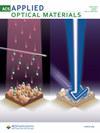
Abstract
Efficient
covalent immobilization of biomolecules on
the surface
of nanostructured materials while maintaining their functional properties
is a key step in the creation of modern biosensor systems. Niobia
and tantala nanocolumns were fabricated by magnetron sputtering of
metal targets together with Al on Si wafers, followed by anodizing
and dissolution of the porous alumina template. The morphology of
the nanocolumns was characterized using scanning electron microscopy,
and the surface area enhancement factor was evaluated. The nanostructures
were covalently functionalized with clickable azide groups via (3-chloropropyl)trichlorosilane,
followed by nucleophilic substitution. Surface functional group load
was quantified via a Cu-catalyzed azide–alkyne cycloaddition
with a dimethoxytrityl (DMT)-substituted alkyne, followed by photometric
detection of the released DMT cation. The use of a high boiling point
hydrophobic solvent (o-dichlorobenzene, o-DCB) together with the extended surface area of the nanostructures
enabled convenient and reproducible measurements, providing a satisfactory
analytical signal (A ≈ 0.2–0.3) from
samples of about 1 cm2. Both niobia- and tantala-based
nanocolumns exhibited comparable functionalization densities of ∼1
nm–2, calculated with consideration of their geometrical
parameters. The feasibility of refunctionalization with azide groups
was demonstrated. A biotin derivative bearing a DMT moiety was covalently
conjugated to the nanocolumns. The surface load of biotin was quantified,
and its biospecific activity was validated through binding of a streptavidin–peroxidase
conjugate. The applicability of anodic nanocolumns for the construction
of label-free biosensors was demonstrated by biospecific streptavidin
adsorption, registered via reflectance spectra.
期刊介绍:
ACS Applied Optical Materials is an international and interdisciplinary forum to publish original experimental and theoretical including simulation and modeling research in optical materials complementing the ACS Applied Materials portfolio. With a focus on innovative applications ACS Applied Optical Materials also complements and expands the scope of existing ACS publications that focus on fundamental aspects of the interaction between light and matter in materials science including ACS Photonics Macromolecules Journal of Physical Chemistry C ACS Nano and Nano Letters.The scope of ACS Applied Optical Materials includes high quality research of an applied nature that integrates knowledge in materials science chemistry physics optical science and engineering.

 求助内容:
 应助结果提醒方式:


 京公网安备 11010802042870号


