{"title":"Global,Regional,and National Burden Changes of Rheumatic Heart Disease From 1990 to 2021.","authors":"Dan-Ni Zhao, Yue Zhuo, Ming-Yao Luo, Zhou Zhou","doi":"10.3881/j.issn.1000-503X.16757","DOIUrl":null,"url":null,"abstract":"<p><p>Objective To systematically assess the global,regional,and national burdens of rheumatic heart disease (RHD) from 1990 to 2021 and to examine their associations with the sociodemographic index (SDI). Methods Data were obtained from the Global Burden of Disease Study 2021 (GBD 2021).We analyzed RHD-related deaths,prevalent cases,age-standardized death rates (ASDRs),and age-standardized prevalence rates (ASPRs),stratified by age,sex,region,and SDI.Estimated annual percentage changes (EAPCs) were calculated to evaluate temporal trends.Spearman correlation analysis was performed to explore the associations between EAPCs and baseline burden in 1990,as well as SDI in 2021.An autoregressive integrated moving average (ARIMA) model was employed to project the future trend of RHD through 2030. Results In 2021,the global ASDR and ASPR of RHD were estimated at 4.47 (95%<i>UI</i>:3.89-5.31) and 488.19 (95%<i>UI</i>:442.57-539.76) per 100 000 population,respectively.Females exhibited higher ASDR and ASPR than males,and the burden was more pronounced among older age groups.From 1990 to 2021,global deaths due to RHD declined by 10.8%,and ASDR decreased by 56.2%,with an EAPC of -2.71% (95%<i>CI</i>=-2.75--2.67).The ARIMA model projected a continued decline in both the number of deaths and ASDR through 2030.In contrast,the number of prevalent cases and ASPR increased by 69.4% and 12.6%,respectively.The highest absolute numbers of deaths and prevalent cases were observed in populous countries,notably India and China.From 1990 to 2021,ASDR and ASPR declined in most countries,while the disease burden in some countries in Africa,the Middle East,and South Asia experienced increasing trends.Both ASDR and ASPR were negatively correlated with SDI (<i>r</i>=-0.511 and -0.762,respectively,both <i>P</i><0.001).The EAPCs of ASDR and ASPR were associated with both baseline burden in 1990 and SDI in 2021.Countries with higher SDI experienced more substantial declines in RHD burden.However,the declines were limited in areas with high baseline prevalence,and some regions even showed upward trends. Conclusions Between 1990 and 2021,although the global mortality of RHD steadily declined,the prevalence slightly increased,with females and older adults bearing a disproportionate burden.Significant regional disparities in disease burden were observed.More pronounced declines occurred in countries with a high SDI,whereas some low-SDI and high-baseline-burden regions showed little or no decline,which suggested the need for sustained and targeted comprehensive prevention and control strategies in key areas.</p>","PeriodicalId":6919,"journal":{"name":"中国医学科学院学报","volume":"48 3","pages":"463-473"},"PeriodicalIF":0.0000,"publicationDate":"2026-06-01","publicationTypes":"Journal Article","fieldsOfStudy":null,"isOpenAccess":false,"openAccessPdf":"","citationCount":"0","resultStr":null,"platform":"Semanticscholar","paperid":null,"PeriodicalName":"中国医学科学院学报","FirstCategoryId":"1087","ListUrlMain":"https://doi.org/10.3881/j.issn.1000-503X.16757","RegionNum":0,"RegionCategory":null,"ArticlePicture":[],"TitleCN":null,"AbstractTextCN":null,"PMCID":null,"EPubDate":"","PubModel":"","JCR":"Q4","JCRName":"Medicine","Score":null,"Total":0}
引用次数: 0
Abstract
Objective To systematically assess the global,regional,and national burdens of rheumatic heart disease (RHD) from 1990 to 2021 and to examine their associations with the sociodemographic index (SDI). Methods Data were obtained from the Global Burden of Disease Study 2021 (GBD 2021).We analyzed RHD-related deaths,prevalent cases,age-standardized death rates (ASDRs),and age-standardized prevalence rates (ASPRs),stratified by age,sex,region,and SDI.Estimated annual percentage changes (EAPCs) were calculated to evaluate temporal trends.Spearman correlation analysis was performed to explore the associations between EAPCs and baseline burden in 1990,as well as SDI in 2021.An autoregressive integrated moving average (ARIMA) model was employed to project the future trend of RHD through 2030. Results In 2021,the global ASDR and ASPR of RHD were estimated at 4.47 (95%UI:3.89-5.31) and 488.19 (95%UI:442.57-539.76) per 100 000 population,respectively.Females exhibited higher ASDR and ASPR than males,and the burden was more pronounced among older age groups.From 1990 to 2021,global deaths due to RHD declined by 10.8%,and ASDR decreased by 56.2%,with an EAPC of -2.71% (95%CI=-2.75--2.67).The ARIMA model projected a continued decline in both the number of deaths and ASDR through 2030.In contrast,the number of prevalent cases and ASPR increased by 69.4% and 12.6%,respectively.The highest absolute numbers of deaths and prevalent cases were observed in populous countries,notably India and China.From 1990 to 2021,ASDR and ASPR declined in most countries,while the disease burden in some countries in Africa,the Middle East,and South Asia experienced increasing trends.Both ASDR and ASPR were negatively correlated with SDI (r=-0.511 and -0.762,respectively,both P<0.001).The EAPCs of ASDR and ASPR were associated with both baseline burden in 1990 and SDI in 2021.Countries with higher SDI experienced more substantial declines in RHD burden.However,the declines were limited in areas with high baseline prevalence,and some regions even showed upward trends. Conclusions Between 1990 and 2021,although the global mortality of RHD steadily declined,the prevalence slightly increased,with females and older adults bearing a disproportionate burden.Significant regional disparities in disease burden were observed.More pronounced declines occurred in countries with a high SDI,whereas some low-SDI and high-baseline-burden regions showed little or no decline,which suggested the need for sustained and targeted comprehensive prevention and control strategies in key areas.
期刊介绍:
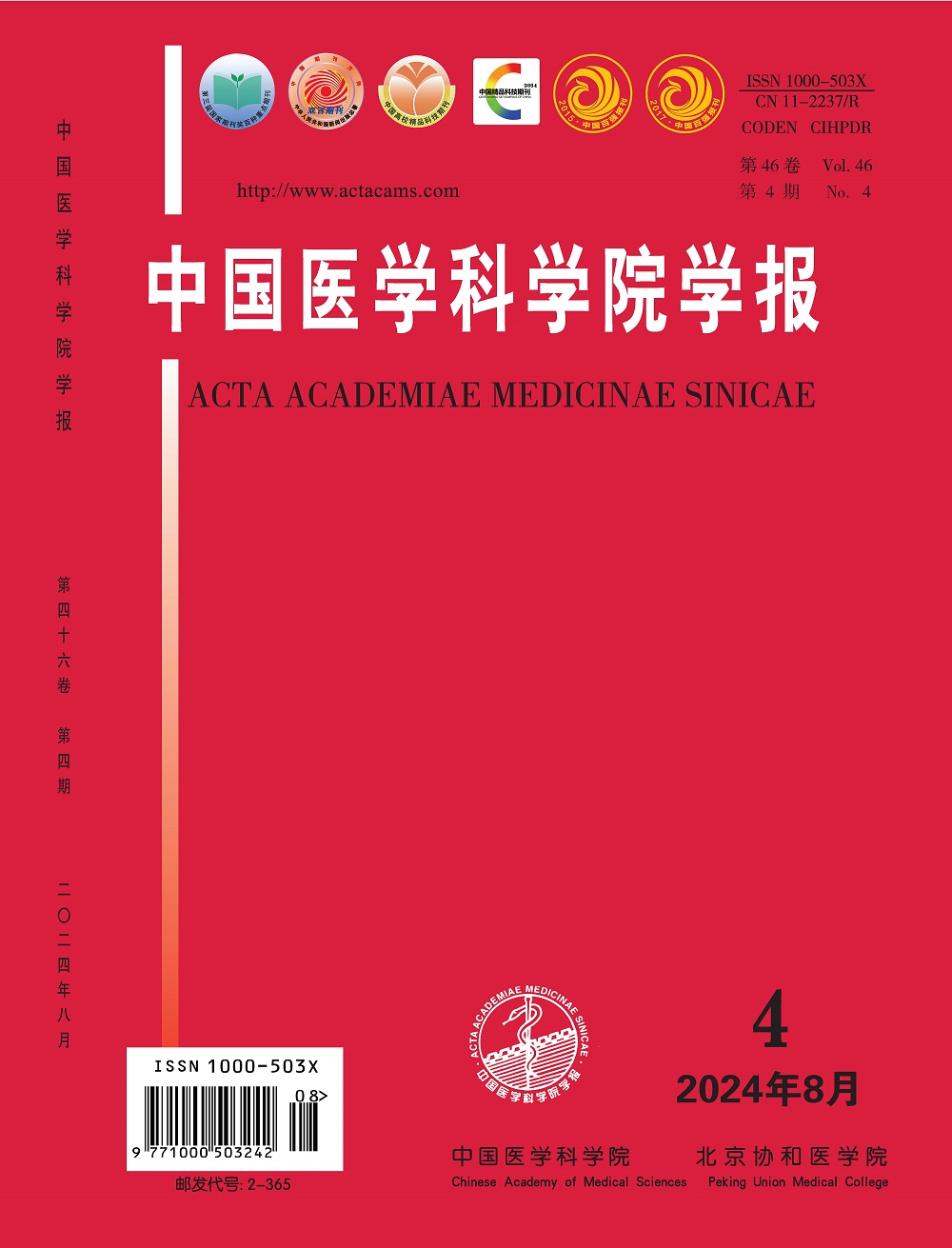
Acta Academiae Medicinae Sinicae was founded in February 1979. It is a comprehensive medical academic journal published in China and abroad, supervised by the Ministry of Health of the People's Republic of China and sponsored by the Chinese Academy of Medical Sciences and Peking Union Medical College.
The journal mainly reports the latest research results, work progress and dynamics in the fields of basic medicine, clinical medicine, pharmacy, preventive medicine, biomedicine, medical teaching and research, aiming to promote the exchange of medical information and improve the academic level of medicine. At present, the journal has been included in 10 famous foreign retrieval systems and their databases [Medline (PubMed online version), Elsevier, EMBASE, CA, WPRIM, ExtraMED, IC, JST, UPD and EBSCO-ASP]; and has been included in important domestic retrieval systems and databases [China Science Citation Database (Documentation and Information Center of the Chinese Academy of Sciences), China Core Journals Overview (Peking University Library), China Science and Technology Paper Statistical Source Database (China Science and Technology Core Journals) (China Institute of Scientific and Technological Information), China Science and Technology Journal Paper and Citation Database (China Institute of Scientific and Technological Information)].

 求助内容:
 应助结果提醒方式:


 京公网安备 11010802042870号


