Suihao Wang, Yongqiang Zhao, Xiaodong Shen, Quan Zhao, Jiaren Huang, Jiali Fu, Zongmian Yu, Tao Huang, Bingsuo Zou
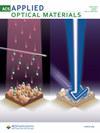
{"title":"Magnetic-Bipolaronic Luminescence Enhancement in a Zero-Dimensional Rare-Earth Metal Ion Doped Manganese Chloride","authors":"Suihao Wang, Yongqiang Zhao, Xiaodong Shen, Quan Zhao, Jiaren Huang, Jiali Fu, Zongmian Yu, Tao Huang, Bingsuo Zou","doi":"10.1021/acsaom.6c00259","DOIUrl":null,"url":null,"abstract":"<p>Polaron formation has emerged as an important mechanism\r\nfor unconventional\r\nluminescence in metal halide semiconductors. Here, we show that incomplete\r\nrare-earth-ion doping in the zero-dimensional hybrid halide (TMBA)<sub>2</sub>MnCl<sub>4</sub> induces magnetic-polaron-mediated emission,\r\nrather than conventional local d-d or f-f transitions. Single-crystal\r\nstructural analysis reveals that the compounds consist of isolated\r\n[MnCl<sub>4</sub>]<sup>2–</sup> tetrahedra separated by TMBA<sup>+</sup> cations, forming a zero-dimensional framework. Upon rare-earth\r\nincorporation, Mn<sup>2+</sup> ions retain tetrahedral coordination\r\nwithout the formation of octahedral [MnCl<sub>6</sub>] units. Despite\r\npreserving an invariant tetrahedral coordination framework over the\r\nentire temperature range, the lattice exhibits a pronounced anisotropic\r\narrangement, giving rise to an effective one-dimensional orientational\r\nmotif embedded within the 0D structure. This structural feature enables\r\ncooperative excited-state coupling and leads to antithermal-quenching\r\nluminescence governed by phonon-assisted, photoinduced magnetic correlations.\r\nMultiple emissive channels are observed, including Ln–Cl charge-transfer-related\r\nexcitonic emission (360–385 nm), Mn-centered green emission\r\n(∼550 nm) arising from the <sup>4</sup>T<sub>1</sub>→<sup>6</sup>A<sub>1</sub> transition and associated with an exciton magnetic\r\nbipolaron, and an orange-red emission (∼600 nm) emerging exclusively\r\nin Ln (La or Ce)-incorporated lattices. In Mn–Ce coexisted\r\nsamples, cooperative coupling between Mn-centered magnetic polarons\r\nand Ce-stabilized lattice/electronic polarons produces an enhanced\r\nlow-energy radiative channel with pronounced antithermal-quenching\r\nbehavior. Spin-polarized density functional theory calculations support\r\nthe photoinduced localized magnetic alignment underlying these polaron-related\r\nemissive states. Moreover, the coexistence of Mn–Ce coupled\r\nemissive channels enables ratiometric optical emission humidity sensing\r\nwith good reversibility and stability, in addition to their spin-related\r\nluminescence and display functionalities, highlighting the broad application\r\npotential of these magnetic bipolaronic systems.</p>","PeriodicalId":29803,"journal":{"name":"ACS Applied Optical Materials","volume":"4 7","pages":"2141–2154"},"PeriodicalIF":3.4000,"publicationDate":"2026-07-24","publicationTypes":"Journal Article","fieldsOfStudy":null,"isOpenAccess":false,"openAccessPdf":"","citationCount":"0","resultStr":null,"platform":"Semanticscholar","paperid":null,"PeriodicalName":"ACS Applied Optical Materials","FirstCategoryId":"1085","ListUrlMain":"https://pubs.acs.org/doi/10.1021/acsaom.6c00259","RegionNum":0,"RegionCategory":null,"ArticlePicture":[],"TitleCN":null,"AbstractTextCN":null,"PMCID":null,"EPubDate":"2026/7/14 0:00:00","PubModel":"Epub","JCR":"","JCRName":"","Score":null,"Total":0}
引用次数: 0
Abstract
Polaron formation has emerged as an important mechanism
for unconventional
luminescence in metal halide semiconductors. Here, we show that incomplete
rare-earth-ion doping in the zero-dimensional hybrid halide (TMBA)2MnCl4 induces magnetic-polaron-mediated emission,
rather than conventional local d-d or f-f transitions. Single-crystal
structural analysis reveals that the compounds consist of isolated
[MnCl4]2– tetrahedra separated by TMBA+ cations, forming a zero-dimensional framework. Upon rare-earth
incorporation, Mn2+ ions retain tetrahedral coordination
without the formation of octahedral [MnCl6] units. Despite
preserving an invariant tetrahedral coordination framework over the
entire temperature range, the lattice exhibits a pronounced anisotropic
arrangement, giving rise to an effective one-dimensional orientational
motif embedded within the 0D structure. This structural feature enables
cooperative excited-state coupling and leads to antithermal-quenching
luminescence governed by phonon-assisted, photoinduced magnetic correlations.
Multiple emissive channels are observed, including Ln–Cl charge-transfer-related
excitonic emission (360–385 nm), Mn-centered green emission
(∼550 nm) arising from the 4T1→6A1 transition and associated with an exciton magnetic
bipolaron, and an orange-red emission (∼600 nm) emerging exclusively
in Ln (La or Ce)-incorporated lattices. In Mn–Ce coexisted
samples, cooperative coupling between Mn-centered magnetic polarons
and Ce-stabilized lattice/electronic polarons produces an enhanced
low-energy radiative channel with pronounced antithermal-quenching
behavior. Spin-polarized density functional theory calculations support
the photoinduced localized magnetic alignment underlying these polaron-related
emissive states. Moreover, the coexistence of Mn–Ce coupled
emissive channels enables ratiometric optical emission humidity sensing
with good reversibility and stability, in addition to their spin-related
luminescence and display functionalities, highlighting the broad application
potential of these magnetic bipolaronic systems.
期刊介绍:
ACS Applied Optical Materials is an international and interdisciplinary forum to publish original experimental and theoretical including simulation and modeling research in optical materials complementing the ACS Applied Materials portfolio. With a focus on innovative applications ACS Applied Optical Materials also complements and expands the scope of existing ACS publications that focus on fundamental aspects of the interaction between light and matter in materials science including ACS Photonics Macromolecules Journal of Physical Chemistry C ACS Nano and Nano Letters.The scope of ACS Applied Optical Materials includes high quality research of an applied nature that integrates knowledge in materials science chemistry physics optical science and engineering.


 求助内容:
 应助结果提醒方式:


 京公网安备 11010802042870号


