R. M. Beilinson, A. A. Yavisheva, I. Tsui, Q. Yang, A. A. Kuksenok, E. P. Medyantseva, N. Yu. Ilyicheva, R. R. Zairov, A. P. Dovzhenko, S. A. Eremin
{"title":"Analytical Capabilities of Fluorescence Polarization Immunoassay and Amperometric Tyrosinase Immunosensors in the Determination of Chloramphenicol","authors":"R. M. Beilinson, A. A. Yavisheva, I. Tsui, Q. Yang, A. A. Kuksenok, E. P. Medyantseva, N. Yu. Ilyicheva, R. R. Zairov, A. P. Dovzhenko, S. A. Eremin","doi":"10.1134/S1061934826700590","DOIUrl":null,"url":null,"abstract":"<p>A version of competitive fluorescence polarization immunoassay (<b>FPIA</b>) and an amperometric immunosensor with a tyrosinase tracer have been developed for the sensitive and selective determination of the chloramphenicol antibiotic. In the development of FPIA for the determination of chloramphenicol, a green fluorescent complex of terbium(III) was first used as a tracer, which changed emission in the green spectral region with a maximum at 545 nm. The competitive binding of the substance to be determined with a limited number of binding sites of specific antibodies (<b>ABs</b>) in using this tracer ensured the determination of chloramphenicol in the linear range of the calibration dependence of fluorescence polarization on the analyte concentration in the range 1 × 10<sup>–11</sup>–1 × 10<sup>–7</sup> M, LOD = 9 × 10<sup>–12</sup> M. To ensure the maximum value of the analytical signal, tracer dilution was selected at 1 : 10 and antibody dilution, at 1 : 25. The optimal incubation time for the tracer–antibody immune complex was 5 min. Tyrosinase enzyme was used as a tracer in the development of an amperometric enzyme-linked immunosorbent assay (<b>ELISA</b>) sensor for the detection of chloramphenicol. The work of this sensor is based on a combination of immunochemical, enzymatic, and electrochemical reactions, leading to “quasi-inhibition” effects. The developed amperometric immunosensor for the determination of chloramphenicol ensured its determination in a narrower concentration range from 1 × 10<sup>–9</sup> to 1 × 10<sup>–6</sup> M, LOD = 8 × 10<sup>–10</sup> M. The conditions of analysis were as follows: AB dilution of 1 : 200 and the duration of an analysis 10 min. The developed versions for the determination of chloramphenicol were tested in analyses of food products (milk). The error of the determination dis not exceed 0.059.</p>","PeriodicalId":606,"journal":{"name":"Journal of Analytical Chemistry","volume":"81 :","pages":"1190 - 1198"},"PeriodicalIF":1.5000,"publicationDate":"2026-08-02","publicationTypes":"Journal Article","fieldsOfStudy":null,"isOpenAccess":false,"openAccessPdf":"","citationCount":"0","resultStr":null,"platform":"Semanticscholar","paperid":null,"PeriodicalName":"Journal of Analytical Chemistry","FirstCategoryId":"92","ListUrlMain":"https://link.springer.com/article/10.1134/S1061934826700590","RegionNum":4,"RegionCategory":"化学","ArticlePicture":[],"TitleCN":null,"AbstractTextCN":null,"PMCID":null,"EPubDate":"","PubModel":"","JCR":"Q4","JCRName":"CHEMISTRY, ANALYTICAL","Score":null,"Total":0}
引用次数: 0
Abstract
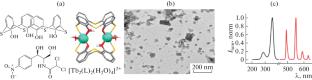
A version of competitive fluorescence polarization immunoassay (FPIA) and an amperometric immunosensor with a tyrosinase tracer have been developed for the sensitive and selective determination of the chloramphenicol antibiotic. In the development of FPIA for the determination of chloramphenicol, a green fluorescent complex of terbium(III) was first used as a tracer, which changed emission in the green spectral region with a maximum at 545 nm. The competitive binding of the substance to be determined with a limited number of binding sites of specific antibodies (ABs) in using this tracer ensured the determination of chloramphenicol in the linear range of the calibration dependence of fluorescence polarization on the analyte concentration in the range 1 × 10–11–1 × 10⁻⁷ M, LOD = 9 × 10–12 M. To ensure the maximum value of the analytical signal, tracer dilution was selected at 1 : 10 and antibody dilution, at 1 : 25. The optimal incubation time for the tracer–antibody immune complex was 5 min. Tyrosinase enzyme was used as a tracer in the development of an amperometric enzyme-linked immunosorbent assay (ELISA) sensor for the detection of chloramphenicol. The work of this sensor is based on a combination of immunochemical, enzymatic, and electrochemical reactions, leading to “quasi-inhibition” effects. The developed amperometric immunosensor for the determination of chloramphenicol ensured its determination in a narrower concentration range from 1 × 10⁻⁹ to 1 × 10⁻⁶ M, LOD = 8 × 10⁻¹⁰ M. The conditions of analysis were as follows: AB dilution of 1 : 200 and the duration of an analysis 10 min. The developed versions for the determination of chloramphenicol were tested in analyses of food products (milk). The error of the determination dis not exceed 0.059.
期刊介绍:
The Journal of Analytical Chemistry is an international peer reviewed journal that covers theoretical and applied aspects of analytical chemistry; it informs the reader about new achievements in analytical methods, instruments and reagents. Ample space is devoted to problems arising in the analysis of vital media such as water and air. Consideration is given to the detection and determination of metal ions, anions, and various organic substances. The journal welcomes manuscripts from all countries in the English or Russian language.

 求助内容:
求助内容: 应助结果提醒方式:

 京公网安备 11010802042870号


