
Multi-omics integration reveals glucosinolate biosynthesis as a regulatory hub coordinating combined heat and salt stress responses in cabbage (Brassica oleracea L.)
IF 8.1
Q1 PLANT SCIENCES
引用次数: 0
Abstract
Global warming has intensified the concurrent occurrence of heat and salt stress, posing a significant threat to cabbage production. However, the regulatory mechanisms governing cabbage responses to this stress combination remain largely elusive. Here, we integrated physiological, transcriptomic, and metabolomic analyses to decipher the stress response strategies of four cabbage genotypes with contrasting heat or salt tolerance. While combined stress suppressed growth and photosynthetic parameters across different genotypes, physiological profiling revealed that salt stress is the primary driver of injury under combined conditions. Based on the levels of H2O2 and the Fv/Fm ratio in leaves, analyses showed that 48 h of stress represented a critical juncture marked by maximal photoinhibition and reactive oxygen species accumulation. Transcriptomic and metabolomic analyses showed that 5255 differentially expressed genes (DEGs) and 857 differentially abundant metabolites (DAMs) were identified in the salt-tolerant genotype ‘JSA9’, while 9019 DEGs and 858 DAMs were identified in the heat-tolerant genotype ‘JSA12’ under combined stress. Crucially, integrated multi-omics network analysis unveiled the glucosinolate biosynthesis pathway as a central regulatory hub coordinating the combined stress response, a role that has not been previously characterized in cabbage under combined heat and salt stress. This pathway exhibited genotype-specific regulatory architectures, with key genes including CYP79B2-1, BCAT4, and ST5a-2 displaying divergent expression patterns linked to distinct adaptive strategies. Collectively, our findings establish a high-resolution molecular framework for combined stress adaptation in cabbage and identify a set of candidate genes for functional validation and breeding of multi-stress-tolerant varieties.
多组学整合揭示硫代葡萄糖苷生物合成是协调甘蓝(Brassica oleracea L.)热盐联合胁迫反应的调控中心
全球变暖加剧了高温和盐胁迫的同时发生,对白菜生产构成了重大威胁。然而,控制白菜对这种胁迫组合反应的调节机制在很大程度上仍然难以捉摸。在这里,我们综合了生理学、转录组学和代谢组学分析来破译四种不同耐热或耐盐卷心菜基因型的胁迫响应策略。在不同的基因型中,盐胁迫抑制了植物的生长和光合参数,生理分析表明盐胁迫是复合条件下植物损伤的主要驱动因素。根据叶片中H2O2水平和Fv/Fm比值分析,胁迫48 h是光抑制和活性氧积累最大的关键时刻。转录组学和代谢组学分析表明,耐盐基因型‘JSA9’鉴定出5255个差异表达基因(deg)和857个差异丰富代谢物(DAMs),而耐热基因型‘JSA12’在联合胁迫下鉴定出9019个差异表达基因(deg)和858个差异丰富代谢物(DAMs)。至关重要的是,综合多组学网络分析揭示了硫代葡萄糖苷生物合成途径作为协调联合胁迫反应的中心调控枢纽,这一作用在以前的高温和盐联合胁迫下的卷心菜中没有被表征。这条通路显示出基因型特异性调控结构,关键基因包括CYP79B2-1、BCAT4和ST5a-2显示出与不同适应策略相关的不同表达模式。总的来说,我们的研究结果建立了白菜联合胁迫适应的高分辨率分子框架,并确定了一组候选基因,用于功能验证和多逆境抗性品种的育种。
本文章由计算机程序翻译,如有差异,请以英文原文为准。
求助全文
约1分钟内获得全文
求助全文
来源期刊
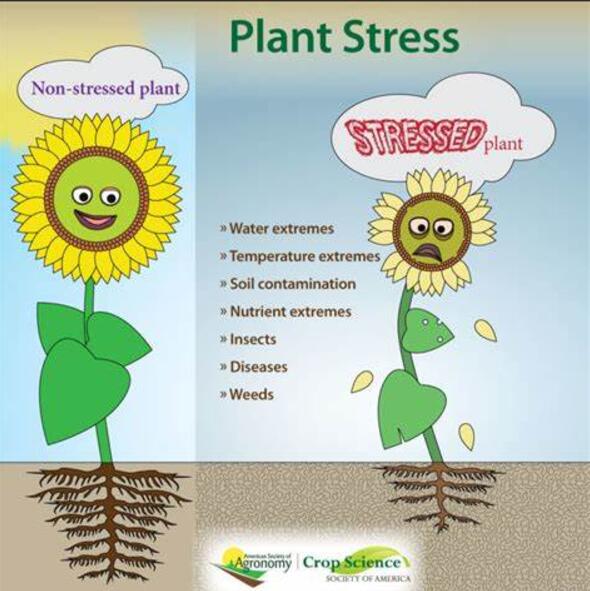
Plant Stress
PLANT SCIENCES-
CiteScore
5.20
自引率
8.00%
发文量
76
审稿时长
63 days
期刊介绍:
The journal Plant Stress deals with plant (or other photoautotrophs, such as algae, cyanobacteria and lichens) responses to abiotic and biotic stress factors that can result in limited growth and productivity. Such responses can be analyzed and described at a physiological, biochemical and molecular level. Experimental approaches/technologies aiming to improve growth and productivity with a potential for downstream validation under stress conditions will also be considered. Both fundamental and applied research manuscripts are welcome, provided that clear mechanistic hypotheses are made and descriptive approaches are avoided. In addition, high-quality review articles will also be considered, provided they follow a critical approach and stimulate thought for future research avenues.
Plant Stress welcomes high-quality manuscripts related (but not limited) to interactions between plants and:
Lack of water (drought) and excess (flooding),
Salinity stress,
Elevated temperature and/or low temperature (chilling and freezing),
Hypoxia and/or anoxia,
Mineral nutrient excess and/or deficiency,
Heavy metals and/or metalloids,
Plant priming (chemical, biological, physiological, nanomaterial, biostimulant) approaches for improved stress protection,
Viral, phytoplasma, bacterial and fungal plant-pathogen interactions.
The journal welcomes basic and applied research articles, as well as review articles and short communications. All submitted manuscripts will be subject to a thorough peer-reviewing process.
 求助内容:
 应助结果提醒方式:


 京公网安备 11010802042870号


