Sivakumar S Moni, Fatma Ayish, Shaqraa Musawi, Ahmad Salawi, Mohamed Eltaib Elmobark, Aamena Jabeen, Mawada Abubaker Abdelgadir Mohammed, Maha Jubran Aqdi, Maram Yahya Aziabi, Raneem Hafiz Harbi, Al Anoud Mohammed Ghazwani, Sara Hassan Almalki, Raghad Abdullah Sharif, Hanin Mohammed Ezzi, Hind Mohammed Suwaydi, Taif E Alajam, Safa Abdullah Awaji, Amwaj Yahya Marwai Nammazi, Amirah Mosa Maashi, Nesreen Ibrahim Faqiri, Atyaf Saleh Ahmed Dohal, Nahlah Salah Burayk
{"title":"Molecular interplay of insulin resistance and cancer: advances in monoclonal antibody therapeutics.","authors":"Sivakumar S Moni, Fatma Ayish, Shaqraa Musawi, Ahmad Salawi, Mohamed Eltaib Elmobark, Aamena Jabeen, Mawada Abubaker Abdelgadir Mohammed, Maha Jubran Aqdi, Maram Yahya Aziabi, Raneem Hafiz Harbi, Al Anoud Mohammed Ghazwani, Sara Hassan Almalki, Raghad Abdullah Sharif, Hanin Mohammed Ezzi, Hind Mohammed Suwaydi, Taif E Alajam, Safa Abdullah Awaji, Amwaj Yahya Marwai Nammazi, Amirah Mosa Maashi, Nesreen Ibrahim Faqiri, Atyaf Saleh Ahmed Dohal, Nahlah Salah Burayk","doi":"10.1080/15384047.2026.2708386","DOIUrl":null,"url":null,"abstract":"<p><p>Insulin resistance (IR) is involved in the development, progression, and treatment resistance of cancer. Apart from contributing to obesity and type 2 diabetes, IR leads to hyperinsulinemia, disruption of insulin-like growth factor signaling, chronic inflammation, and metabolic remodeling, which fosters a pro-tumorigenic milieu. These changes stimulate the PI3K-Akt-mTOR, MAPK, JAK-STAT, and NF-κB pathways, which increase proliferation, survival, angiogenesis, immune escape, and metastasis. IR also modifies the tumor microenvironment (TME) and dampens anti-tumor immunity. IGF-1R, IL-6, IL-1β, TNF-<i>α</i>, PD-1, PD-L1, and CTLA-4 monoclonal antibodies could be beneficial by inhibiting inflammatory and oncogenic pathways and reinitiating immune surveillance. Tumor resistance and heterogeneity are significant obstacles. This is a structured narrative review of the molecular connections, antibody treatments, translational obstacles, and future refined approaches in oncology.</p>","PeriodicalId":9536,"journal":{"name":"Cancer Biology & Therapy","volume":"27 1","pages":"2708386"},"PeriodicalIF":5.7000,"publicationDate":"2026-12-31","publicationTypes":"Journal Article","fieldsOfStudy":null,"isOpenAccess":false,"openAccessPdf":"https://www.ncbi.nlm.nih.gov/pmc/articles/PMC13432918/pdf/","citationCount":"0","resultStr":null,"platform":"Semanticscholar","paperid":null,"PeriodicalName":"Cancer Biology & Therapy","FirstCategoryId":"3","ListUrlMain":"https://doi.org/10.1080/15384047.2026.2708386","RegionNum":4,"RegionCategory":"医学","ArticlePicture":[],"TitleCN":null,"AbstractTextCN":null,"PMCID":null,"EPubDate":"2026/7/28 0:00:00","PubModel":"Epub","JCR":"Q2","JCRName":"ONCOLOGY","Score":null,"Total":0}
引用次数: 0
Abstract
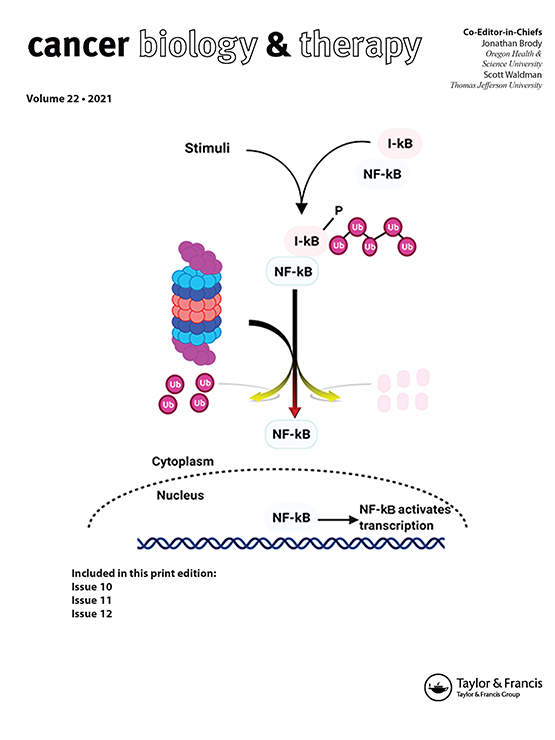
Insulin resistance (IR) is involved in the development, progression, and treatment resistance of cancer. Apart from contributing to obesity and type 2 diabetes, IR leads to hyperinsulinemia, disruption of insulin-like growth factor signaling, chronic inflammation, and metabolic remodeling, which fosters a pro-tumorigenic milieu. These changes stimulate the PI3K-Akt-mTOR, MAPK, JAK-STAT, and NF-κB pathways, which increase proliferation, survival, angiogenesis, immune escape, and metastasis. IR also modifies the tumor microenvironment (TME) and dampens anti-tumor immunity. IGF-1R, IL-6, IL-1β, TNF-α, PD-1, PD-L1, and CTLA-4 monoclonal antibodies could be beneficial by inhibiting inflammatory and oncogenic pathways and reinitiating immune surveillance. Tumor resistance and heterogeneity are significant obstacles. This is a structured narrative review of the molecular connections, antibody treatments, translational obstacles, and future refined approaches in oncology.
期刊介绍:
Cancer, the second leading cause of death, is a heterogenous group of over 100 diseases. Cancer is characterized by disordered and deregulated cellular and stromal proliferation accompanied by reduced cell death with the ability to survive under stresses of nutrient and growth factor deprivation, hypoxia, and loss of cell-to-cell contacts. At the molecular level, cancer is a genetic disease that develops due to the accumulation of mutations over time in somatic cells. The phenotype includes genomic instability and chromosomal aneuploidy that allows for acceleration of genetic change. Malignant transformation and tumor progression of any cell requires immortalization, loss of checkpoint control, deregulation of growth, and survival. A tremendous amount has been learned about the numerous cellular and molecular genetic changes and the host-tumor interactions that accompany tumor development and progression. It is the goal of the field of Molecular Oncology to use this knowledge to understand cancer pathogenesis and drug action, as well as to develop more effective diagnostic and therapeutic strategies for cancer. This includes preventative strategies as well as approaches to treat metastases. With the availability of the human genome sequence and genomic and proteomic approaches, a wealth of tools and resources are generating even more information. The challenge will be to make biological sense out of the information, to develop appropriate models and hypotheses and to translate information for the clinicians and the benefit of their patients. Cancer Biology & Therapy aims to publish original research on the molecular basis of cancer, including articles with translational relevance to diagnosis or therapy. We will include timely reviews covering the broad scope of the journal. The journal will also publish op-ed pieces and meeting reports of interest. The goal is to foster communication and rapid exchange of information through timely publication of important results using traditional as well as electronic formats. The journal and the outstanding Editorial Board will strive to maintain the highest standards for excellence in all activities to generate a valuable resource.

 求助内容:
 应助结果提醒方式:


 京公网安备 11010802042870号


