
Integrative analysis of plant responses to a combination of water deficit, heat stress and eCO2
IF 8.1
Q1 PLANT SCIENCES
引用次数: 0
Abstract
The frequency, intensity, and duration of environmental stressors, such as droughts, heat waves, floods, and pollution, are increasing due to anthropogenic activities, subjecting plants to compound conditions of ‘multifactorial stress combination (MFSC)’. These can have contrasting or additive effects on plant physiological performance and impact different ecosystems and agro-ecosystems worldwide. Using an integrative physiological, genetic, hormonal, and transcriptomic analysis, we studied the response of Arabidopsis thaliana (L.) Heynh to a combination of water deficit (WD), heat stress (HS) and/or elevated levels of CO2 (eCO2). Our findings identified unique, as well as common, responses to MFSC. We further reveal that stomatal aperture regulation under conditions of MFSC is controlled by a combination of different pathways that is different than that activated in plants under less complex stress conditions. Under a combination of WD+HS+eCO2, for example, stomatal closure requires the function of the S-type anion channel SLAH3, but not the S-type anion channel SLAC1, or many other regulators typically found to control stomatal aperture under simpler conditions of abiotic stress/stress combinations. Our findings highlight the complexity of plant physiological and molecular responses to conditions of MFSC and open the way for future studies focused on how climate change and increased pollution impact different ecosystems and agro-ecosystems worldwide.

植物对水分亏缺、热胁迫和eCO2组合响应的综合分析
由于人类活动的影响,干旱、热浪、洪水和污染等环境胁迫的频率、强度和持续时间都在增加,使植物处于“多因子胁迫组合”(MFSC)的复合条件下。这些因素可以对植物生理性能产生对比或叠加效应,并影响全球不同的生态系统和农业生态系统。利用生理、遗传、激素和转录组学综合分析,我们研究了拟南芥(L.)这是由缺水(WD)、热应激(HS)和/或二氧化碳(eCO2)水平升高共同造成的。我们的研究结果确定了对MFSC的独特和常见的反应。我们进一步揭示了MFSC条件下气孔孔径的调节是由不同途径的组合控制的,这与在不太复杂的胁迫条件下激活的植物不同。例如,在WD+HS+eCO2组合条件下,气孔关闭需要s型阴离子通道SLAH3的作用,而不需要s型阴离子通道slaac1的作用,也不需要其他许多在非生物胁迫/胁迫组合条件下控制气孔开度的调节因子。我们的研究结果强调了植物对MFSC条件的生理和分子反应的复杂性,并为未来关注气候变化和污染增加如何影响全球不同生态系统和农业生态系统的研究开辟了道路。
本文章由计算机程序翻译,如有差异,请以英文原文为准。
求助全文
约1分钟内获得全文
求助全文
来源期刊
Plant Stress
PLANT SCIENCES-
CiteScore
5.20
自引率
8.00%
发文量
76
审稿时长
63 days
期刊介绍:
The journal Plant Stress deals with plant (or other photoautotrophs, such as algae, cyanobacteria and lichens) responses to abiotic and biotic stress factors that can result in limited growth and productivity. Such responses can be analyzed and described at a physiological, biochemical and molecular level. Experimental approaches/technologies aiming to improve growth and productivity with a potential for downstream validation under stress conditions will also be considered. Both fundamental and applied research manuscripts are welcome, provided that clear mechanistic hypotheses are made and descriptive approaches are avoided. In addition, high-quality review articles will also be considered, provided they follow a critical approach and stimulate thought for future research avenues.
Plant Stress welcomes high-quality manuscripts related (but not limited) to interactions between plants and:
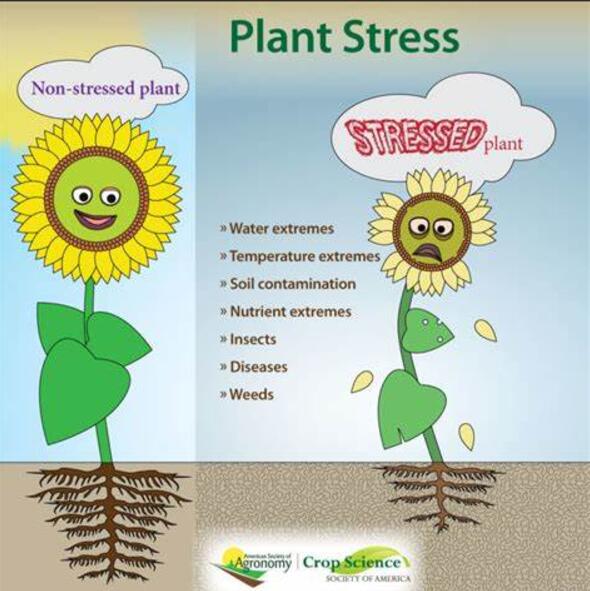
Lack of water (drought) and excess (flooding),
Salinity stress,
Elevated temperature and/or low temperature (chilling and freezing),
Hypoxia and/or anoxia,
Mineral nutrient excess and/or deficiency,
Heavy metals and/or metalloids,
Plant priming (chemical, biological, physiological, nanomaterial, biostimulant) approaches for improved stress protection,
Viral, phytoplasma, bacterial and fungal plant-pathogen interactions.
The journal welcomes basic and applied research articles, as well as review articles and short communications. All submitted manuscripts will be subject to a thorough peer-reviewing process.
 求助内容:
 应助结果提醒方式:


 京公网安备 11010802042870号


