
Biostimulant seed priming enhances germination, early field emergence and osmotic stress responses, accompanied by a distinct metabolic signature in Brassica napus L
IF 8.1
Q1 PLANT SCIENCES
引用次数: 0
Abstract
Biostimulant-based seed priming in Brassica napus offers a sustainable approach to improve crop establishment and stress resilience. We compared an Ascophyllum nodosum biostimulant (EpiSeed) with hydropriming and untreated controls in spring and winter oilseed rape varieties. We integrated laboratory assays, mannitol induced osmotic stress germination test, a single site field trial, and GC–MS metabolomics across four stages: after priming (AP), dry seeds, 6 h re-imbibition under non-stress (6h-NS), and osmotic stress (6h-DS). EpiSeed priming significantly accelerated germination, enhanced early root growth and improved mannitol induced osmotic stress tolerance during germination compared with hydropriming and controls. In the field, Lagonda variety spring oilseed rape seeds primed with EpiSeed showed significantly faster seedling emergence, a non-significant trend in yield increase (15%), and reduced seed glucosinolate content (9%) in a single growing season. Metabolomics of the same variety identified 26 differentially accumulated metabolites. During priming, both treatments enriched alanine, aspartate, glutamate, cyanoamino acid, arginine, proline, and branched-chain amino acid (BCAA) metabolism pathways. During re-imbibition, responses diverged: under non-stress, EpiSeed showed coordinated metabolic utilization consistent with rapid growth and seed-to-seedling transition, whereas hydropriming altered mainly 4-aminobutanoic acid (GABA). Under osmotic stress, EpiSeed was associated with a more growth-oriented metabolic response via arginine and proline metabolism, while hydropriming exhibited a survival-oriented strategy dominated by BCAA and alanine, aspartate, glutamate pathways. Temporal trajectory analysis revealed a persistent EpiSeed specific metabolic signature marked by 4-hydroxyproline, consistent with cell wall related metabolism and growth activation. Collectively, EpiSeed establishes a distinct metabolic signature linking early biochemical reprogramming to improved germination, osmotic stress resilience, and field performance in oilseed rape.
生物刺激素种子启动提高了甘蓝型油菜的萌发、田间早出苗和渗透胁迫反应,并伴有明显的代谢特征
以生物刺激素为基础的甘蓝型油菜种子催育提供了一种可持续的方法,以提高作物的建立和抗逆性。本研究在春油菜和冬油菜品种中比较了一种植物刺激素(EpiSeed)与水浸和未经处理的对照。我们整合了实验室分析、甘露醇诱导的渗透胁迫萌发试验、单位点田间试验和GC-MS代谢组学,涵盖了四个阶段:启动后(AP)、干燥种子、非胁迫下6小时的再抑制(6h-NS)和渗透胁迫(6h-DS)。与水处理和对照相比,EpiSeed处理显著促进了种子萌发,促进了早期根系生长,提高了甘露醇诱导的萌发过程中渗透胁迫的耐受性。在田间,经EpiSeed处理的Lagonda品种春油菜种子在单生长季内出苗速度显著加快,产量增加趋势不显著(15%),籽粒硫代葡萄糖苷含量降低(9%)。同一品种的代谢组学鉴定出26种差异积累的代谢物。在启动过程中,两种处理都丰富了丙氨酸、天冬氨酸、谷氨酸、氰胺酸、精氨酸、脯氨酸和支链氨基酸(BCAA)的代谢途径。在非胁迫条件下,EpiSeed表现出与快速生长和种子到幼苗过渡相一致的协调代谢利用,而加氢胁迫主要改变4-氨基丁酸(GABA)。在渗透胁迫下,EpiSeed通过精氨酸和脯氨酸代谢更倾向于生长导向的代谢反应,而氢启动则表现出以BCAA和丙氨酸、天冬氨酸、谷氨酸途径为主的生存导向策略。时间轨迹分析显示,EpiSeed具有持续的4-羟基脯氨酸特异性代谢特征,与细胞壁相关的代谢和生长激活一致。总的来说,EpiSeed建立了一个独特的代谢特征,将早期生化重编程与提高油菜的发芽、渗透胁迫恢复能力和田间表现联系起来。
本文章由计算机程序翻译,如有差异,请以英文原文为准。
求助全文
约1分钟内获得全文
求助全文
来源期刊
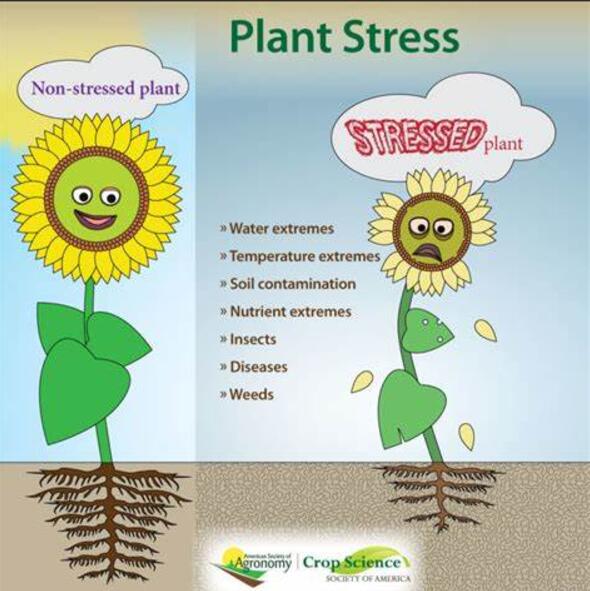
Plant Stress
PLANT SCIENCES-
CiteScore
5.20
自引率
8.00%
发文量
76
审稿时长
63 days
期刊介绍:
The journal Plant Stress deals with plant (or other photoautotrophs, such as algae, cyanobacteria and lichens) responses to abiotic and biotic stress factors that can result in limited growth and productivity. Such responses can be analyzed and described at a physiological, biochemical and molecular level. Experimental approaches/technologies aiming to improve growth and productivity with a potential for downstream validation under stress conditions will also be considered. Both fundamental and applied research manuscripts are welcome, provided that clear mechanistic hypotheses are made and descriptive approaches are avoided. In addition, high-quality review articles will also be considered, provided they follow a critical approach and stimulate thought for future research avenues.
Plant Stress welcomes high-quality manuscripts related (but not limited) to interactions between plants and:
Lack of water (drought) and excess (flooding),
Salinity stress,
Elevated temperature and/or low temperature (chilling and freezing),
Hypoxia and/or anoxia,
Mineral nutrient excess and/or deficiency,
Heavy metals and/or metalloids,
Plant priming (chemical, biological, physiological, nanomaterial, biostimulant) approaches for improved stress protection,
Viral, phytoplasma, bacterial and fungal plant-pathogen interactions.
The journal welcomes basic and applied research articles, as well as review articles and short communications. All submitted manuscripts will be subject to a thorough peer-reviewing process.
 求助内容:
 应助结果提醒方式:


 京公网安备 11010802042870号


