
Plasma-activated water seed treatment modulates osmotic stress responses in pea through morphological, ionomic, hormonal, and antioxidant changes
IF 8.1
Q1 PLANT SCIENCES
引用次数: 0
Abstract
Plasma-activated water (PAW) seed treatment is an emerging green technology that enhances plant germination and growth; however, its role in drought stress tolerance remains unclear. In this study, pea (Pisum sativum L.) seeds were treated with PAW (10 mg L⁻¹ nitrite, 30 mg L⁻¹ nitrate, pH 3.9), Zinc (Zn)-enriched PAW (PA(W+Zn); 6 mg L⁻¹ hydrogen peroxide (H₂O₂), 19 mg L⁻¹ nitrite, 20 mg L⁻¹ nitrate, 14 mg L⁻¹ Zn, pH 4.7), distilled water (DW), or Zn-enriched DW. Subsequently, three-week-old plants were subjected to osmotic stress using polyethylene glycol 8000 (PEG8000) (20% w/v). PAW induced partial hilum opening and mild seed coat damage, while PA(W+Zn) increased nitric oxide (NO) accumulation. Both treatments enhanced nutrient levels and shootward translocation, particularly of Zn and iron (Fe). Under stress, PAW promoted the formation of larger but thinner leaves, indicating adaptive morphological responses. However, stomatal conductance, relative water content, photosynthesis, and starch accumulation remained unaffected. Unchanged proline levels and reduced soluble sugars suggest that classical osmotic acclimation was not induced by PAW treatments. Instead, both PAW and PA(W+Zn) increased abscisic acid (ABA) levels and PsDHN2 expression, indicating activation of ABA-dependent stress signalling, likely mediated by nitrate-, nitrite-, and H2O2-derived signals. Tissue-specific cytokinin (CK) responses and enhanced antioxidant enzyme activities (superoxide dismutase [SOD], catalase [CAT]) further suggest the establishment of a primed state. Overall, PAW-based seed treatments induce complex physiological and molecular responses involving ABA signalling, selected ion translocation, and antioxidant enzymes without significantly improved water status, stomatal regulation, or photosynthetic performance.

等离子活化水种子处理通过形态、离子、激素和抗氧化变化调节豌豆的渗透胁迫反应
等离子体活化水(PAW)种子处理是一项新兴的绿色技术,可以促进植物的发芽和生长;然而,其在抗旱胁迫中的作用尚不清楚。在这项研究中,豌豆(Pisum sativum L.)种子用PAW (10 mg L -⁻¹亚硝酸盐,30 mg L -⁻¹硝酸盐,pH值3.9),富含锌(Zn)的PAW (PA(W+Zn);6毫克L -过氧化氢,19毫克L -亚硝酸盐,20毫克L -硝酸盐,14毫克L - Zn (pH值4.7),蒸馏水,或富锌的DW。随后,用聚乙二醇8000 (PEG8000) (20% w/v)对三周大的植株进行渗透胁迫。PAW诱导种门部分打开和轻度种皮损伤,而PA(W+Zn)增加了一氧化氮(NO)的积累。两种处理都提高了养分水平和植株向内转运,尤其是锌和铁。在胁迫下,PAW促进了叶片的变大变薄,显示了适应性形态反应。气孔导度、相对含水量、光合作用和淀粉积累未受影响。脯氨酸水平不变,可溶性糖减少,这表明经典的渗透驯化不是由PAW处理诱导的。相反,PAW和PA(W+Zn)均增加了脱落酸(ABA)水平和PsDHN2表达,表明ABA依赖的应激信号被激活,可能是由硝酸盐、亚硝酸盐和h2o2来源的信号介导的。组织特异性细胞分裂素(CK)反应和抗氧化酶(超氧化物歧化酶(SOD)、过氧化氢酶(CAT))活性的增强进一步表明了引物状态的建立。总的来说,基于paw的种子处理诱导了复杂的生理和分子反应,包括ABA信号、选择离子转运和抗氧化酶,但没有显著改善水分状况、气孔调节或光合性能。
本文章由计算机程序翻译,如有差异,请以英文原文为准。
求助全文
约1分钟内获得全文
求助全文
来源期刊
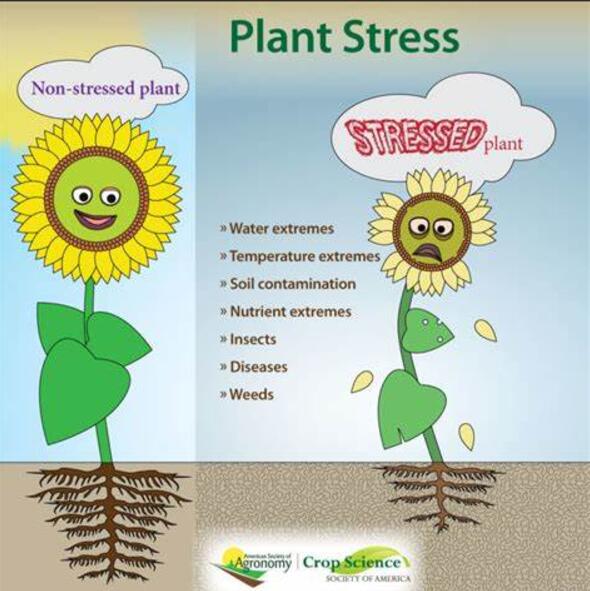
Plant Stress
PLANT SCIENCES-
CiteScore
5.20
自引率
8.00%
发文量
76
审稿时长
63 days
期刊介绍:
The journal Plant Stress deals with plant (or other photoautotrophs, such as algae, cyanobacteria and lichens) responses to abiotic and biotic stress factors that can result in limited growth and productivity. Such responses can be analyzed and described at a physiological, biochemical and molecular level. Experimental approaches/technologies aiming to improve growth and productivity with a potential for downstream validation under stress conditions will also be considered. Both fundamental and applied research manuscripts are welcome, provided that clear mechanistic hypotheses are made and descriptive approaches are avoided. In addition, high-quality review articles will also be considered, provided they follow a critical approach and stimulate thought for future research avenues.
Plant Stress welcomes high-quality manuscripts related (but not limited) to interactions between plants and:
Lack of water (drought) and excess (flooding),
Salinity stress,
Elevated temperature and/or low temperature (chilling and freezing),
Hypoxia and/or anoxia,
Mineral nutrient excess and/or deficiency,
Heavy metals and/or metalloids,
Plant priming (chemical, biological, physiological, nanomaterial, biostimulant) approaches for improved stress protection,
Viral, phytoplasma, bacterial and fungal plant-pathogen interactions.
The journal welcomes basic and applied research articles, as well as review articles and short communications. All submitted manuscripts will be subject to a thorough peer-reviewing process.
 求助内容:
 应助结果提醒方式:


 京公网安备 11010802042870号


