
Supplemental red-light improves consistency of solid stem phenotype in solid-stem wheat varieties
IF 8.1
Q1 PLANT SCIENCES
引用次数: 0
Abstract
Wheat stem sawfly (WSS) is a major pest of wheat with limited control options, causing substantial grain yield losses and reducing grain quality. Solid-stem genetic resistance has been the primary management strategy due to the lack of effective chemical or biological pest control options. However, the currently available solid-stem varieties often show inconsistent stem solidness across different environments. Because increased light intensity and longer day length are associated with stronger solid stem expression, we investigated the effect of supplemental red light (SL) in a greenhouse study comparing SL to standard greenhouse light (GL) across seven spring wheat varieties (Choteau, Conan, Dagmar, Duclair, Fortuna, Vida, along with Reeder, a hollow-stem variety). SL treatment enhanced solid-stem phenotypes in solid-stem varieties, with Duclair, Dagmar, and Choteau exhibiting consistent pith expression in both main stems and tillers, resulting in more uniform pith development. Transcriptomic analysis of first internode tissues from Reeder and Duclair under SL and GL conditions identified 55,997 differentially expressed genes (DEGs), with SL upregulating pathways related to cell division, phytochrome signaling, and photosynthesis. Gene Ontology (GO) and Kyoto Encyclopedia of Genes and Genomes (KEGG) enrichments analyses indicated that SL suppressed Programmed Cell Death (PCD) and promoted cytoskeletal remodeling, and energy reallocation, suggesting activation of signaling networks that support pith proliferation. These findings indicate that supplemental red light can stabilize the solid-stem phenotype through light-mediated gene regulation and may provide physiological and molecular insights to support breeding for improved WSS resistance and reduced lodging.
补充红光可提高实茎小麦品种实茎表型的一致性
小麦干锯蝇(WSS)是小麦的主要害虫,其防治措施有限,造成大量的粮食产量损失和粮食品质下降。由于缺乏有效的化学或生物虫害防治选择,固体茎遗传抗性一直是主要的管理策略。然而,目前可用的固体茎品种在不同的环境中往往表现出不一致的茎固度。由于光照强度和日照长度的增加与固体茎表达的增强有关,我们在温室研究中研究了补充红光(SL)对7个春小麦品种(Choteau、Conan、Dagmar、Duclair、Fortuna、Vida以及空心茎品种Reeder)的影响,并将SL与标准温室光(GL)进行了比较。SL处理增强了实茎品种的实茎表型,迪克莱尔、达格玛和乔托在主茎和分蘖中均表现出一致的髓表达,使髓发育更加均匀。对Reeder和Duclair在SL和GL条件下的第一节间组织进行转录组学分析,鉴定出55,997个差异表达基因(deg),其中SL上调的途径与细胞分裂、光敏色素信号传导和光合作用有关。基因本体(GO)和京都基因与基因组百科全书(KEGG)富集分析表明,SL抑制程序性细胞死亡(PCD),促进细胞骨架重塑和能量再分配,提示激活支持髓细胞增殖的信号网络。这些结果表明,补充红光可以通过光介导的基因调控来稳定固体茎的表型,并可能为提高WSS抗性和减少倒伏的育种提供生理和分子上的见解。
本文章由计算机程序翻译,如有差异,请以英文原文为准。
求助全文
约1分钟内获得全文
求助全文
来源期刊
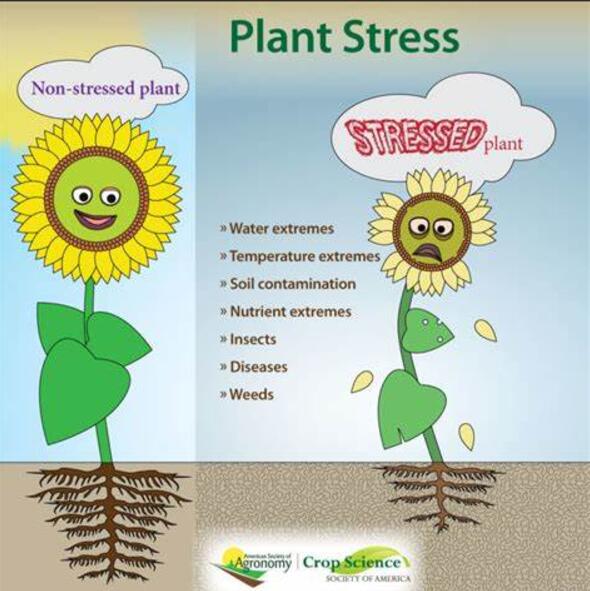
Plant Stress
PLANT SCIENCES-
CiteScore
5.20
自引率
8.00%
发文量
76
审稿时长
63 days
期刊介绍:
The journal Plant Stress deals with plant (or other photoautotrophs, such as algae, cyanobacteria and lichens) responses to abiotic and biotic stress factors that can result in limited growth and productivity. Such responses can be analyzed and described at a physiological, biochemical and molecular level. Experimental approaches/technologies aiming to improve growth and productivity with a potential for downstream validation under stress conditions will also be considered. Both fundamental and applied research manuscripts are welcome, provided that clear mechanistic hypotheses are made and descriptive approaches are avoided. In addition, high-quality review articles will also be considered, provided they follow a critical approach and stimulate thought for future research avenues.
Plant Stress welcomes high-quality manuscripts related (but not limited) to interactions between plants and:
Lack of water (drought) and excess (flooding),
Salinity stress,
Elevated temperature and/or low temperature (chilling and freezing),
Hypoxia and/or anoxia,
Mineral nutrient excess and/or deficiency,
Heavy metals and/or metalloids,
Plant priming (chemical, biological, physiological, nanomaterial, biostimulant) approaches for improved stress protection,
Viral, phytoplasma, bacterial and fungal plant-pathogen interactions.
The journal welcomes basic and applied research articles, as well as review articles and short communications. All submitted manuscripts will be subject to a thorough peer-reviewing process.
 求助内容:
 应助结果提醒方式:


 京公网安备 11010802042870号


