
Iron oxide nanoparticles and mycorrhizae in plant responses to drought and salinity stress: a review
IF 8.1
Q1 PLANT SCIENCES
引用次数: 0
Abstract
Global climate change is increasing the frequency and severity of drought and soil salinity, which are major constraints to crop productivity and long-term agricultural sustainability. These abiotic stresses disrupt water and ion homeostasis, increase the overproduction of reactive oxygen species (ROS), and impair photosynthetic efficiency, cellular integrity, and plant growth. To survive under these conditions, plants activate coordinated physiological, biochemical, and molecular responses involving antioxidant defense systems, hormonal signaling networks, transcriptional reprogramming, and epigenetic regulation. This review presents an integrated overview of plant responses to drought and salinity, with particular emphasis on oxidative stress regulation and the molecular mechanisms controlling ROS homeostasis. We summarize the roles of antioxidant enzymes and discuss how their expression is regulated by stress-responsive transcription factors and hormone-dependent pathways. Recent advances in epigenetic regulation, including DNA methylation, histone modifications, and small RNA-mediated pathways, are also highlighted as important contributors to stress memory and adaptive plasticity under recurrent drought and salinity. We further highlight emerging mitigation strategies based on iron oxide nanoparticles (IONPs) and arbuscular mycorrhizal fungi (AMF), which modulate redox balance, nutrient availability, hormonal crosstalk, and stress-responsive gene expression. Evidence suggests that IONPs enhance antioxidant capacity and ion homeostasis, while AMF improve water uptake, nutrient acquisition, and transcriptional coordination under stress. The combined application of IONPs and AMF shows synergistic potential by targeting shared signaling hubs such as ROS, ABA, and Ca2+, thereby strengthening plant resilience to drought and salinity. Finally, we discuss future perspectives for integrating nanotechnology, beneficial soil microorganisms, molecular breeding, and epigenetic approaches to develop sustainable, field-applicable strategies for enhancing crop resilience to drought and salinity in a changing climate.

氧化铁纳米颗粒和菌根在植物干旱和盐胁迫响应中的研究进展
全球气候变化正在增加干旱和土壤盐碱化的频率和严重程度,这是作物生产力和长期农业可持续性的主要制约因素。这些非生物胁迫破坏了水和离子的稳态,增加了活性氧(ROS)的过量产生,损害了光合效率、细胞完整性和植物生长。为了在这些条件下生存,植物激活协调的生理、生化和分子反应,包括抗氧化防御系统、激素信号网络、转录重编程和表观遗传调控。本文综述了植物对干旱和盐度的反应,重点介绍了氧化应激调节和控制ROS稳态的分子机制。我们总结了抗氧化酶的作用,并讨论了它们的表达如何受到应激反应转录因子和激素依赖途径的调节。表观遗传调控的最新进展,包括DNA甲基化、组蛋白修饰和小rna介导的途径,也被强调为反复干旱和盐度下应激记忆和适应可塑性的重要因素。我们进一步强调了基于氧化铁纳米颗粒(IONPs)和arbuscular菌根真菌(AMF)的新兴缓解策略,它们调节氧化还原平衡、营养有效性、激素串扰和应激反应基因表达。有证据表明,离子离子化蛋白增强抗氧化能力和离子稳态,而AMF改善水分吸收、营养获取和胁迫下的转录协调。IONPs和AMF的联合应用通过靶向ROS、ABA和Ca2+等共享信号中心显示出协同潜力,从而增强植物对干旱和盐度的抵御能力。最后,我们讨论了整合纳米技术、有益土壤微生物、分子育种和表观遗传学方法的未来前景,以开发可持续的、适用于田间的策略,以提高作物在不断变化的气候中对干旱和盐度的抵御能力。
本文章由计算机程序翻译,如有差异,请以英文原文为准。
求助全文
约1分钟内获得全文
求助全文
来源期刊
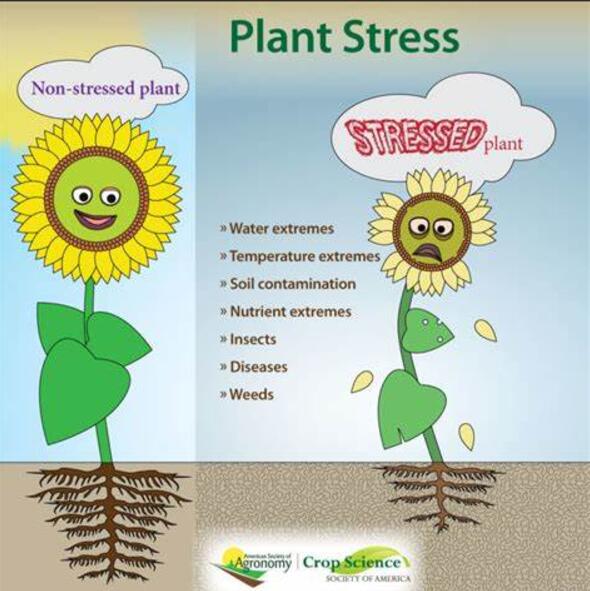
Plant Stress
PLANT SCIENCES-
CiteScore
5.20
自引率
8.00%
发文量
76
审稿时长
63 days
期刊介绍:
The journal Plant Stress deals with plant (or other photoautotrophs, such as algae, cyanobacteria and lichens) responses to abiotic and biotic stress factors that can result in limited growth and productivity. Such responses can be analyzed and described at a physiological, biochemical and molecular level. Experimental approaches/technologies aiming to improve growth and productivity with a potential for downstream validation under stress conditions will also be considered. Both fundamental and applied research manuscripts are welcome, provided that clear mechanistic hypotheses are made and descriptive approaches are avoided. In addition, high-quality review articles will also be considered, provided they follow a critical approach and stimulate thought for future research avenues.
Plant Stress welcomes high-quality manuscripts related (but not limited) to interactions between plants and:
Lack of water (drought) and excess (flooding),
Salinity stress,
Elevated temperature and/or low temperature (chilling and freezing),
Hypoxia and/or anoxia,
Mineral nutrient excess and/or deficiency,
Heavy metals and/or metalloids,
Plant priming (chemical, biological, physiological, nanomaterial, biostimulant) approaches for improved stress protection,
Viral, phytoplasma, bacterial and fungal plant-pathogen interactions.
The journal welcomes basic and applied research articles, as well as review articles and short communications. All submitted manuscripts will be subject to a thorough peer-reviewing process.
 求助内容:
 应助结果提醒方式:


 京公网安备 11010802042870号


